Canada’s Critical Minerals Bottlenecks in Refining and Freight
Canadian mineral buyers face processing, grid and transport decisions that shape whether material meets a refinery customer’s delivery requirements.
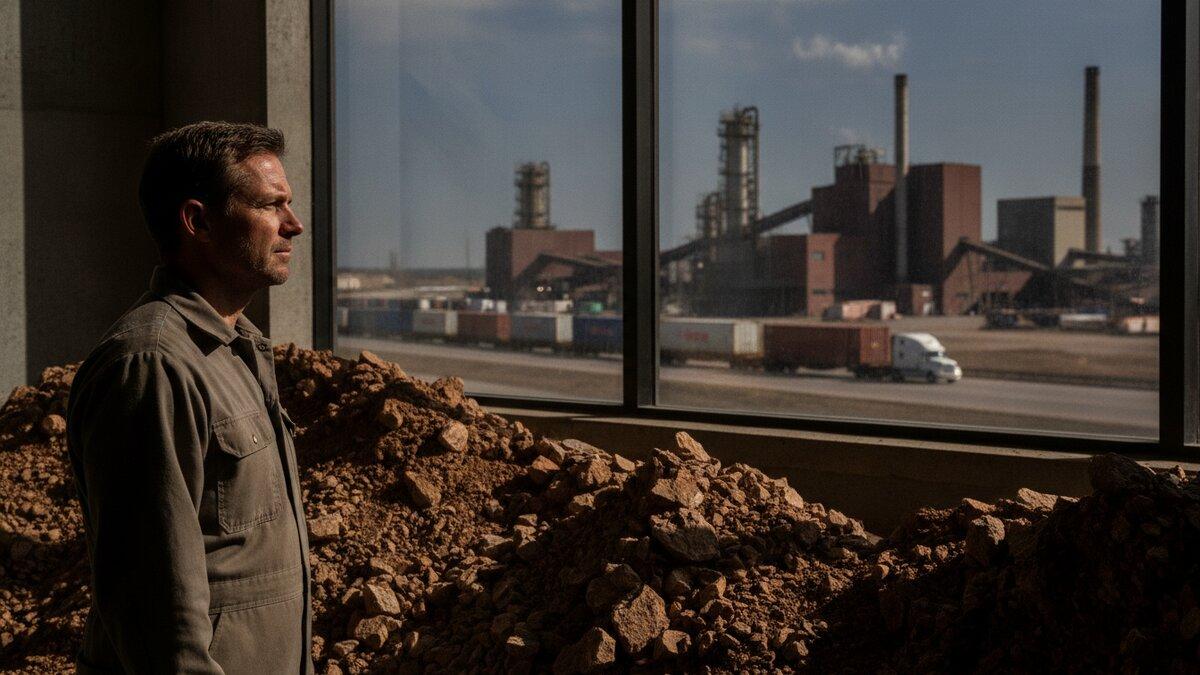
Canada’s critical minerals supply chain can stall between the mine and the customer when a refinery lacks the right equipment, a grid connection or reliable freight. For buyers assessing the Canada critical minerals processing supply chain, those dependencies matter because battery materials refining can only support a delivery commitment once the plant can turn incoming concentrate into material the customer accepts.
- The International Energy Agency found that the largest refining country’s average share rose from 70% in 2023 to 72% in 2025 across the key energy minerals it assessed, excluding rare earths.
- Frontier Lithium’s Ontario plan calls for a concentrator at the proposed PAK mine and a separate lithium conversion facility in Thunder Bay.
- Québec requires government authorization before connecting new industrial projects needing 5 MW or more, including qualifying additions to existing loads.
Where concentrate becomes a saleable chemical
A spodumene concentrator and a lithium refinery deliver different products. Frontier’s proposed PAK mine and concentrator would supply spodumene concentrate. The Thunder Bay facility would convert concentrate from PAK and potentially other sources into battery-grade lithium chemicals. For a buyer, the possibility of multiple feed sources makes the refinery’s allowable impurity ranges and its ability to handle changes in feed composition commercially relevant. Ask which feed blends the plant has run and which blend produced the sample submitted for approval.
Metso’s published alkaline-leach flowsheet illustrates where mineral processing equipment enters hard-rock lithium conversion. It describes one vendor route. Use the sequence to identify where to request test results and equipment guarantees.
- Concentration: request concentrate grade and recovery across representative ore blends.
- Thermal conversion: request feed rate and heat consumption at the agreed conversion target.
- Extraction: assess lithium recovery and reagent use on the proposed feed.
- Product finishing: review impurity results and repeatability across finished lots.
Installed equipment pricing for a Canadian project is not disclosed in the brochure. Ask vendors to quote in CAD against the same feed, throughput and battery-grade specification. Define who supplies the utilities, controls and commissioning support so the plant owner can compare the full installed scope. The IEA identifies specialised equipment and skills as constraints and finds that suppliers of key battery-grade graphite equipment are limited outside China. For another example of how a specific processing route shapes purchasing exposure, see JournalArta’s analysis of nickel processing supply risk.
What grid connections and freight routes can support
Industrial power procurement starts with a site-specific load profile. Give the utility the expected peak demand, the commissioning load and the minimum load needed for an orderly shutdown. Ask which loads the connection can serve on the proposed start date and which depend on network upgrades. The province’s authorization process is a separate milestone for covered large loads. Québec also identifies some public utility projects as potentially exempt, so the project owner should establish which requirements apply to its specific application.
For infrastructure funding context, see JournalArta’s coverage of the Canada critical minerals infrastructure fund.
Model freight in both directions. For a mine-linked refinery, get separate carrier quotes for inbound concentrate and reagents and for outbound finished material. Specify route, payload, transfer points, who provides covered storage and what happens when a shipment misses its receiving slot. Calculate delivered cost in CAD per accepted tonne, using quotes for handling and storage and the expected yield from representative test runs. Keep the mine road, refinery access and outbound carrier booking on separate lines so a delay on one leg can be traced to its effect on inventory and customer deliveries.
When to order equipment, fund capacity or sign offtake
If the feed is still variable, fund metallurgical testwork before committing to full-size equipment. Give the test lab samples representing the feed blends the mine plan will actually deliver. Ask the equipment supplier to state the feed assumptions behind its throughput and recovery guarantees, and tie acceptance to a sustained run at agreed operating conditions. A successful test on hand-picked concentrate can give engineers a starting point. Procurement still needs a test that reflects the range of material the plant will receive.
If the power connection or freight route is unresolved, stage capital commitments around written utility and carrier milestones. Compare the integrated mine-and-refinery plan against processing at an existing site, where suitable third-party capacity is available. Saskatchewan Research Council reported signing tolling agreements in 2024 to convert customer-supplied rare earth oxides into metals. That example illustrates the contract structure. For a proposed tolling deal, request available capacity, minimum batch size, material ownership and responsibility for losses or rejected output.
If a buyer needs firm tonnes by a specific date, keep a qualified source under contract while the Canadian supplier works through sample approval and repeat production lots. Set the delivery commitment against the agreed specification, the earliest supported start date and the volume the seller can reserve after existing obligations. For treasury, stress-test the CAD cash required to carry extra feed or buy replacement material if the new line starts late.
The volume worth putting into a purchase plan is the quantity the refinery can make from qualified feed, with confirmed power and freight, and deliver within the customer’s receiving window. Base equipment orders, working capital and offtake commitments on that quantity.
 Take the quizWhat Kind of Holiday Spender Are You? Take the Black Friday QuizStart →



 Lifestyle · Food & HealthWhat Is Raynaud’s Syndrome? Why Fingers Turn White in the Cold
 Lifestyle · Food & Health4 Ways Walking After Meals Helps Your Body, Doctors Say
 Lifestyle · Food & Health4 Reasons to Eat Oatmeal, According to Nutrition Experts
 Lifestyle7 Signs Your Social Battery Is Running Low (and Why You Keep Cancelling Plans)