How US Refiners Source Black Mass From Battery Recycling
US refiners buying recycled battery black mass must assess the feed’s composition, shipment rules and evidence of recoverable materials.
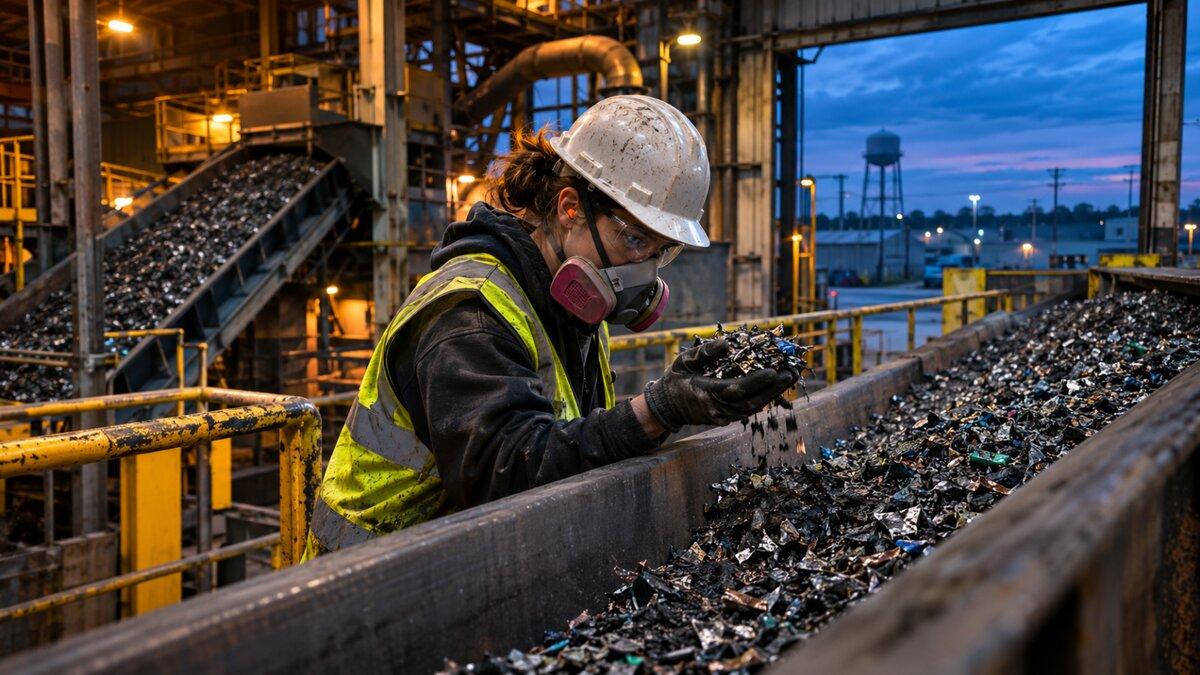
US refiners should contract for black mass by dry weight, verified metal content and a delivery route their plant can accept. Those terms connect the US battery recycling and black mass refining supply chain to the buyer’s actual requirements for battery materials recovery, from incoming lot specifications to the material a refinery can sell.
- EPA says black mass composition and liquid content vary with battery inputs and shredding methods. Buyers should set lot-level limits for moisture, target metals and impurities.
- American Battery Technology Company reported a design processing rate of about 20,000 metric tonnes per year for its first recycling facility in its September 2026 annual filing. Saleable black mass tonnage at that rate was not disclosed.
- EPA excludes black mass from the universal waste category. Its hazardous waste status depends on the material’s characteristics, and storage before recycling can trigger permitting requirements.
- Since August 27, 2026, a federal allocation order has required covered U.S. sellers to allocate 100% of monthly sales of covered black mass to U.S. persons unless BIS grants an adjustment or exception.
How battery scrap becomes refinery feedstock
Recycling inputs can include manufacturing scrap and end-of-life batteries. A refinery can buy black mass from a processor or source batteries and scrap for contracted preprocessing. Start with the supplier’s production records. For factory scrap, ask whether lots are segregated by cell chemistry and production line. For end-of-life feed, ask how the processor identifies chemistry, manages mixed streams and records changes to the blend.
The process determines what the buyer receives and where to set acceptance checks.
- Shredding. Mechanical preprocessing breaks down cells or modules. BHS-Sonthofen documents a configuration using its VR rotary shear and NGU universal shredder.
- Drying. The same configuration uses an HTC vacuum dryer and condenses electrolyte. Request a moisture specification and the method used to measure it.
- Separation. Shredding and separation produce black mass containing cathode and anode material alongside distinct streams such as copper and aluminum foils. Ask for dry-basis assays that include residual copper and aluminum.
- Refining. Hydrometallurgical refining systems use liquid leaching to extract metals. Smelting can recover nickel and cobalt, with additional processing needed to recover lithium from the residue. Ask the refinery which elements it can turn into a saleable product.
Procurement teams evaluating a recycling site should ask which outputs it produces, which grades it accepts and what volume is open to outside buyers. Treat recycled feed as a separate qualification from the mined supply covered in JournalArta’s Indonesia nickel supply risk analysis.
EPA waste classification and BIS shipping restrictions
Intact batteries and shredded black mass require separate shipping reviews. Under EPA guidance, a universal waste handler may not shred batteries to make black mass. Shredding for recycling takes place at a destination facility. For the leg carrying intact batteries, PHMSA’s shipper guide bars damaged, defective or recalled lithium batteries covered by the rule from aircraft. Confirm the battery condition with the shipper before booking a carrier or promising a collection date.
Black mass falls outside the universal waste category and can exhibit hazardous waste characteristics. EPA says a recycler that stores hazardous waste before recycling generally needs a Resource Conservation and Recovery Act Part B permit. If the shipper relies on a transfer-based exclusion for hazardous secondary material, check the transit states as well as the origin and destination. EPA warns that a transit state that has not adopted the exclusion could apply its own hazardous waste rules when the shipment crosses its border. Confirm where a delayed load can legally wait.
For cross-border tolling, verify the separate BIS authorization before including an overseas refinery in a supply plan. The August 2026 order requires covered black mass to stay physically in the United States absent BIS authorization. The agency can consider exceptions for overseas refining followed by return of the material, and any separate export approvals still apply. In its November 12, 2026 quarterly filing, ABTC said BIS approved an export license under specified terms on September 30 for sales of up to $100 million of its recycled black mass. Treat that figure as the reported authorization ceiling when modeling competing demand for domestic lots.
When to commit volume and how to compare quotes
If the refinery needs a narrow feed specification, start with segregated factory scrap or black mass from a processor that can trace and isolate it. Qualify representative lots before committing to a minimum volume. Put the sampling method, moisture limit, dry-basis assay, independent lab for disputes and off-spec remedies in the contract. Require advance notice when the supplier changes the source or blend, and reserve the right to requalify the material.
If the plant can handle multiple chemistries, qualify end-of-life and third-party supply in separate lots before agreeing to a blend. Request a quote in USD per dry metric tonne and compare the cost per unit of expected saleable output. Use the lot assay and the receiving refinery’s qualification results to estimate that output. Include quoted freight, handling and any tolling charges, and specify who pays for rejected loads. Commercial black mass prices and tolling rates are not disclosed in the cited filings. For buyers comparing exposure across refining routes, JournalArta’s Indonesia HPAL nickel refining analysis covers the sulfur cost risk on that route.
For a long-term offtake, ask the supplier for actual outbound black mass volumes by grade and the share already committed. If the only figure available is the plant’s design processing rate, keep the forecast volume provisional until the seller substantiates deliveries. A workable contract ties payment to accepted dry weight and assay, commits volume the supplier can substantiate, and gives both parties an agreed destination if the primary refinery cannot receive a shipment.
 Take the quizWhat Kind of Holiday Spender Are You? Take the Black Friday QuizStart →




 Lifestyle · Food & HealthWhat Is Raynaud’s Syndrome? Why Fingers Turn White in the Cold
 Lifestyle · Food & Health4 Ways Walking After Meals Helps Your Body, Doctors Say
 Lifestyle · Food & Health4 Reasons to Eat Oatmeal, According to Nutrition Experts
 Lifestyle7 Signs Your Social Battery Is Running Low (and Why You Keep Cancelling Plans)