Einstein’s Black Hole Prediction Gains Independent Support
An Australian team has independently checked the first image of a black hole, finding a structure close to the original. The researchers used machine learning to reanalyze telescope data from M87*, whose appearance supports predictions made by Albert Einstein’s theory of general relativity.
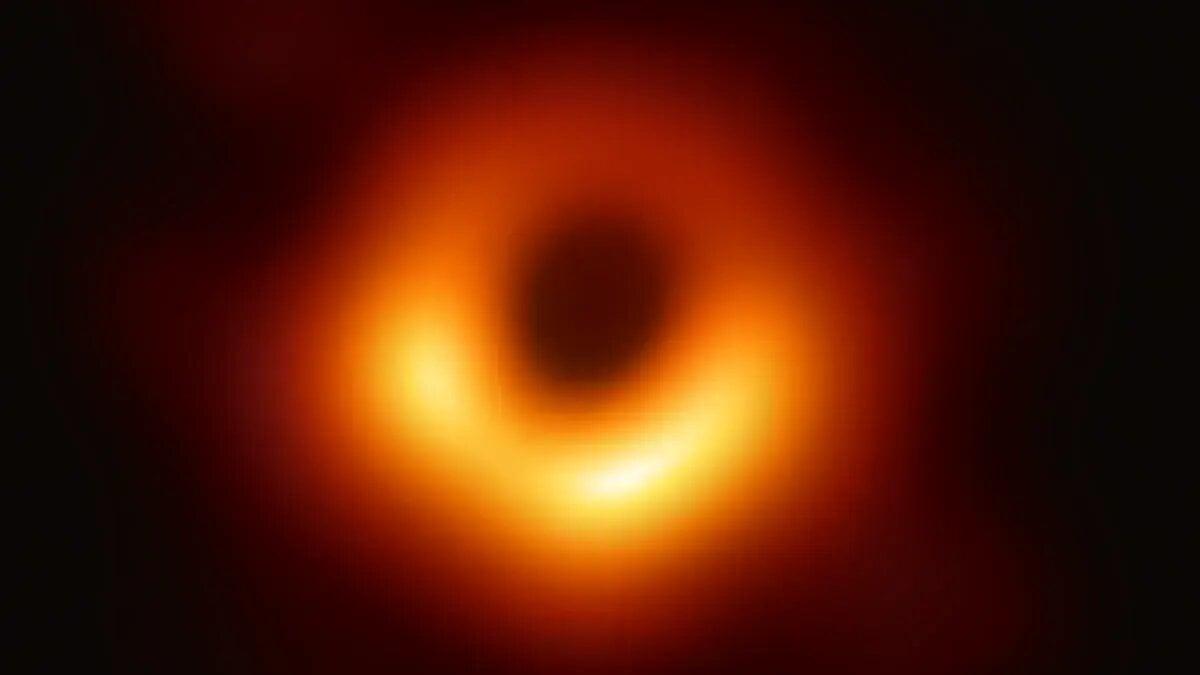
Australian scientists have independently verified the first image of a black hole, adding support for Albert Einstein’s theory of general relativity. Their analysis found a structure almost identical in size and shape to the image of M87*, unveiled in 2019.
The black hole sits at the center of the galaxy Messier 87, 55 million light-years away. It has a mass around 6.5 billion times that of the sun.
A global network of telescopes called the Event Horizon Telescope captured the original data. The network combined observations from separate telescopes to produce an image of the black hole’s surroundings.
Independent Analysis Reproduces the Ring
Researchers led by Samuel Lai of Australia’s Commonwealth Scientific and Industrial Research Organisation used machine learning to reexamine the telescope data. Their technique, called GenDIReCT, filtered out interference from Earth’s atmosphere and accounted for biases from combining telescope observations.
Lai compared the difficulty of imaging the distant black hole to “standing in your backyard and trying to take a photo of a doughnut on the moon.”
The team applied its method to the original telescope dataset. Lai said the model had no prior knowledge of what a black hole looked like when the researchers applied it to the M87 data.
“This is the first truly independent validation of the EHT image, an important step in the scientific process,” Lai said.
The independent analysis addresses questions about whether atmospheric effects or image-processing methods influenced the original result. The researchers’ method recovered a similar black hole structure without relying on a model trained on its appearance.
Einstein’s Prediction Gets Another Test
Einstein published his theory of general relativity in 1915. It describes gravity as the curvature of space and time caused by objects with mass.
The theory predicted the appearance of a black hole’s surroundings: a ring of superheated, glowing plasma with the black hole’s shadow falling on it. The original M87* image closely matched that prediction.
Laurent Loinard, director of the Event Horizon Telescope Collaboration, said the independent method recovered M87*’s ring structure across several years. He said the results agreed closely with the collaboration’s published findings.
The researchers’ technique could also be applied to medical imaging and earthquake mapping. Their research was published on November 11 in the journal Nature.
 Take the quizWhat Kind of Holiday Spender Are You? Take the Black Friday QuizStart →




 Lifestyle · Food & HealthNormal Blood Pressure Chart by Age: Healthy Ranges Explained
 Lifestyle · Food & HealthWhat Is Raynaud’s Syndrome? Why Fingers Turn White in the Cold
 Lifestyle · Food & Health4 Ways Walking After Meals Helps Your Body, Doctors Say
 Lifestyle · Food & Health4 Reasons to Eat Oatmeal, According to Nutrition Experts