Voyager 1 Team Celebrates Light-Day Milestone Despite Glitch
Voyager 1 has become the first spacecraft to reach one light-day from Earth, even as its team investigates a disruption to its data transmissions. NASA says it remains in contact with the probe, though its distance means diagnosing a problem takes two days.
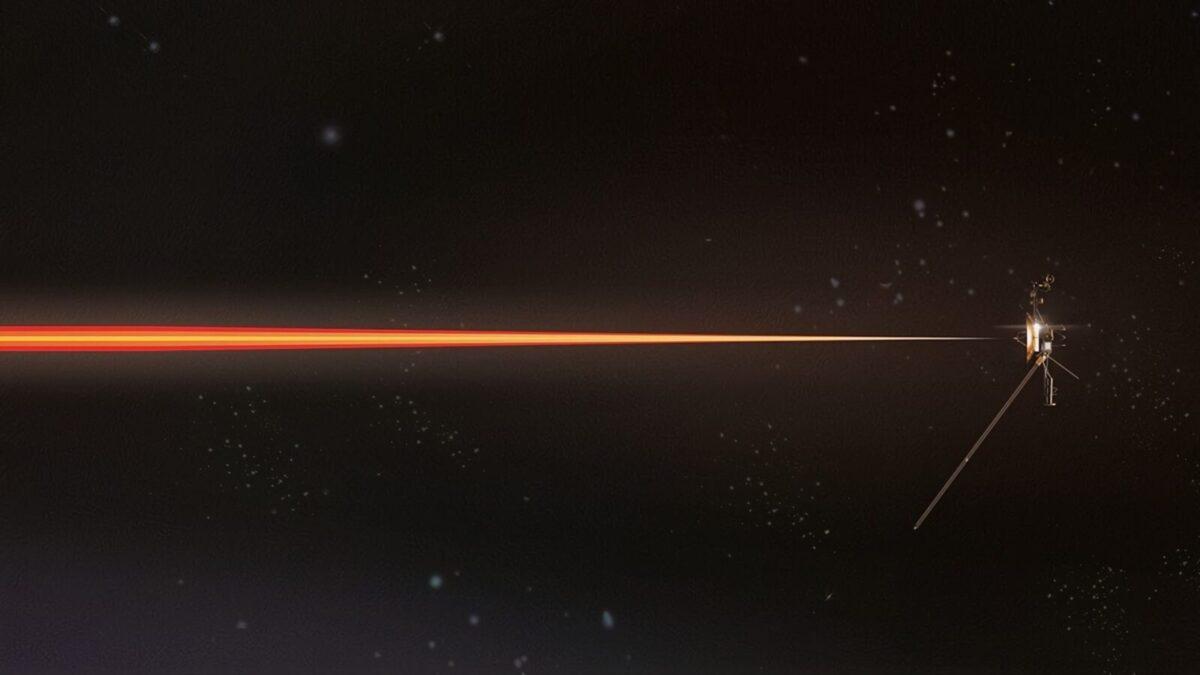
Voyager 1 reached one light-day from Earth on November 18, becoming the first spacecraft to cross that distance. The NASA team celebrated the milestone while investigating a communications glitch that has stopped the probe from transmitting science and engineering data.
The milestone came at 5:16 a.m. EST, when Voyager 1 was about 16 billion miles (26 billion kilometers) from Earth. A light-day is the distance light travels in one day.
Voyager 1 is the farthest human-made object in space. A signal from Earth now takes 24 hours to reach it.
Data glitch slows mission team
Voyager 1 stopped transmitting science and engineering data on November 14, NASA Jet Propulsion Laboratory spokesperson Raquel Villanueva said. The mission team remains in contact with the spacecraft and is investigating the problem.
Voyager project manager Suzanne Dodd said the probe was sending a strong carrier signal, but the team was not receiving the data. She said the anomaly was not something the team had never encountered before.
The distance makes troubleshooting slow. Dodd said a signal takes 24 hours to reach Voyager 1 and another 24 hours to return, so diagnosing a problem takes two days. Data rates are also very low.
Dodd said she was confident Voyager 1 would send data back before too long. She expects more anomalies as the spacecraft ages and travels farther away.
Voyager 2, the other spacecraft in the mission, is doing well on its journey through interstellar space, Dodd said. It continues to operate three scientific instruments.
NASA marks a long journey
Mission team members gathered on November 19 at NASA's Jet Propulsion Laboratory in Pasadena, California, to celebrate. It was the first such Voyager event there since 1989, when Voyager 2 flew past Neptune.
The two spacecraft have been flying for nearly 50 years. Their mission was originally expected to last five years.
Voyager project scientist Linda Spilker recalled watching the launch in 1977. “What an incredible milestone,” she said at the event.
NASA astronaut Jessica Watkins sent a video message from the International Space Station. She ended it with a weightless backflip.
The celebration also featured images and video from around the world, including landmarks lit gold in honor of the mission's Golden Record. NASA science chief Nicky Fox and writer and producer Ann Druyan lit the Empire State Building gold on November 17.
NASA's Voyager deputy project scientist Jamie Rankin said the spacecraft are helping scientists understand conditions in the space between stars.
 Take the quizWhat Kind of Holiday Spender Are You? Take the Black Friday QuizStart →





 Lifestyle · Food & HealthNormal Blood Pressure Chart by Age: Healthy Ranges Explained
 Lifestyle · Food & HealthWhat Is Raynaud’s Syndrome? Why Fingers Turn White in the Cold
 Lifestyle · Food & Health4 Ways Walking After Meals Helps Your Body, Doctors Say
 Lifestyle · Food & Health4 Reasons to Eat Oatmeal, According to Nutrition Experts