Voyager 1 Travels More Than One Light-Day From Earth
NASA’s Voyager 1 is now so far from Earth that a radio signal takes 24 hours to reach the spacecraft. Launched in 1977, the probe remains in contact with Earth and has two science instruments operating as engineers manage its dwindling power supply.
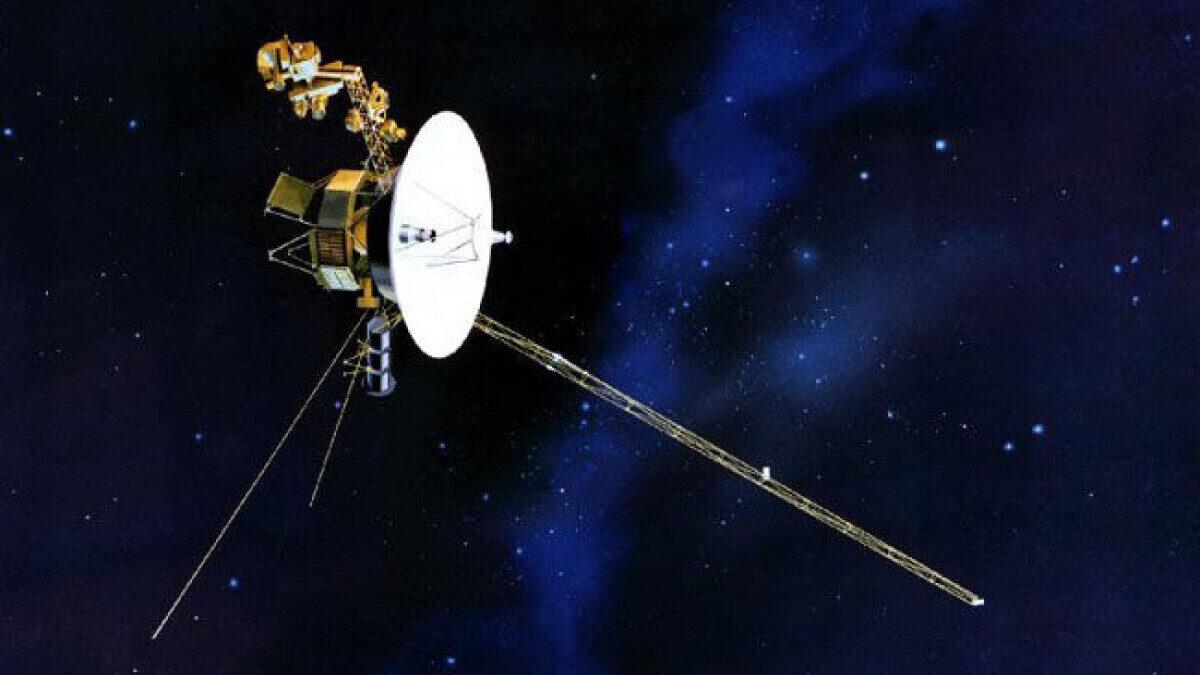
NASA’s Voyager 1 spacecraft has traveled more than one light-day from Earth, nearly 50 years after its launch from Florida.
A radio signal now takes 24 hours to reach the probe. A response to a call from Earth may take two days.
Voyager 1 launched from Cape Canaveral on September 5, 1977. It remains in contact with Earth and has two science instruments operating.
Two instruments are still running
The spacecraft’s working instruments are its magnetometer and plasma wave subsystem. Other instruments have been switched off over the decades to conserve dwindling power.
Voyager 1 gets that power from radioisotope thermoelectric generators. Its cameras were switched off for good after a final imaging sequence in 1990.
Those last pictures formed a solar system “Family Portrait” that included the Pale Blue Dot image of Earth.
Voyager’s route took in Titan
Mission planning began in the 1960s, while NASA was working to put a person on the Moon ahead of the Soviet Union.
A rare alignment made a tour of Jupiter, Saturn, Uranus and Neptune possible. Voyager 2 eventually visited all four planets.
Voyager 1 followed a different route. Its mission prioritized Saturn’s moon Titan, ruling out a later encounter with Pluto.
The probe flew past Jupiter in 1979, then passed Saturn and Titan in 1980.
Backup systems protected the probe
Dr Garry Hunt, a member of Voyager’s original imaging team, credited reliable, well-tested equipment and new technology developed for the mission.
The spacecraft also carried fault protection. “If anything goes wrong, it automatically switches to a backup,” Hunt said.
Radiation protection was another concern. Hunt said the team did not know Jupiter’s magnetic environment when it designed the spacecraft.
The magnetic environment proved “1,000 times stronger than we anticipated,” he said.
Hunt also praised the project managers and engineers who kept Voyager operating over the years.
 Take the quizWhat Kind of Holiday Spender Are You? Take the Black Friday QuizStart →





 Lifestyle · Food & HealthWhat Is Raynaud’s Syndrome? Why Fingers Turn White in the Cold
 Lifestyle · Food & Health4 Ways Walking After Meals Helps Your Body, Doctors Say
 Lifestyle · Food & Health4 Reasons to Eat Oatmeal, According to Nutrition Experts
 Lifestyle7 Signs Your Social Battery Is Running Low (and Why You Keep Cancelling Plans)