Google DeepMind Releases Gemini 4 Neon for Paid Users
Google DeepMind is rolling out Gemini 4 Neon to developers, businesses and paid Gemini subscribers. The model can process spreadsheets, documents, audio and video, and Google says it leads a coding-agent benchmark. Developers will pay based on the amount of data sent to and generated by the model.
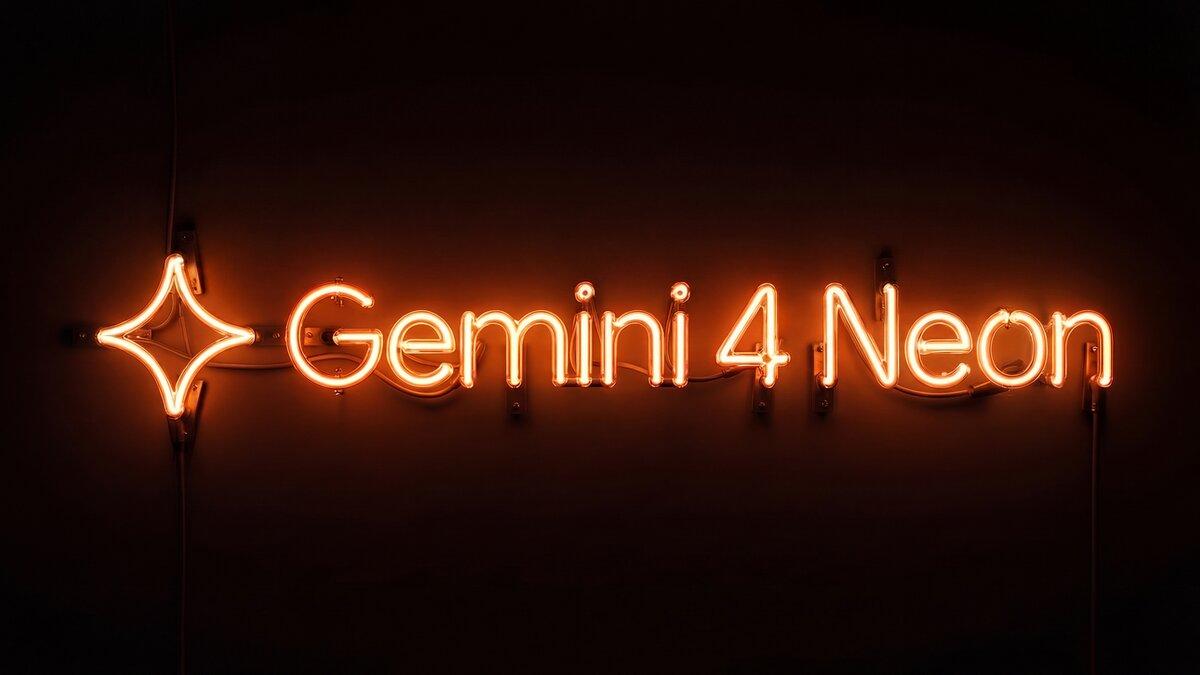
Google DeepMind is releasing Gemini 4 Neon to developers, businesses and paid subscribers, bringing a new model to the Gemini app and API.
Access depends on the product. Google AI Pro and Ultra subscribers can select Neon in the Gemini app, while businesses can use it through Gemini for business.
Google says Neon handles coding, research and analytical tasks. It can process spreadsheets, PDFs, charts, audio and video together and turn them into structured documents.
Pricing and access
Developers can use Neon through the paid Gemini API tier in Google AI Studio and Android Studio. The API is a way for developers to connect their software to the model.
Google charges $3 per million input tokens and $15 per million output tokens. Tokens are units used to measure the text or other data a model processes and generates.
Cached input tokens cost $0.15 per million, a 95% discount. The model has a 1 million-token context window, the amount of information it can consider in a session.
Paid Google AI Pro and Ultra subscribers can also try Neon in Google Antigravity. Businesses can access it through the Gemini for business API or model menu, and through Google Antigravity.
Coding and research benchmarks
Google says Neon ranked first on the Artificial Analysis Coding Agent Index, with a score of 58.6. That benchmark assesses models on coding tasks carried out by agents.
The model also scored 65.2% on Terminal-Bench 4.1 and 46.2% on FrontierCode 2.0 at its default high setting, Google said. The company says Neon can debug and revise code across multiple files.
On the Artificial Analysis Intelligence Index, Neon scored 61 at its xhigh thinking level and ranked third overall, according to Google. The company said it placed behind larger, slower models.
Google reported a second-place ranking on the Vals Index, with a score of 70.9%. It also said Neon ranked first on the Legal Research Bench and Tax Agent Bench.
Neon has four thinking levels, which let teams adjust the amount of processing used for a task. Google says the default high level costs 32% less per task than Carbon on the Artificial Analysis Intelligence Index.
Cybersecurity and safety claims
Google says Neon scored 76% on the hard tier of AutoBaxBench, which tests secure code generation. It also scored 51.26% on WebExploitBench v1.2, a test related to finding security flaws.
The company says Neon resisted every attack in a Gray Swan benchmark when it used real-time safeguards at its highest thinking level. The test plants malicious instructions in material a model accesses, such as web pages or documents.
Google says eligible members of its Fairwind Program will begin receiving access to Neon for cyber defense over the next few days.
 Take the quizWhat Kind of Holiday Spender Are You? Take the Black Friday QuizStart →




 Lifestyle · Food & HealthWhat Is Raynaud’s Syndrome? Why Fingers Turn White in the Cold
 Lifestyle · Food & Health4 Ways Walking After Meals Helps Your Body, Doctors Say
 Lifestyle · Food & Health4 Reasons to Eat Oatmeal, According to Nutrition Experts
 Lifestyle7 Signs Your Social Battery Is Running Low (and Why You Keep Cancelling Plans)