Milky Way Shock Discovery Challenges Spiral Arm Map
University of Sydney researchers say a star-forming shock front may account for part of what astronomers call the Milky Way’s Norma arm. Their simulations and observations also suggest the galaxy’s central bar is a relatively long, slowly rotating structure.
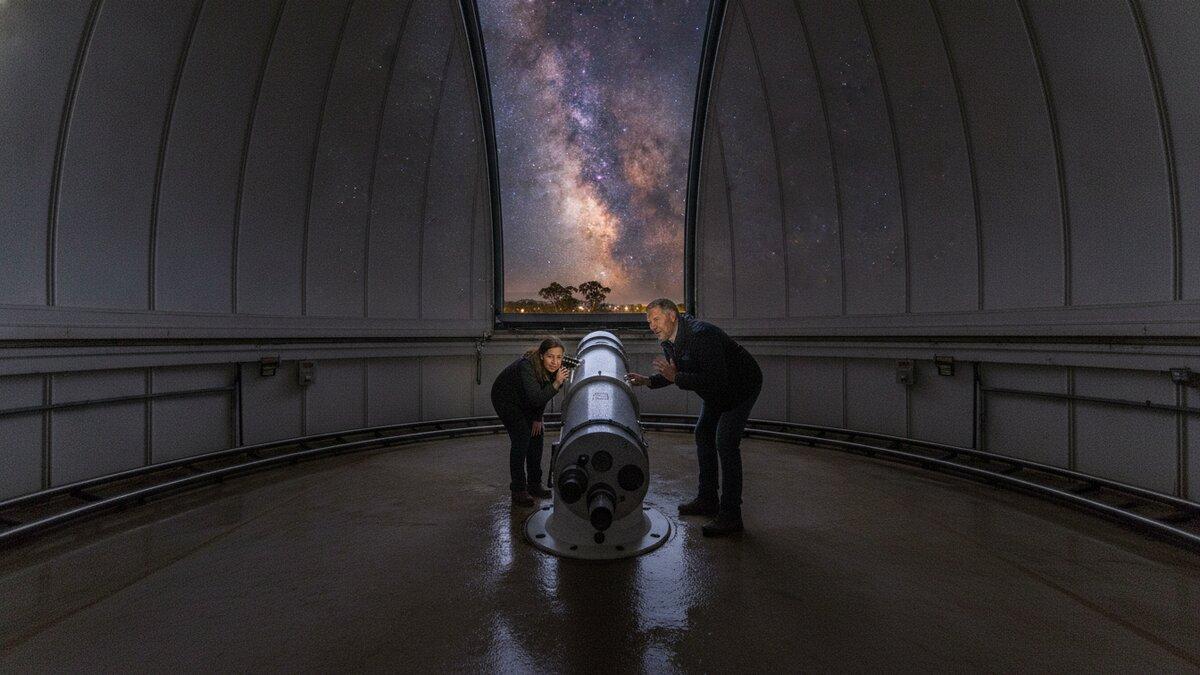
University of Sydney researchers have found evidence that a galactic shock challenges the conventional map of the Milky Way. Their study suggests that part of the Norma arm may instead be a star-forming shock front along the galaxy’s central bar.
The finding could change how astronomers understand where stars form in the Milky Way. It also raises questions about the galaxy’s spiral structure, according to the study published in Nature Astronomy.
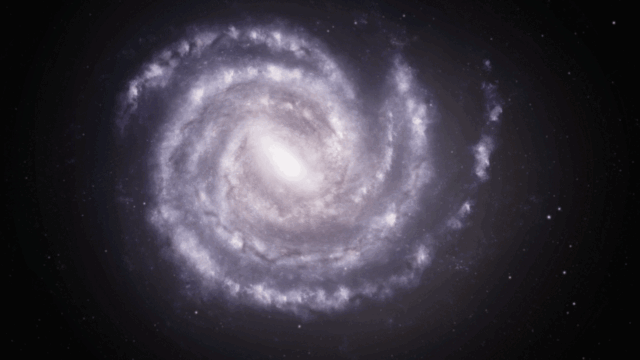
The Milky Way is a barred spiral galaxy. Its central bar is an elongated concentration of stars that rotates and exerts gravitational forces on surrounding gas.
Those forces create shock fronts that compress clouds of gas. In this case, the compression appears to create conditions for stars to form on a large scale.
Star formation along the bar
In many nearby barred galaxies, star formation is often suppressed along bar shock fronts, even where gas is plentiful. The researchers say the Milky Way may be different, though a small number of other observed galaxies also show significant star formation along these fronts.
Lead author Dr. Hillary Davis recently completed her doctorate at the University of Sydney’s School of Physics and Sydney Institute for Astronomy.
“In most similar galaxies, star formation very commonly occurs along spiral arms,” Davis said. “What’s extraordinary is seeing this happen in a different region of our galaxy, where shocks are usually so strong that star formation is often suppressed.”
The team compared computer simulations of galaxies evolving over billions of years with observations of masers. These are natural sources of concentrated microwave emissions associated with regions where massive stars form.
“We found that masers previously associated with the Norma arm closely align with the shock front predicted by our simulations,” Davis said.
The Norma arm takes its name from the constellation Norma, where it appears relative to Earth. The researchers say at least part of the feature may instead lie along the leading edge of the galactic bar.
A longer, slower central bar
The researchers estimate that the bar extends approximately 4.3 kiloparsecs, or about 14,000 light-years, from the galactic center along its long axis. Their findings support a relatively long, slowly rotating structure.
The size, orientation and rotation of the bar have been debated for decades. Dust and Earth’s position within the galaxy make the structure difficult to observe directly, Davis said.
“Our findings place further constraints on the size, angle and rotation speed of this central bar,” Davis said.
Davis said the findings raise questions about the Milky Way’s spiral structure and bar region that need further investigation.
 Take the quizWhat Kind of Holiday Spender Are You? Take the Black Friday QuizStart →
- 1Stock Market Today: Dow Slides 1.34% and VIX Jumps 15% at Midday

- 2Joachim Klement to Sell Stocks After S&P 500 Signal

- 3Stock Market Today: Nasdaq, S&P 500 Futures Slide as AI Selloff Deepens

- 4Kenneth Walker’s Groin Injury Puts Cardinals Game in Doubt

- 5Pat Cummins Faces Captaincy Doubts From Mitchell Johnson

 Markets · FintechHow to Calculate Compound Interest: Formula, Examples and the Rule of 72
 Lifestyle · Food & HealthNormal Blood Pressure Chart by Age: Healthy Ranges Explained
 Lifestyle · Food & HealthWhat Is Raynaud’s Syndrome? Why Fingers Turn White in the Cold
 Lifestyle · Food & Health4 Ways Walking After Meals Helps Your Body, Doctors Say