Chip Stocks Post Worst Week Since 2001 as Nasdaq Slides
Chip stocks suffered their worst week since the aftermath of the 2001 attacks, while a broader sell-off left the Nasdaq 100 near a bear market. The PHLX Semiconductor Index fell about 17% for the week, and Nvidia has lost about $2.7 trillion in market value since its October peak.
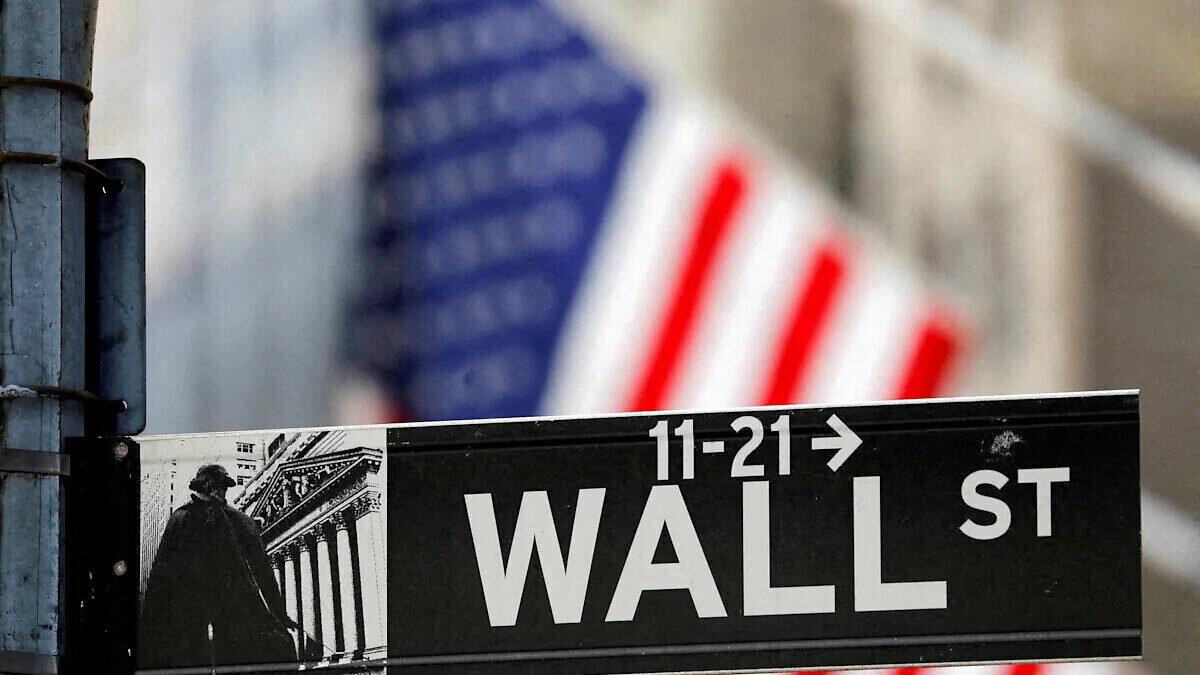
Chip stocks suffered their worst week since the aftermath of the 2001 attacks as a Wall Street sell-off pushed the Nasdaq 100 close to a bear market. The PHLX Semiconductor Index fell about 17% for the week, hitting technology shares across the US market.
The Nasdaq Composite fell more than 5% in the final session of the week, erasing its gain for 2026. The S&P 500 dropped nearly 4% and lost about $2.4 trillion in market value that day.
The Nasdaq 100 finished just short of a bear market, defined as a 20% decline from a record closing high. The S&P 500 closed in a correction, 10% below its October 6 record, for the first time since April 2025.
Chip shares lead the losses
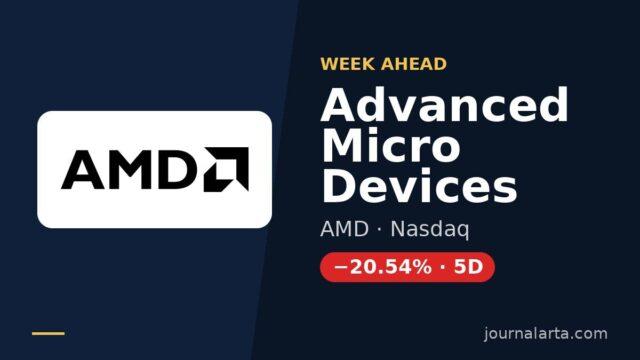
Broadcom, Micron and AMD each fell about 12% to 14% in the final session of the week. The PHLX Semiconductor Index has lost a third of its value since September 30.
Nvidia has lost about $2.7 trillion in market value since its October 6 peak. Its shares fell despite revenue more than doubling in its first report since Jensen Huang's exit.
Anthropic shares also fell after the company completed what was described as the biggest initial public offering ever.
The semiconductor index was on track for its worst two months since late 2008. The Nasdaq 100 and the tech sector were on the same track.
Declines reach the broader market
The S&P 500 fell every day during the week, with four declines of 1% or more. Bespoke Investment Group said that pattern had occurred only five other times since World War II.
The previous instances were in 1962, 1974, 1978, the week after the 2001 attacks and October 2008. The S&P 500 has lost about $8 trillion in market value since its record, nearly $6 trillion of it during the week.
The losses have not hit all stocks equally. An equal-weight version of the S&P 500, which gives each stock the same weight, was about flat since September 30.
Walmart and Costco shares rose in the final session. A Goldman Sachs version of the S&P 500 that excludes artificial intelligence stocks was only about 5% below its record, Jim Bianco noted.
Matt Orton, chief market strategist at Raymond James Investment Management, rejected a comparison with 2000. “The fundamentals are so diametrically different from where we were in 2000,” he said.
BTIG's Jonathan Krinsky cautioned against calling a market bottom while half of S&P 500 stocks remained above their 50-day moving averages, a short-term measure of market trends.
 Take the quizWhat Kind of Holiday Spender Are You? Take the Black Friday QuizStart →
- 1Stock Market Today: Dow Slides 1.34% and VIX Jumps 15% at Midday

- 2Joachim Klement to Sell Stocks After S&P 500 Signal

- 3Stock Market Today: Nasdaq, S&P 500 Futures Slide as AI Selloff Deepens
- 4Kenneth Walker’s Groin Injury Puts Cardinals Game in Doubt
- 5Pat Cummins Faces Captaincy Doubts From Mitchell Johnson

 Markets · FintechHow to Calculate Compound Interest: Formula, Examples and the Rule of 72
 Lifestyle · Food & HealthNormal Blood Pressure Chart by Age: Healthy Ranges Explained
 Lifestyle · Food & HealthWhat Is Raynaud’s Syndrome? Why Fingers Turn White in the Cold
 Lifestyle · Food & Health4 Ways Walking After Meals Helps Your Body, Doctors Say