Nasdaq Drops 10% in Worst Market Week Since April 2025
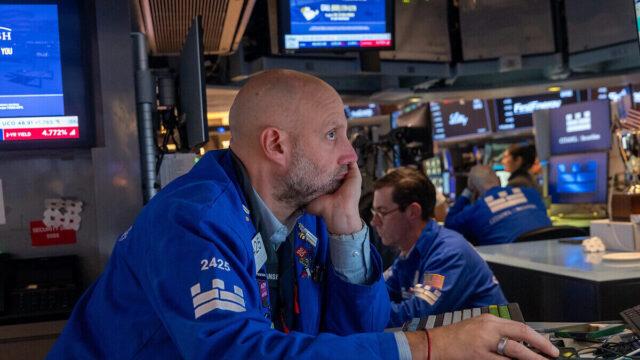
The Nasdaq Composite fell 10% for the week as technology shares led a broad sell-off. The S&P 500 lost 8.6% and the Dow dropped 8%, marking the major indexes’ worst weekly performance since the first week of April 2025.

The Nasdaq Composite fell 10% for the week as a declining stock market posted its worst weekly performance since the first week of April 2025. The S&P 500 lost 8.6% and the Dow Jones Industrial Average fell 8%, as concerns about artificial intelligence stocks spread across US markets.
Technology shares led the sell-off.
In the latest session, the Nasdaq dropped 5.2%, or more than 1,200 points. It was the index’s second-largest one-day points decline on record.
The S&P 500 fell 3.7%, its seventh straight session of losses. The Dow dropped 1.9%, or more than 900 points.
The Nasdaq was down nearly 3% for the year after the session. The S&P 500 and Dow remained up less than 1%.
Both the S&P 500 and the Dow entered correction territory, meaning they had fallen more than 10% from recent highs. The Nasdaq had already been in a correction for several weeks.
Chip Stocks Lead the Decline
Nvidia shares fell 14%, leading the Dow’s decliners. The chipmaker’s stock has lost one-third of its value over the past two weeks as investors assessed Jensen Huang’s departure as chief executive.
Advanced Micro Devices fell 13%. Broadcom, Marvell Technology and Micron each posted double-digit declines.
Memory device makers also fell. SanDisk dropped 16%, while Seagate and Western Digital each lost 12%. Nvidia-backed Coherent and Nebius declined 13% and 16%, respectively.
Anthropic shares fell nearly 9% to around $89, despite the artificial intelligence company’s record initial public offering. The shares debuted at $111.50, above the $83 offering price, before closing their first session at around $97.
Meta Platforms fell 6%, Tesla lost 8% and SpaceX declined 8%. Amazon, Apple and Microsoft also fell sharply.
Investors Weigh Market Risks
Courtney Garcia, senior wealth advisor at Payne Capital Management, described the sell-off as a pullback in a longer-term bull market rather than the start of a recession. She pointed to positive underlying economic data and gains in consumer staples and health care for the year.
A separate market analyst warned of significant volatility over the next 12 months or longer. The analyst cited high valuations, weak earnings surprises, rising consumer delinquencies and inflationary pressures.
The Cboe Volatility Index, a measure of expected market volatility, rose 26% to near 36. That was its highest level since the tariff turmoil of April 2025.
Elsewhere, bitcoin traded at $59,000, its lowest level since June. Gold futures fell 4% to $3,540 an ounce, while WTI oil futures rose 1.1% to $84.10 per barrel.
The 10-year Treasury yield was 4.94%, down from 5.05% at the previous close.
 Take the quizWhat Kind of Holiday Spender Are You? Take the Black Friday QuizStart →
- 1Stock Market Today: Dow Slides 1.34% and VIX Jumps 15% at Midday

- 2Joachim Klement to Sell Stocks After S&P 500 Signal

- 3Stock Market Today: Nasdaq, S&P 500 Futures Slide as AI Selloff Deepens
- 4Kenneth Walker’s Groin Injury Puts Cardinals Game in Doubt

- 5Pat Cummins Faces Captaincy Doubts From Mitchell Johnson

 Markets · FintechHow to Calculate Compound Interest: Formula, Examples and the Rule of 72
 Lifestyle · Food & HealthNormal Blood Pressure Chart by Age: Healthy Ranges Explained
 Lifestyle · Food & HealthWhat Is Raynaud’s Syndrome? Why Fingers Turn White in the Cold
 Lifestyle · Food & Health4 Ways Walking After Meals Helps Your Body, Doctors Say