Australian Doctors Urge Health Review of Salmon Antibiotic
Australia’s doctors’ association wants regulators to assess human health and environmental risks before approving another emergency permit for an antibiotic used in Tasmanian salmon farms. A previous permit was revoked after traces appeared in wild fish, while the industry says it uses antibiotics only to treat diagnosed disease.
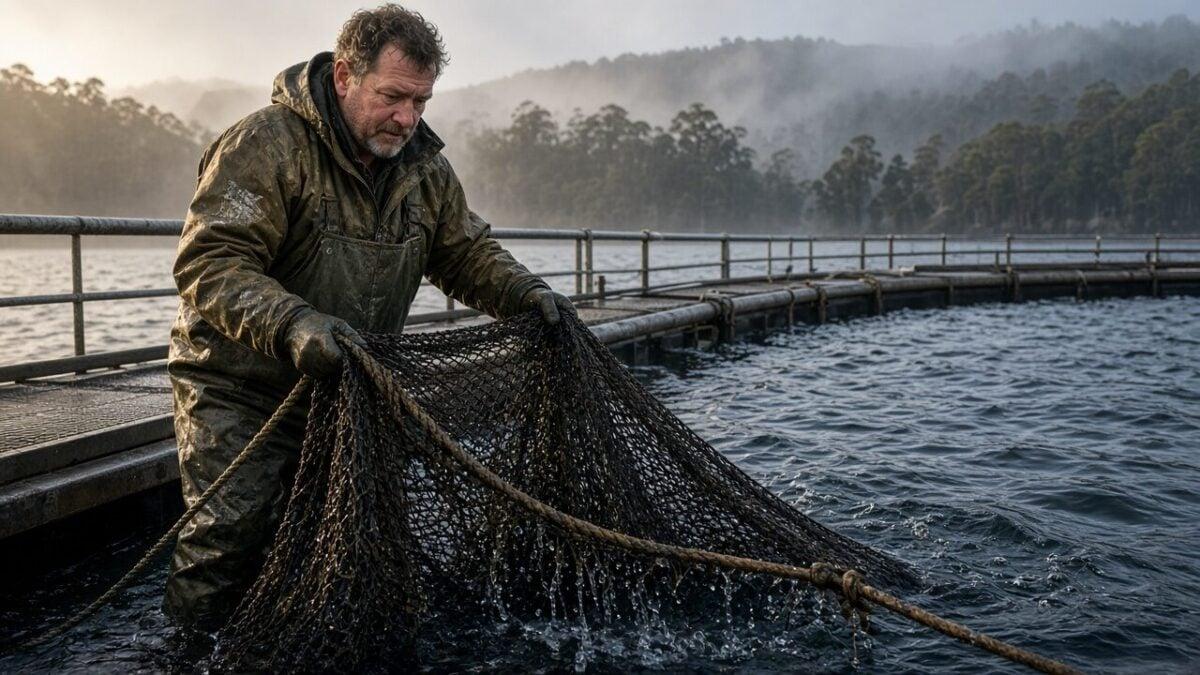
Australia’s doctors’ association says human health must be factored into a decision on antibiotic use in Tasmanian salmon farms. The request concerns antimicrobial resistance, a global health threat that can make infections harder to treat.
A decision is expected soon. Salmon Tasmania has applied for another emergency permit to use florfenicol against bacterial disease in farmed salmon.
The Australian Medical Association (AMA) urged the Australian Pesticides and Veterinary Medicines Authority (APVMA) to conduct a full assessment. The doctors’ group also called for independent environmental and human health risk evaluations to be made public.
In its submission, the AMA said: “Our concern is that the consequences for human health, the environment and market access are being underestimated, and that health and trade cannot be separated.”
Earlier permit revoked over wildlife risks
The regulator revoked an earlier emergency permit in March after identifying an unacceptable risk of residue exposure to non-target species. Traces had been detected in wild fish up to 10 kilometers from the nearest salmon pen where the drug was used.
Florfenicol was later found in abalone up to 14 kilometers away. The earlier permit followed a bacterial disease outbreak that killed 15,000 tonnes of salmon in early 2025 and left fish chunks on beaches.
The previous permit allowed 10 to 20 milligrams per kilogram of fish per day for 10 consecutive days, with no re-treatment. Salmon Tasmania’s new application seeks the same dose rates and treatment frequency.
Public submissions on the application closed on Monday, November 16. The regulator is also considering a separate minor-use permit application from florfenicol manufacturer Abbey Labs.
A Senate estimates hearing in October heard that Abbey Labs sought higher dose rates in the south-eastern and eastern biosecurity zones.
Doctors and industry outline risks
The AMA said medicated feed cannot be contained within salmon pens and antibiotic exposure in the water favors resistant bacteria. It said workers, fishers and coastal communities may be exposed to resistant organisms.
The group wants the assessment to examine possible exposure through water, seafood and occupational contact. It also called for an evaluation of the cumulative effects of repeated, large-scale use on wild species and people.
The AMA said it was not suggesting that the proposed use would inevitably produce unacceptable resistance. It also said it was not suggesting that importing countries currently require testing for resistance genes.
Salmon Tasmania chief executive John Whittington said farmers agreed that antimicrobial resistance was a serious global health issue. He said vaccination and selective breeding were the industry’s first line of defense.
“Antibiotics are used only to treat diagnosed disease, under veterinary prescription, consistent with growers’ legal duty to care for their animals,” Whittington said. He added that Tasmanian salmon farming did not routinely or preventatively use antibiotics.
The Tasmanian Health Department has said there are no reports of adverse human health effects from eating seafood containing florfenicol residues.
The Tasmanian Environment Department closed commercial rock lobster and commercial dive fisheries in parts of the state’s southeast for three months. The closures were designed to reduce international trade risks linked to the use of a different antibiotic, oxytetracycline, on salmon farms.
 Take the quizWhat Kind of Holiday Spender Are You? Take the Black Friday QuizStart →





 Markets · FintechHow to Calculate Compound Interest: Formula, Examples and the Rule of 72
 Lifestyle · Food & HealthNormal Blood Pressure Chart by Age: Healthy Ranges Explained
 Lifestyle · Food & HealthWhat Is Raynaud’s Syndrome? Why Fingers Turn White in the Cold
 Lifestyle · Food & Health4 Ways Walking After Meals Helps Your Body, Doctors Say