BepiColombo Sets Course for Mercury Orbit After Eight Years
The European-Japanese BepiColombo mission was scheduled to enter Mercury’s orbit on November 21, more than eight years after launch. Its two spacecraft are due to separate in December and begin scientific observations in April 2027, after a series of maneuvers to reach their final orbits.
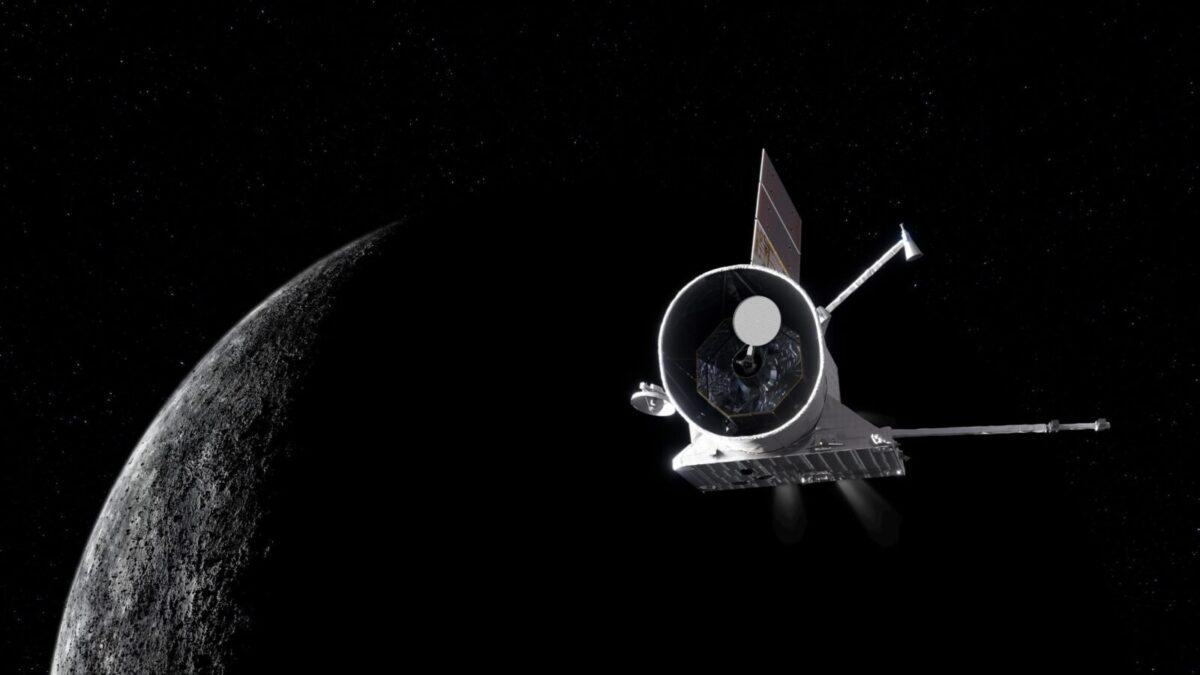
The European-Japanese BepiColombo mission was scheduled to enter orbit around Mercury on November 21, more than eight years after leaving Earth. Its two spacecraft are set to study the planet from different orbits after separating in December.
The arrival maneuver was scheduled to begin at 1:24 p.m. EST and last 37 minutes. It required an engine burn to place the spacecraft in orbit.
BepiColombo is a joint mission of the European Space Agency (ESA) and the Japanese Aerospace Exploration Agency (JAXA). ESA built the Mercury Planetary Orbiter, while JAXA built the Mercury Magnetospheric Orbiter, also known as Mio.
The orbiters launched with the Mercury Transfer Module, which provided power and propulsion. An Ariane 5 rocket carried the mission from French Guiana in October 2018.
A long route to Mercury
BepiColombo’s route included one flyby of Earth, two of Venus and six of Mercury over roughly seven years. A solar panel problem reduced power for the transfer module’s electric thrusters, extending the journey by a year.
Mercury is difficult to reach because the sun’s gravity accelerates approaching spacecraft. A probe must lose considerable energy for the planet’s weaker gravity to capture it.
The transfer module released the two orbiters on September 3, beginning an arrival phase expected to take about six months. The orbiters remained connected and were expected to separate around December 9.
Two orbits, different observations
Mio is expected to settle into a highly elliptical orbit over Mercury’s poles shortly after separation. The European orbiter will use a less elliptical polar orbit, reaching it on March 10, 2027, after a series of engine burns.
Scientific work is scheduled to begin on April 6, 2027. The two spacecraft will gather complementary data from their different positions.
ESA officials said the mission would study Mercury’s internal structure, large iron core and magnetic field, as well as its magnetosphere and its interaction with the solar wind.
“The data will enable scientists to understand more about the origin and evolution of a planet located close to its parent star, and a better understanding of the overall evolution of our solar system,” the officials said.
 Take the quizWhat Kind of Holiday Spender Are You? Take the Black Friday QuizStart →




 Markets · FintechHow to Calculate Compound Interest: Formula, Examples and the Rule of 72
 Lifestyle · Food & HealthNormal Blood Pressure Chart by Age: Healthy Ranges Explained
 Lifestyle · Food & HealthWhat Is Raynaud’s Syndrome? Why Fingers Turn White in the Cold
 Lifestyle · Food & Health4 Ways Walking After Meals Helps Your Body, Doctors Say