Chris Bowen Faces Climate Talks Deadlock in Turkey
Climate talks in Antalya have run past their deadline as countries dispute fossil fuel emissions, finance and carbon capture. Australian minister Chris Bowen is also pushing an electrification target that has drawn objections from some negotiating countries.
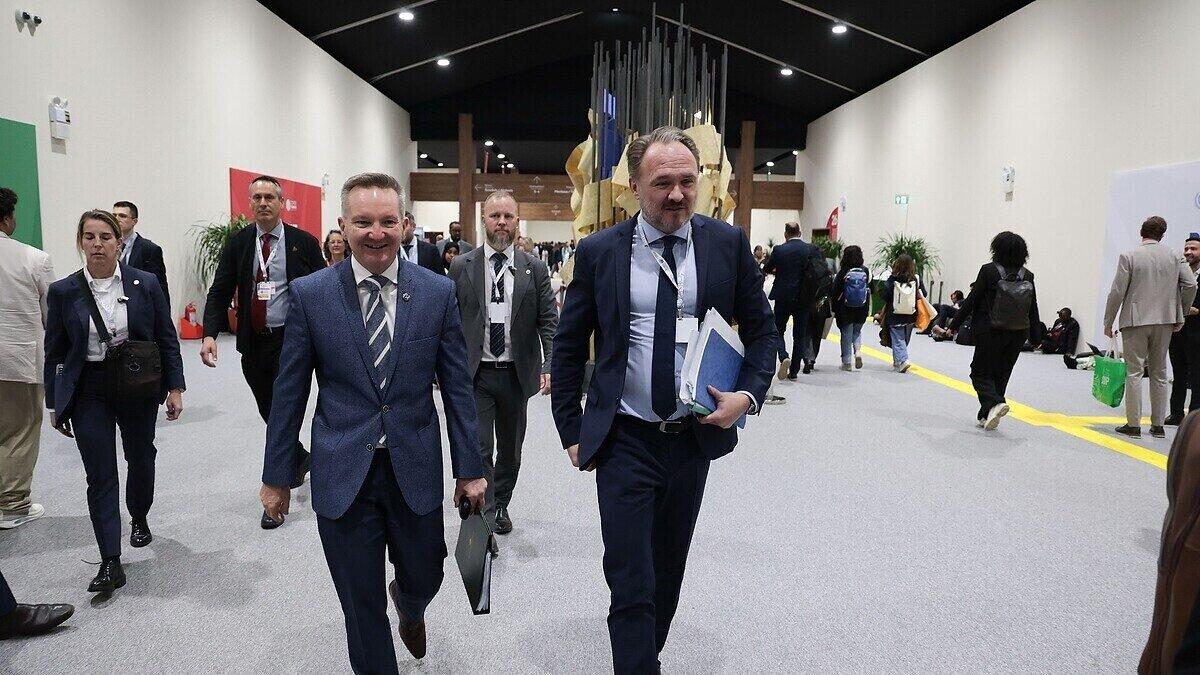
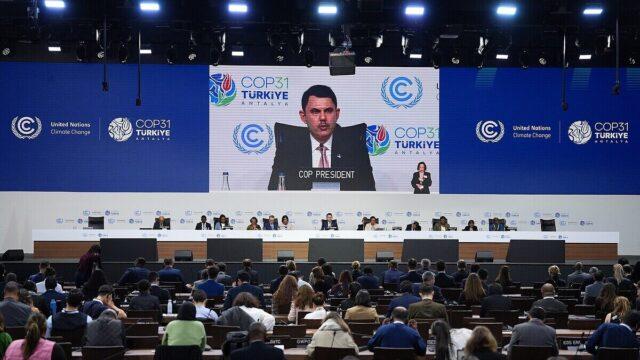
Australian Climate Change and Energy Minister Chris Bowen faces deadlocked climate talks in Antalya, Turkey, as countries dispute fossil fuel emissions and financial support. Negotiators are expected to resume discussions after the summit ran past its planned deadline.
The outcome matters for countries seeking agreement on how to reduce emissions and help vulnerable economies cope with warming. The talks require consensus among the almost 200 signatories of the Paris Accord.
Fossil fuel language divides nations
Small island nations vulnerable to climate change, including countries in the Pacific, want the final agreement to refer specifically to reducing fossil fuel emissions. Saudi Arabia has led oil-producing nations opposing that position, with support from Russia and some developing countries.
Some countries in the same bloc have also objected to an agreement championed by Bowen. It would commit the world to making 35 percent of its energy use electric by 2035.
“Electrification is the key to transitioning away from fossil fuels,” Bowen said at a summit press conference.
France and Panama are leading representatives from a group of countries demanding more ambitious climate action. The group also includes Belgium, Côte d’Ivoire, Finland, Greece, Guatemala, Spain, Sweden and Vanuatu.
Finance and carbon capture disputed
Countries are also divided over climate finance. Developing nations want financial help to protect their economies from the effects of warming they did not cause, while developed nations want to keep the focus on cutting emissions.
European Union Climate Commissioner Wopke Hoekstra said demands for increased finance pledges from developing nations hit by climate disasters were “dead in the water” before the talks began.
Donor nations argue that some countries considered poor when the first climate agreements were made have since become wealthier. They say those countries should no longer receive support.
A separate dispute concerns whether the final decision should refer to carbon capture and storage. Some argue that including the technology now could be used to justify not pursuing emissions cuts.
UN scientific assessments say stabilizing the climate will require removing carbon pollution from the atmosphere when technology becomes available at scale later in the century.
Bowen's negotiating strategy questioned
Some participants have questioned Bowen’s decision to allow ambitious claims into an early draft and his insistence on a final decision. Climate analyst Bill Hare, director of the nonprofit Climate Analytics, defended Bowen’s approach.
Activists have also criticized Bowen and Turkish Environment Minister Murat Kurum over the summit’s failure to secure support for ambitious action. Mohamed Adow, head of Power Shift Africa, called it “the worst COP ever.”
If countries cannot resolve the standoff, UN rules permit the talks to be suspended until next year. Climate negotiations have been suspended without an outcome once before, when Kyoto Protocol talks collapsed in 2000.
 Take the quizWhat Kind of Holiday Spender Are You? Take the Black Friday QuizStart →




 Markets · FintechHow to Calculate Compound Interest: Formula, Examples and the Rule of 72
 Lifestyle · Food & HealthNormal Blood Pressure Chart by Age: Healthy Ranges Explained
 Lifestyle · Food & HealthWhat Is Raynaud’s Syndrome? Why Fingers Turn White in the Cold
 Lifestyle · Food & Health4 Ways Walking After Meals Helps Your Body, Doctors Say