COP31 Nears Climate Deal After Fossil Fuel Dispute
COP31 President Murat Kurum says a new negotiating text could secure agreement among nearly 200 delegations in Antalya, Turkey. The proposal follows disputes over fossil fuels and financial help for developing countries, with a session scheduled to begin approving the deal.
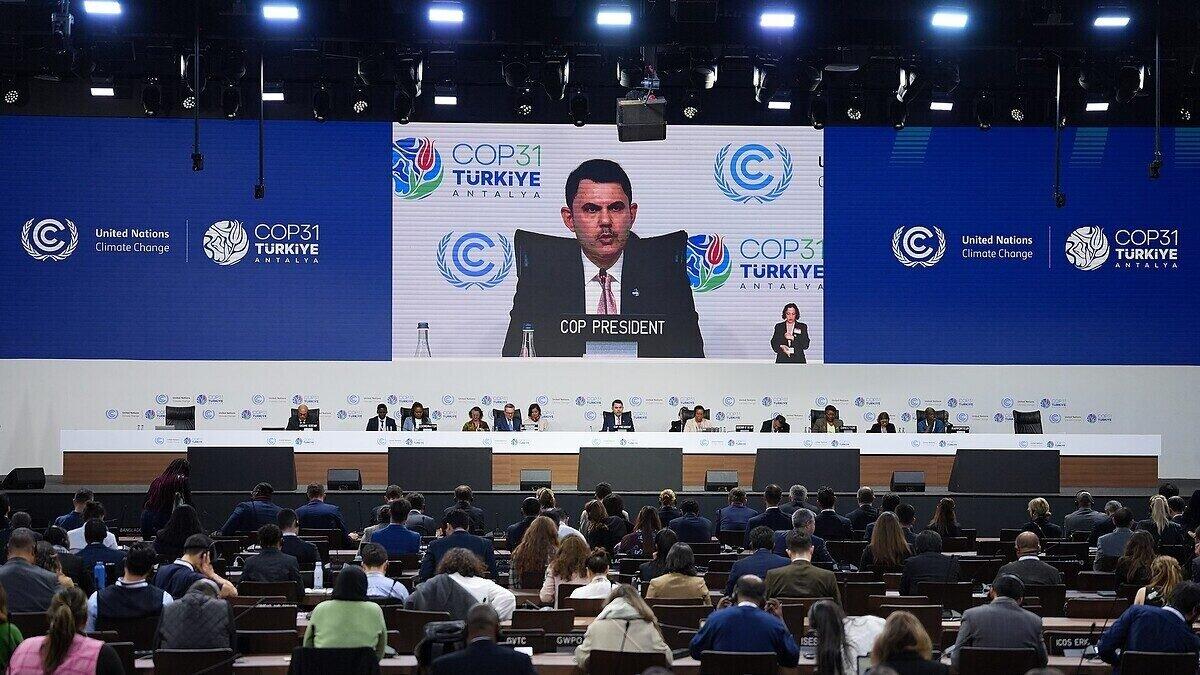
COP31 climate talks in Antalya, Turkey, have moved closer to a deal after Australia and Turkey presented a new negotiating text. COP31 President Murat Kurum said he believed all parties could agree, following disputes over fossil fuels and funding for developing countries.
“We believe that we have put forward a text which all the parties can agree upon,” Kurum, Turkey’s environment minister, told a late-night session.
The talks ran beyond their deadline as negotiators sought an agreement among nearly 200 delegations. Climate negotiations require consensus, giving individual countries the ability to block an outcome.
Delegations had until 3 a.m. Irish time to raise objections to the new text. A session was scheduled for 6 a.m. Irish time to begin approving it.
Fossil fuel language divided countries
The new package revised an earlier draft that drew criticism for omitting any reference to ending fossil fuel use. Kurum said he believed concerns about fossil fuels had been addressed.
Australia is leading the negotiations, with support from host Turkey. The countries have sought to balance the needs of climate-vulnerable nations with those dependent on producing or consuming fossil fuels.
An opening draft called for a faster phaseout of fossil fuels. A later version removed all mentions of them after objections from Saudi Arabia and other major oil and gas producers.
France and Panama were among countries that signed a letter demanding “a clear transition away from fossil fuels.” Panama also threatened to leave the talks.
Panama’s environment minister, Juan Carlos Navarro, told a news conference that a deal without any mention of fossil fuels was unacceptable. The European Union warned that the revised draft risked turning the conference into a fossil summit.
Climate finance remains a concern
Kurum said the new text also addressed concerns about financing for developing countries adapting to climate change. An earlier version had dropped a $120 billion target for adaptation funding.
Developing countries have criticized wealthy nations for falling short on climate finance. Ghana’s environment minister, Zanetor Agyeman-Rawlings, said: “We didn’t come here to beg.”
The revised draft also proposed raising electricity’s share of final global energy consumption to 35 percent by 2035. It did not require that electricity to come from renewable sources.
The talks took place after a UN environmental report found global warming was set to exceed 1.5 degrees Celsius, a threshold countries agreed to try not to pass. Kurum said the conference would reconvene to approve the deal.
 Take the quizWhat Kind of Holiday Spender Are You? Take the Black Friday QuizStart →




 Markets · FintechHow to Calculate Compound Interest: Formula, Examples and the Rule of 72
 Lifestyle · Food & HealthNormal Blood Pressure Chart by Age: Healthy Ranges Explained
 Lifestyle · Food & HealthWhat Is Raynaud’s Syndrome? Why Fingers Turn White in the Cold
 Lifestyle · Food & Health4 Ways Walking After Meals Helps Your Body, Doctors Say