Europe Faces Election Cycle That Could Test EU Unity
Spain’s November 29 election opens a sequence of national votes across Europe that could reshape the European Union’s leadership. Elections in France, Poland and Italy will follow, with analysts warning that gains by nationalist parties could complicate decisions on Ukraine, enlargement and the EU budget.
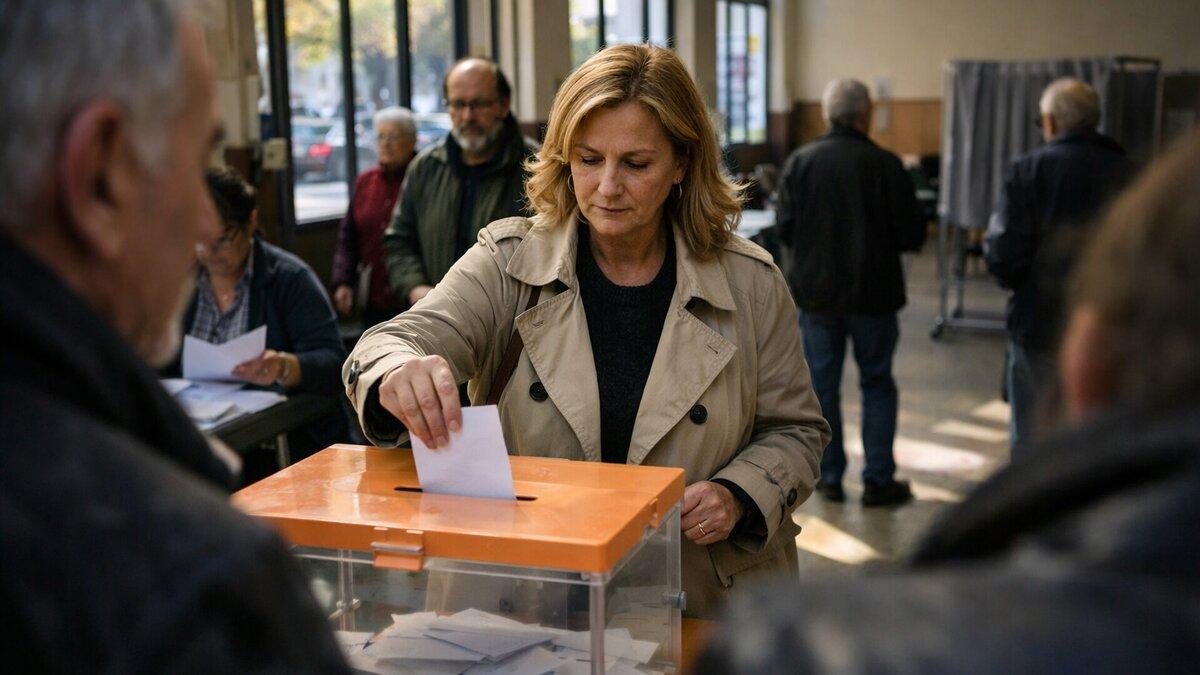
Voters in four of the European Union’s five largest member states face national elections in a cycle that could test the bloc’s ability to act collectively, analysts say. Spain votes on November 29, followed by France, Poland and Italy.
Parliamentary elections are also due in Estonia, Finland, Greece and Slovakia, alongside regional ballots in Germany. The sequence runs through the end of next year.
In Spain, Prime Minister Pedro Sánchez’s socialist coalition faces a probable defeat to the conservative People’s Party and far-right Vox. The two parties already govern together in some Spanish regions.
France holds presidential and parliamentary elections in the spring. Marine Le Pen of the far-right National Rally leads the presidential race, ahead of far-left candidate Jean-Luc Mélenchon and a divided mainstream opposition.
In Poland, nationalist parties could unseat Prime Minister Donald Tusk’s liberal coalition despite recent splits. Together, the parties command nearly half the national vote.
Italian Prime Minister Giorgia Meloni hopes to secure a second term in elections due before the end of 2027. Her Brothers of Italy party has far-right roots and faces pressure from the National Future party.
Italian political scientist Natalie Tocci said the electoral cycle could “dramatically change the face of Europe.”
The potential shift comes alongside strong support for EU membership. A record 74% of Europeans say their country benefits from belonging to the bloc, and few Eurosceptic parties now advocate leaving it outright.
Nationalist and Eurosceptic parties instead seek a looser association of sovereign states. Analysts link their support to sluggish growth, aging populations, strained public finances and rising living costs.
Nearly one in four voters now backs far-right parties, a share that has grown almost fivefold since the mid-1990s. Recent results have varied: Geert Wilders’s Freedom Party lost nearly a third of its seats in the Netherlands, and Viktor Orbán’s Fidesz was defeated in Hungary.
At the European Council, which brings together national leaders, only three of the 27 heads of government are from the center-left. Analysts warn that a larger Eurosceptic bloc could obstruct budget talks, enlargement, Ukraine aid and closer cooperation on defense, energy, finance and technology.
Le Pen’s platform calls for cutting France’s EU budget contribution by €11bn and holding a constitutional referendum to assert the supremacy of French law over European law.
Mujtaba Rahman of the Eurasia Group consultancy said France “carries very significant influence over the EU.”
Stefan Lehne of the Carnegie Europe think tank said the elections could be “key tests of the EU’s resilience.” A stronger radical right could “prevent it from becoming what it needs to be to deal with the challenges of the future,” he said.
 Take the quizWhat Kind of Holiday Spender Are You? Take the Black Friday QuizStart →





 Markets · FintechHow to Calculate Compound Interest: Formula, Examples and the Rule of 72
 Lifestyle · Food & HealthNormal Blood Pressure Chart by Age: Healthy Ranges Explained
 Lifestyle · Food & HealthWhat Is Raynaud’s Syndrome? Why Fingers Turn White in the Cold
 Lifestyle · Food & Health4 Ways Walking After Meals Helps Your Body, Doctors Say