Monash Scientist Proposes Expanding the Human Family Tree
A Monash University researcher proposes placing Australopithecus and Paranthropus in the same genus as modern humans. The study argues that fossil discoveries have weakened the traits traditionally used to separate the groups, though the proposed classification has not been officially adopted.
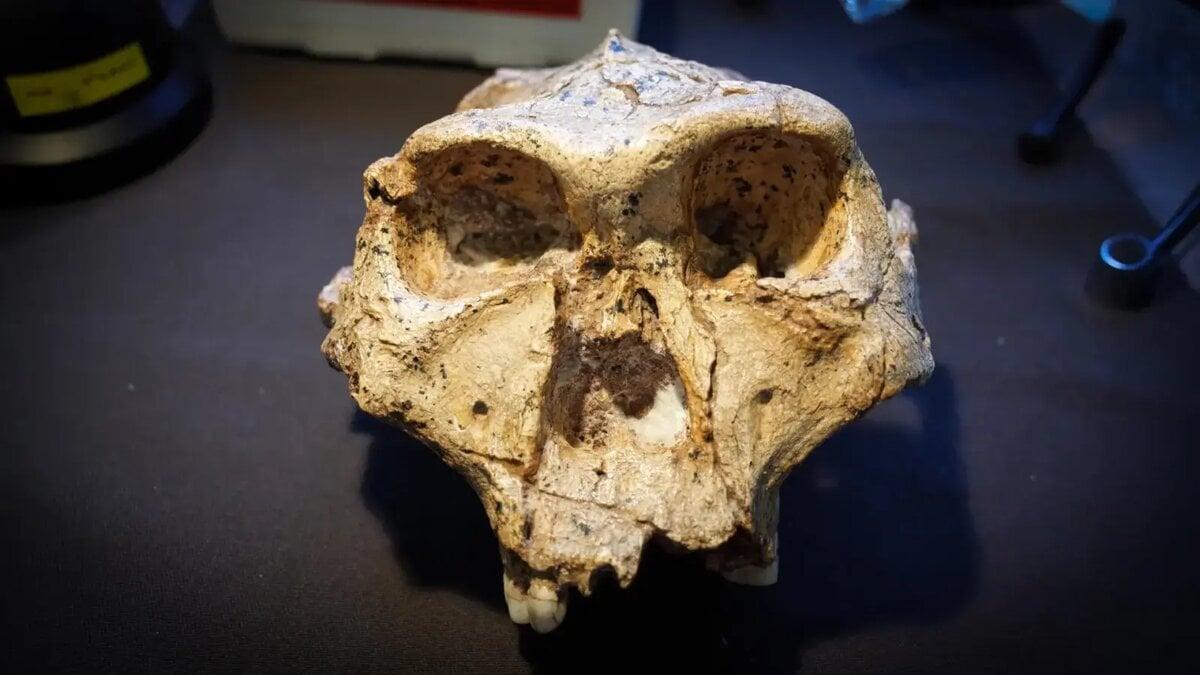
A Monash University scientist wants to redraw the human family tree by placing ancient relatives in the same genus as modern humans. The proposal would include groups currently classified as Australopithecus and Paranthropus, covering closely related fossils from the past 4 to 5 million years.
The change is a proposal, not an adopted classification. It would change how scientists group species, rather than suggest that those ancient relatives were identical to people today.
Ian Towle, a research fellow at the Monash Biomedicine Discovery Institute, published the study in the American Journal of Biological Anthropology. He argues that traditional boundaries between the groups have become harder to defend as fossil evidence has grown.
Fossils challenge old distinctions
Scientists have traditionally used features such as brain size, anatomy and tool use to distinguish Homo from other ancient human relatives. Recent discoveries have complicated those distinctions, including fossils of Homo species with relatively small brains.
Evidence also suggests that species classified as Australopithecus and Paranthropus likely had more complex behaviors than researchers once assumed. Traits once considered exclusive to Homo may have appeared across several groups.
Towle said, “Recent fossil discoveries and advances in evolutionary and genetic analysis make this an ideal time to reconsider whether our traditional taxonomy still accurately reflects human evolution.”
Fossils show a branching family tree, with species that overlapped in time. Their evolutionary relationships are still being studied, and discoveries can make existing classifications harder to maintain.
One genus, distinct species
Towle proposes expanding Homo to include Australopithecus and Paranthropus while preserving distinctions between individual species. A genus is a classification level above species: modern humans are Homo sapiens, with Homo as the genus and sapiens as the species name.
Taxonomy is the system scientists use to name organisms and group them by their characteristics and evolutionary relationships. Over the past 50 years, researchers have increasingly sought to organize species by ancestry rather than physical similarities alone.
One grouping used in that approach is a clade: a common ancestor and all its descendants. Towle argues that the classification of human evolutionary relatives has been slower to apply that principle consistently.
A broader Homo genus could accommodate differences among fossil relatives without repeatedly moving particular groups between genera, Towle argues. It would still recognize that ancient species differed in appearance, anatomy and behavior.
“The more we learn about our ancestors and close fossil relatives, the more we realize how complex and non-linear our family tree is,” Towle said.
 Take the quizWhat Kind of Holiday Spender Are You? Take the Black Friday QuizStart →




 Markets · FintechHow to Calculate Compound Interest: Formula, Examples and the Rule of 72
 Lifestyle · Food & HealthNormal Blood Pressure Chart by Age: Healthy Ranges Explained
 Lifestyle · Food & HealthWhat Is Raynaud’s Syndrome? Why Fingers Turn White in the Cold
 Lifestyle · Food & Health4 Ways Walking After Meals Helps Your Body, Doctors Say