Voyager 1 Reaches One Light-Day Amid Data Outage
NASA’s Voyager 1 has reached a distance of one light-day from Earth, but the spacecraft has stopped sending science and engineering data. Its radio signal remains strong, and engineers are investigating an outage that began on November 14.
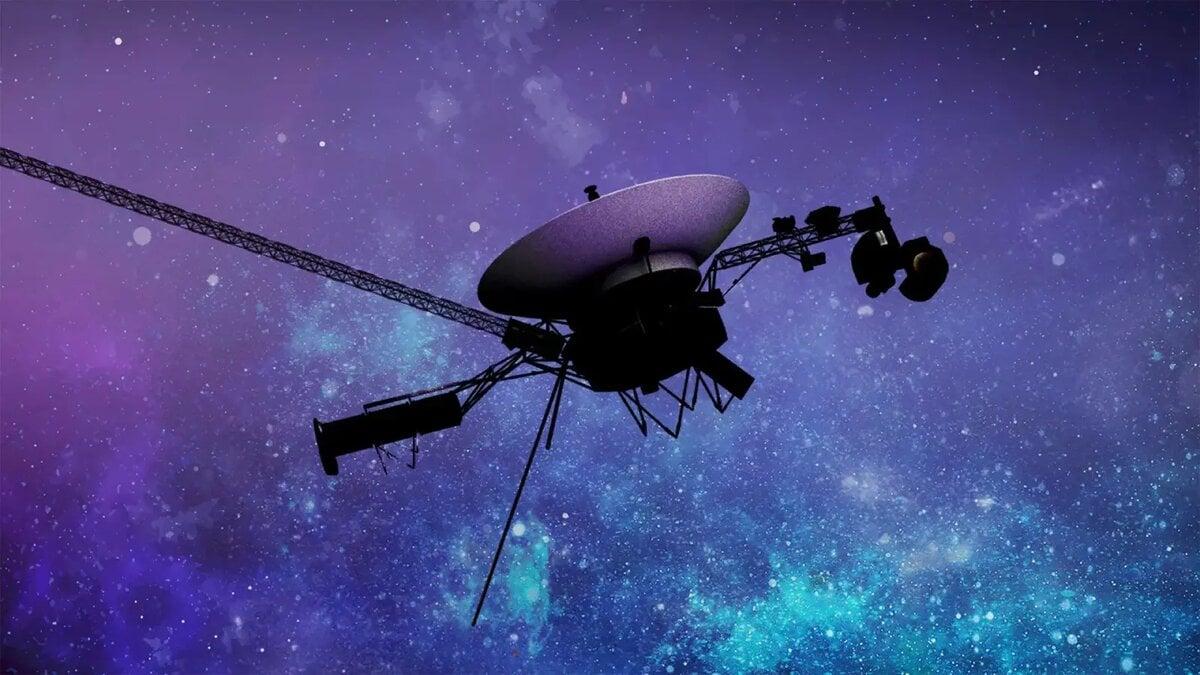
NASA’s Voyager 1 has reached one light-day from Earth, even as an outage prevents it from sending science and engineering data. The 49-year-old spacecraft crossed the milestone on November 18, about 16.1 billion miles away, NASA said.
Its radio signal is still strong. Engineers do not yet know why it carries no usable data.
Voyager 1 crossed the milestone at 5:16 a.m. ET. A ground antenna near Madrid received the signal at 5:16 a.m. ET on November 19, NASA said.
No other human-made object has traveled so far. A light-day is the distance light travels in a single day.
Engineers investigate the data outage
The outage began on November 14. Voyager 1’s steady radio signal shows that its antenna remains pointed at Earth, but it provides no information about the probe’s health or instrument readings.
The signal carries data in blocks called frames. Ground antennas must identify where each block starts before engineers can read it, a step known as frame synchronization.
Voyager project manager Suzanne Dodd said the team had encountered a similar problem before. “We do have a very strong carrier signal,” she said. “We currently don't have a frame sync, so we're not getting the science or engineering data currently.”
The signal indicates that the antenna, transmitter and computer keeping the spacecraft aimed at Earth still work. The problem is more likely in another onboard computer that gathers and packages data.
Finding the cause could take weeks or longer, NASA warned. Each command takes two days to produce an answer because of the distance.
In 2023, Voyager 1 also sent a carrier signal without data. Engineers traced that problem to an onboard computer, and NASA said the experience is guiding the current investigation.
The team is also checking whether the outage is connected to a loss of contact in October. Voyager 1 reconnected on its own after about 48 hours.
Power limits the aging probes
Voyager 1 has two operating science instruments: a magnetometer, which measures magnetic fields, and a plasma wave instrument. The latter detects waves in the thin, electrically charged gas of interstellar space.
Voyager 1 and its twin, Voyager 2, use generators that turn heat from decaying plutonium into electricity. Each probe loses about four watts a year, and engineers have shut off instruments to save power.
Engineers also switched off three devices on Voyager 1 and replaced them with lower-power alternatives that keep its fuel from freezing. The team expects the savings to keep the instruments running until at least the 50th launch anniversary.
Voyager 2 remains healthy, with three instruments working.
 Take the quizWhat Kind of Holiday Spender Are You? Take the Black Friday QuizStart →




 Markets · FintechHow to Calculate Compound Interest: Formula, Examples and the Rule of 72
 Lifestyle · Food & HealthNormal Blood Pressure Chart by Age: Healthy Ranges Explained
 Lifestyle · Food & HealthWhat Is Raynaud’s Syndrome? Why Fingers Turn White in the Cold
 Lifestyle · Food & Health4 Ways Walking After Meals Helps Your Body, Doctors Say