Norway Brings Back Textbooks and Plans Smart Glasses Ban
Norway is reversing course on classroom screens after a drop in reading and writing skills. The government is restoring printed textbooks, preparing limits on social media for under-16s and planning a temporary ban on camera-equipped smart glasses in some public places.
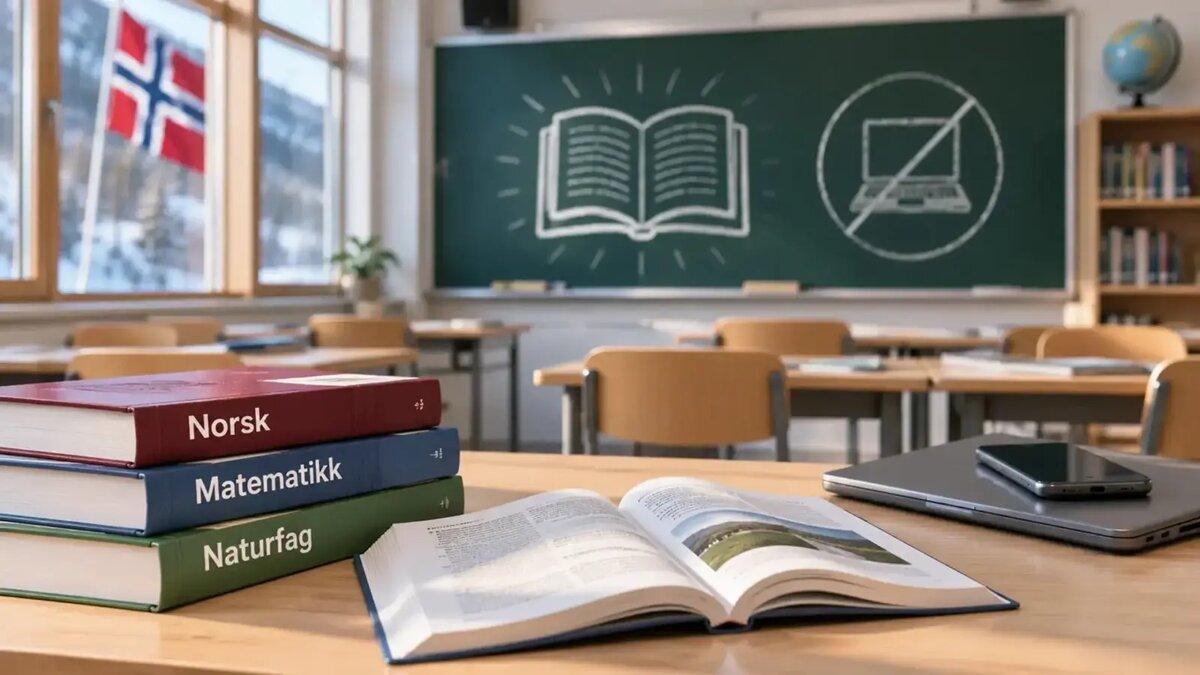
Norway is pulling back from years of heavy classroom technology and moving to restrict new devices, from tablets in schools to camera-equipped smart glasses in parks, beaches and schools. The government wants printed textbooks back in classrooms after a sharp decline in pupils' reading and writing skills.
The shift reaches beyond education. Authorities also plan limits on social media for children and a temporary ban on smart glasses in some public places, citing privacy risks.
Textbooks return to classrooms
Norway has pushed computers and tablets into classrooms for nearly 20 years, a trend reinforced during Covid. Since 2023, primary schools in Oslo were supposed to give every pupil a digital device.
Digitalisation Minister Torgeir Micaelsen said there is "reason to believe that the introduction of screens in schools happened too quickly, before we had sufficient knowledge about their effects."
The government is seeking to enshrine access to printed textbooks in law. It has also recommended regulating mobile phone use in schools and introducing artificial intelligence into the curriculum only gradually.
A Norwegian commission on screen use said in 2024 that students generally understand long texts better on paper.
A teacher's warning, then a policy U-turn
Three years ago, third grade teacher Pal Ludvig Finstad put tablets away for paper and pencils to help pupils struggling with reading and writing. He received a written warning from the school administration.
Oslo municipality has now dropped its requirement of one device per pupil in primary schools. Schools have more freedom to choose their teaching tools.
"The screen itself is not the problem," said primary school principal Silje Ween. "It's the way it's used, when the tool becomes more important than the content."
In the 2025 PISA survey, which measures the skills of 15-year-olds, Norwegian students scored below the OECD average in reading comprehension, mathematics and science. It was the first time since 2006 they fell short in all three at once. Distraction from screens has been cited as one possible explanation.
Social media and smart glasses
Norway announced plans in 2024 to restrict social media to protect young people. The government is expected to present a bill by the end of this year banning "harmful" platforms such as TikTok, Snapchat and Roblox for children under 16.
It also wants to temporarily ban smart glasses, which carry cameras, in some public places such as parks, beaches and schools.
Christer Hyggen, a sociologist and researcher at OsloMet University, said political leaders "have lagged behind and tried to solve complex problems with quick fixes." He called the measures so far "superficial" and argued that deeper issues include addictive design, targeted marketing and the profiling of children.
Hyggen said he believes "the paradigm shift can only happen at a larger level: that of Europe."
 Take the quizWhat Kind of Holiday Spender Are You? Take the Black Friday QuizStart →




 Markets · FintechHow to Calculate Compound Interest: Formula, Examples and the Rule of 72
 Lifestyle · Food & HealthNormal Blood Pressure Chart by Age: Healthy Ranges Explained
 Lifestyle · Food & HealthWhat Is Raynaud’s Syndrome? Why Fingers Turn White in the Cold
 Lifestyle · Food & Health4 Ways Walking After Meals Helps Your Body, Doctors Say