RBA’s David Jacobs Says Higher Rates Are Restricting Economy
Reserve Bank of Australia official David Jacobs says financial conditions are restrictive after five interest rate increases, although strong business lending complicates the picture. His comments came as annual inflation reached 4.9% in October and households reported cutting spending in response to higher rates.

Five interest rate increases have left Australia’s financial conditions restrictive, Reserve Bank of Australia official David Jacobs said. Strong business lending and low credit spreads make the full effect harder to judge, he said.
The central bank’s cash rate is 4.85%, its highest level in 18 years. Higher borrowing costs are affecting housing in particular.
Jacobs, the bank’s head of domestic markets, said in a Sydney speech that policy was having a material effect on sectors sensitive to interest rates. The expected real cash rate has risen above estimates of the neutral rate, he said.
The real cash rate accounts for inflation. The neutral rate is the level estimated to neither stimulate nor restrain the economy.
“Overall, policy is clearly restrictive,” Jacobs said. “Restrictiveness could bite harder if the economic effects of the housing downturn prove larger than expected.”
Credit spreads are the extra interest borrowers pay above a benchmark rate. Low spreads and strong business lending have limited the broader tightening of financial conditions, Jacobs said.
He attributed some of that lending strength to a global preference to invest rather than save.
“Financial conditions are restrictive, but their effects are not as uniform as the high level of real rates alone might suggest,” Jacobs said.
Estimates of Australia’s real neutral interest rate have risen to between 0.5% and 1.5%, Jacobs said. Before the pandemic, estimates were at zero or negative levels.
Stronger global investment demand could push neutral rates higher. That could reduce the restrictive effect of a given cash rate.
The housing downturn could also weigh on household spending and business investment if its economic effects prove more severe than expected, Jacobs cautioned.
New lending to property investors has fallen particularly sharply. Developers face weaker selling conditions and higher financing and construction costs.
Annual consumer price inflation climbed to 4.9% in October from 4.3% in September, the Australian Bureau of Statistics said.
The central bank’s preferred trimmed mean measure rose to 3.8% from 3.6%. Economists had expected 3.6%. The measure removes the largest price rises and falls to give a view of underlying inflation.
A separate central bank staff analysis found that around three-quarters of mortgage holders had reduced spending in response to higher rates. About one-fifth reported working longer hours.
Roughly one-third of mortgage holders had drawn on savings to cover everyday expenses, the analysis found.
The Reserve Bank of Australia is due to hold its next policy meeting on December 7-8.
 Take the quizWhat Kind of Holiday Spender Are You? Take the Black Friday QuizStart →
- 1Dow futures slip as AI stocks give back Nvidia’s rally
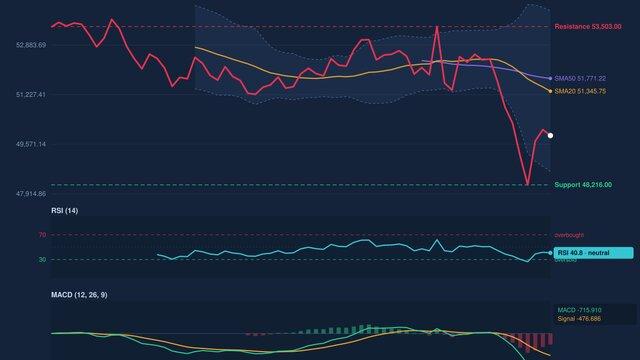
- 2Alphabet GOOG falls 1.06% as chip report clouds Google’s 2027 TPU orders
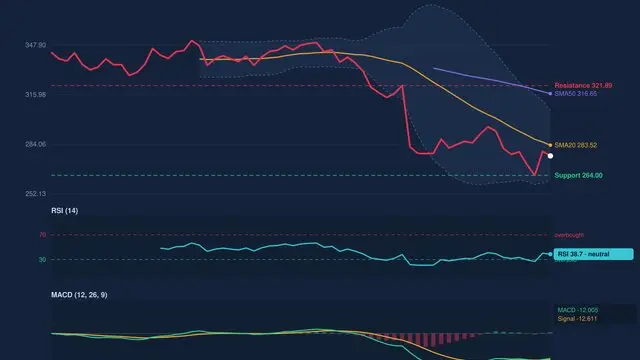
- 3Wall Street slips as chip selloff drags Nasdaq lower, but Dow rises
- 4Sandisk stock tests 77.81 support, with 74.87 the floor below
- 5Christa Pike Seeks Independent Exams After Failed Execution
 Lifestyle · Food & HealthCold vs Flu vs RSV: How to Tell the Difference by Symptoms, Speed and Duration
 LifestyleWhy Do Long Lines Make People Curious? 5 Reasons We Join the Crowd
 Technology · Apps & SoftwareHow to Secure a Home Wi-Fi Network: 7 Steps Cybersecurity Agencies Recommend
 Lifestyle · Food & HealthHigh Blood Pressure: Symptoms, Readings and 5 Ways to Lower It, Experts Say