Brent Crude Falls to $90.42 a Barrel, Down $1.63 From Monday
Brent crude traded at $90.42 per barrel at 7:45 a.m. Eastern on November 24, 2026, down $1.63 from the previous morning and about $27 above its level a year earlier. Here is how the benchmark works and how it feeds into gas prices.
Brent crude, the main global oil benchmark, traded at $90.42 per barrel at 7:45 a.m. Eastern Time on November 24, 2026. That is $1.63 below the previous morning's level and about $27 higher than a year earlier.
Nobody can say for certain where the price of oil goes next. Supply and demand drive the market, and risks such as a potential recession or war can change its direction quickly.
Two benchmarks, one global picture
Two benchmarks dominate oil trading. Brent is the main global reference. West Texas Intermediate (WTI) is the main benchmark in North America.
Brent gives a better view of global performance because it prices a large share of the world's traded crude. The U.S. Energy Information Administration now uses Brent as its primary reference in its Annual Energy Outlook.
Prices update constantly while futures markets are open. A futures market works like an auction in which buyers and sellers agree on oil deals for a later date. The price keeps moving as long as contracts are traded.
What it means at the gas pump
Pump prices cover more than crude. Drivers also pay for refining, wholesalers, taxes and the local station's markup.
Even so, crude often makes up more than half the cost of a gallon. When oil jumps, gas usually rises with it. When oil falls, gas tends to slip more slowly, a pattern sometimes called "rockets and feathers."
Expensive oil also lifts the cost of everyday goods, through energy bills and through shipping from farms and warehouses to store shelves.
Long record of swings
Brent has been volatile for decades. The early 1970s brought the first major oil shock, when Middle Eastern producers cut exports and imposed an embargo on the U.S. and others during the Yom Kippur War.
Prices fell in the mid-1980s on weaker demand and a wave of non-OPEC producers. They surged in 2008 and then crashed with the global financial crisis. During the 2020 COVID lockdowns, demand collapsed and prices dropped below $20 per barrel.
The U.S. also holds a backup supply of crude in the Strategic Petroleum Reserve. It is meant to protect energy security during crises such as sanctions, storm damage or war, and to cushion price shocks. It is not designed to solve long-term problems.
 Take the quizWhat Kind of Holiday Spender Are You? Take the Black Friday QuizStart →
- 1Dow Futures Jump 1.5% as Wall Street Tries to Rebound From Rout

- 2Nasdaq Falls Into Correction as Buffett’s Crash Advice Resurfaces

- 3Google Urged to Take Down Russell Brand Prison Video on YouTube

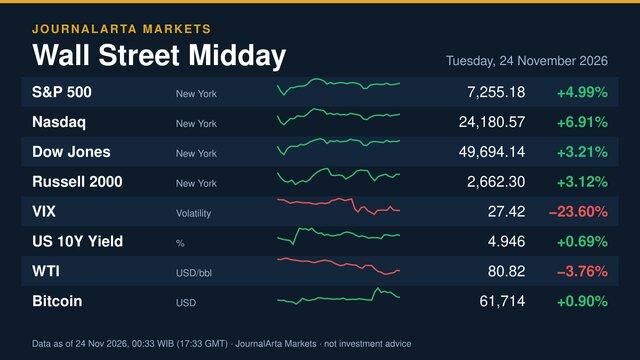
- 4Stock Market Today: S&P 500 Surges 4.99% and Nasdaq 6.91% at Midday as VIX Slides
- 5Croydon Mayor Backs Rail Fix to Become South England Nightlife Hub by 2040

 Lifestyle · Food & HealthCold vs Flu vs RSV: How to Tell the Difference by Symptoms, Speed and Duration
 LifestyleWhy Do Long Lines Make People Curious? 5 Reasons We Join the Crowd
 Technology · Apps & SoftwareHow to Secure a Home Wi-Fi Network: 7 Steps Cybersecurity Agencies Recommend
 Lifestyle · Food & HealthHigh Blood Pressure: Symptoms, Readings and 5 Ways to Lower It, Experts Say