How to Register for DTSEN 2026: Requirements, Online and Offline Links
Learn how to register for DTSEN 2026, the requirements, and how to check your status online or at the local office.
JAKARTA — How to Register for DTSEN 2026: Requirements, Online and Offline Links now matters for Indonesian households that want to access social assistance next year, because the government says only residents in deciles 1 to 4 qualify for aid.
The key gate is registration in DTSEN, the National Socioeconomic Single Data system, which now replaces DTKS as the main reference for programs such as PKH, BPNT, and PBI-JKN. If a family is not recorded in the database, it will not move forward for economic assessment.
What DTSEN is and why it replaces DTKS
DTSEN stands for National Socioeconomic Single Data. The system updates the older DTKS database and now serves as the official reference used by the Ministry of Social Affairs to target social aid recipients.
The change is not cosmetic. DTSEN is updated every three months through field verification and data synchronization with Dukcapil, Indonesia’s population administration office, and other integrated systems. That means local records, civil registry data, and community verification all feed into one national list.
For applicants, the practical point is simple: no DTSEN entry, no assessment. The government uses the database to decide whether a household sits within the lower-income deciles that may receive assistance.
Requirements to register for DTSEN 2026
To register, applicants need to meet several basic conditions. They must be Indonesian citizens with a valid e-KTP, hold a Family Card, and not serve as a civil servant, soldier, police officer, or government retiree.
The household must also fall into the low-income category, specifically deciles 1 to 4. In practice, that means the system looks at income, living conditions, and assets. If the data is outdated, residents can request an update instead of starting from zero.
These rules matter because the new social aid filter is tighter. Officials want the database to capture who is truly vulnerable, not just who submits an application first.
How to register online through a phone
Residents who have a smartphone can file a proposal through the Ministry of Social Affairs’ Cek Bansos app. The app is available on Google Play Store and Apple App Store.
After opening the app, users enter the Usulan Registration menu and choose Add Proposal. The system then asks for NIK, Family Card number, and facial verification before users can continue.
Applicants must fill in their full address, including RT/RW, upload clear photos of their ID card, Family Card, and the front of their house, then complete the economic form honestly. The form asks about work, income, and assets owned.
Once saved, the data enters the SIKS-NG system and is checked by village officials and the local social affairs office. That verification step can determine whether the file moves ahead or gets sent back for correction.
Offline registration at the village office
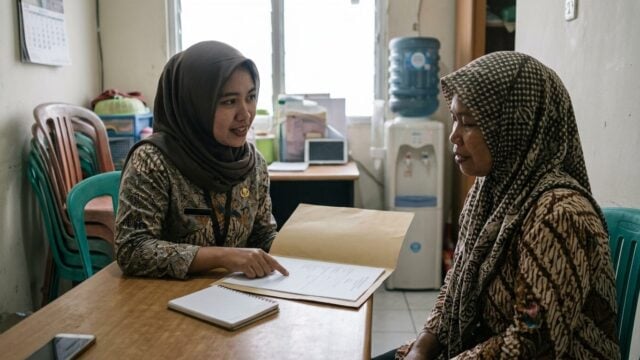
Not everyone can do the process online. For people without a phone or stable internet, registration is still available free of charge at the village or subdistrict office.
Applicants should bring photocopies of their e-KTP, Family Card, and a recommendation letter from RT and RW leaders. After arriving during office hours, they can ask the social welfare desk to submit a new DTKS or DTSEN proposal.
The officer will input the data through the village operator’s official account in SIKS-NG. Residents should also ask for proof that the proposal has been received. That receipt helps if they need to follow up later.
The process usually takes one to three months, depending on the verification queue and the completeness of the documents. That delay can feel long, but it reflects the layered checks built into the system.
Why this matters for households waiting for aid
For families on low incomes, DTSEN is no longer just a data file. It is the doorway to assistance that can cover food support, cash transfers, and health insurance contributions.
That is why the stakes are immediate. A missing name can mean a missed subsidy. A wrong address or outdated family record can delay access for months. In communities where a few hundred thousand rupiah matters, the difference is real.
Residents can check their status through the official Cek Bansos website at http://cekbansos.kemensos.go.id. The government also updates DTSEN routinely every three months, so applicants need to review their records regularly and correct any errors as soon as they appear.
Registration is free, and the Ministry of Social Affairs warns households not to pay brokers or anyone claiming they can speed up the process. One official warning has stayed consistent: the database decides eligibility, not the fee someone pays on the side.
“If your name is not in DTSEN, the assessment cannot begin,” a social affairs official said, underscoring how central the database has become for aid distribution in 2026.