Semeru Eruption Sends Hot Clouds 5.5 Km Toward Kobokan
Indonesia’s Mount Semeru sent a pyroclastic flow 5.5 kilometers toward Besuk Kobokan early Saturday, a day after a similar flow traveled 5 kilometers. Local officials said residents’ activities remained normal and response teams were on alert.
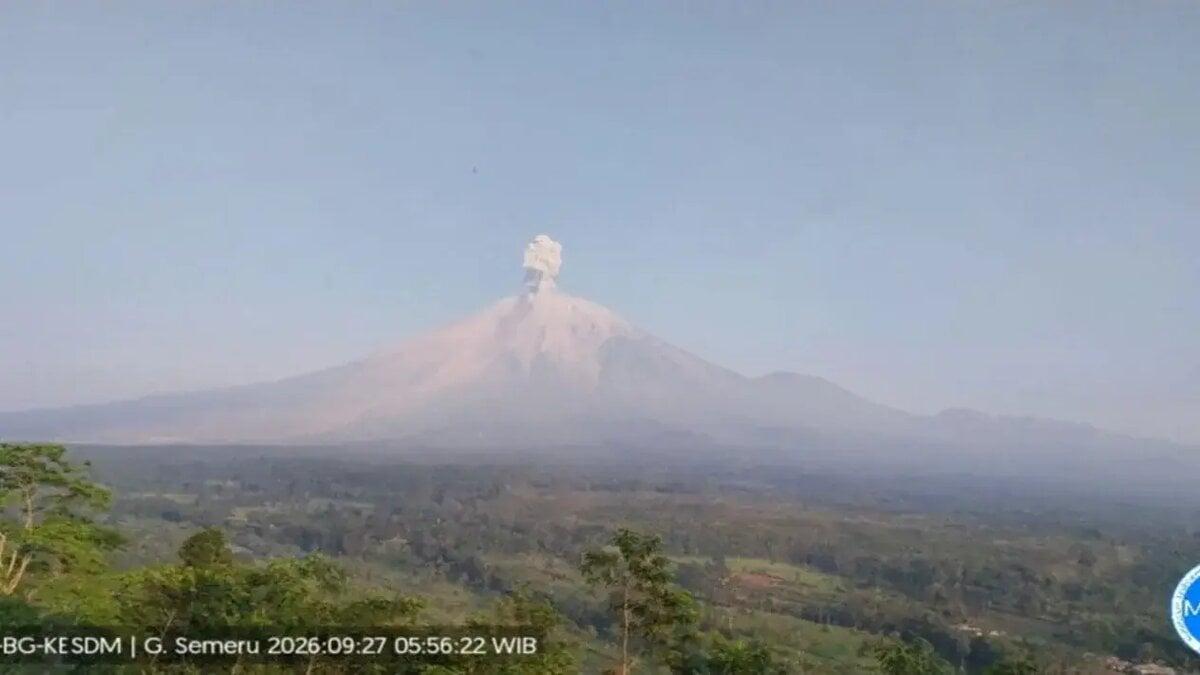
LUMAJANG, Indonesia — A pyroclastic flow from Mount Semeru traveled 5.5 kilometers (3.4 miles) toward Besuk Kobokan in eastern Java early Saturday, underscoring ongoing volcanic hazards in a region watched by residents and emergency officials. Local authorities reported no direct impact on daily activities and said response teams remained on standby.
The eruption began at 12:11 a.m. local time (WIB) on Saturday, Nov. 7, 2026, according to Sigit Rian Alfian, an official at the Semeru Volcano Observation Post. The ash column rose about 1 kilometer (0.6 miles) above the summit. Thick gray ash drifted south and southwest, he said.
The eruption lasted about six minutes, with a maximum seismic amplitude of 33 millimeters, monitoring data showed. The recorded flow traveled toward Besuk Kobokan, a drainage channel on Semeru’s southeastern flank.
“The ash spread toward the south-southwest,” Sigit said in a written observation report.
A second flow in two days
The activity came a day after another Semeru eruption on Friday afternoon, Nov. 6. That event sent a pyroclastic flow 5 kilometers (3.1 miles) from the summit toward Besuk Kobokan, according to the report.
Isnugroho, head of Lumajang district’s disaster management agency, said residents’ activities in the area were proceeding normally and no direct effects had been reported. He said the designated high-risk zone had been cleared of public activity.
“Residents’ activities are running smoothly, and there has been no impact from the eruption and Semeru pyroclastic flow because the high-risk red zone has been cleared of public activity,” Isnugroho said.
Response teams on standby
The Lumajang Regional Disaster Management Agency urged people near the volcano to remain alert for further eruptions. Rapid-response personnel, along with Indonesian military and police officers, were stationed at the Curah Kobokan and Oro-Oro Ombo observation posts to monitor conditions and prepare for changes.
Officials asked residents to follow local authorities’ instructions as monitoring continued at both posts.