CNA Explains: What is treason under Indonesian law?
Indonesia’s treason debate has resurfaced after State Secretary Prasetyo Hadi said alleged wiretapping of President Prabowo Subianto could potentially…
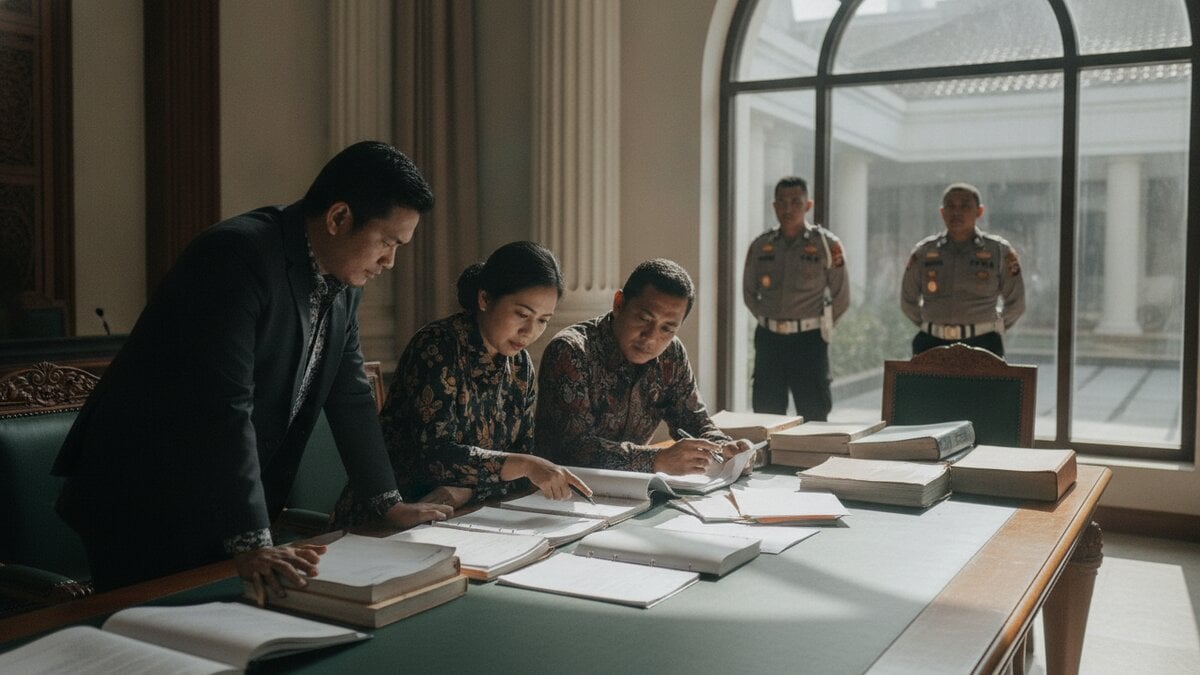
State Secretary Prasetyo Hadi said alleged wiretapping of President Prabowo Subianto could potentially amount to treason in Jakarta on Wednesday, Nov 4. The allegation has brought fresh attention to how Indonesia’s criminal law defines the offence and the penalties it carries.
The case involves former National Police chief Listyo Sigit Prabowo, named a suspect alongside two other senior police officers over alleged surveillance of the president and several prominent figures. Investigations are ongoing, and the government has said the motive remains unclear.
“We can consider this an act that potentially amounts to treason,” Prasetyo said at the Presidential Palace in Jakarta. He said the alleged actions could threaten national interests and the president’s safety.
What is treason under Indonesia law?
University of Indonesia law professor Eva Achjani Zulfa said treason can involve an attempt to kill or harm the president or vice-president. She said prosecutors must establish the perpetrator’s intent to prevent the president from carrying out official duties and functions.
“If that intention can be proven, the act can be classified as treason,” Eva told CNA Indonesia.
Intent is central. Eva said the law requires proof that the alleged perpetrator meant to render the president unable to perform his duties. The allegation of surveillance alone does not settle that legal question; the government says the investigation is still under way.
What penalties does the new Criminal Code set?
Indonesia’s new Criminal Code took effect on Jan 2, 2026. Article 191 of Law No 1 of 2023 covers treason against the president or vice-president.
The article sets different penalties according to the intended act and its consequences. Treason committed with intent to kill carries the death penalty. If the offence deprives the president or vice-president of liberty, the penalty is life imprisonment. If either is rendered unable to govern, the maximum sentence is 20 years in prison.
Under the former Criminal Code, Article 104 dealt with treason against the president or vice-president. Article 87 said treason occurs when intent is demonstrated through the start of an attempt to carry it out. The shift to Article 191 places the offence under the code that came into force this year.
The distinction matters in the current case because investigators must establish both what happened and whether the required intent existed. Prasetyo said the suspected wiretapping could affect national interests and presidential safety, while also acknowledging that investigators have yet to clarify its motive.
Indonesia has prosecuted other cases as treason. In 2019, Hermawan Susanto threatened to behead then-President Joko Widodo during a demonstration outside the Elections Supervisory Agency office in Jakarta. The Central Jakarta District Court found him guilty in March 2020 and sentenced him to 10 months and five days in prison. He was released immediately because he had already served that time in detention.
The country has also experienced attempts to assassinate presidents. During the Cikini incident on Nov 30, 1957, attackers threw grenades at President Sukarno in Jakarta; he survived, while 10 people were killed. On Mar 9, 1960, Air Force pilot Daniel Maukar fired on the presidential palace from a MiG-17 fighter jet, and Sukarno survived.
Eva’s central test remains proof of intent: “This element must be proven.”