Why Anesthesia Knocks One Patient Out in 40 Seconds and Keeps Another Awake
Why does general anesthesia knock you out in about 40 seconds while a spinal block keeps a mother awake for her C-section? The science, explained.
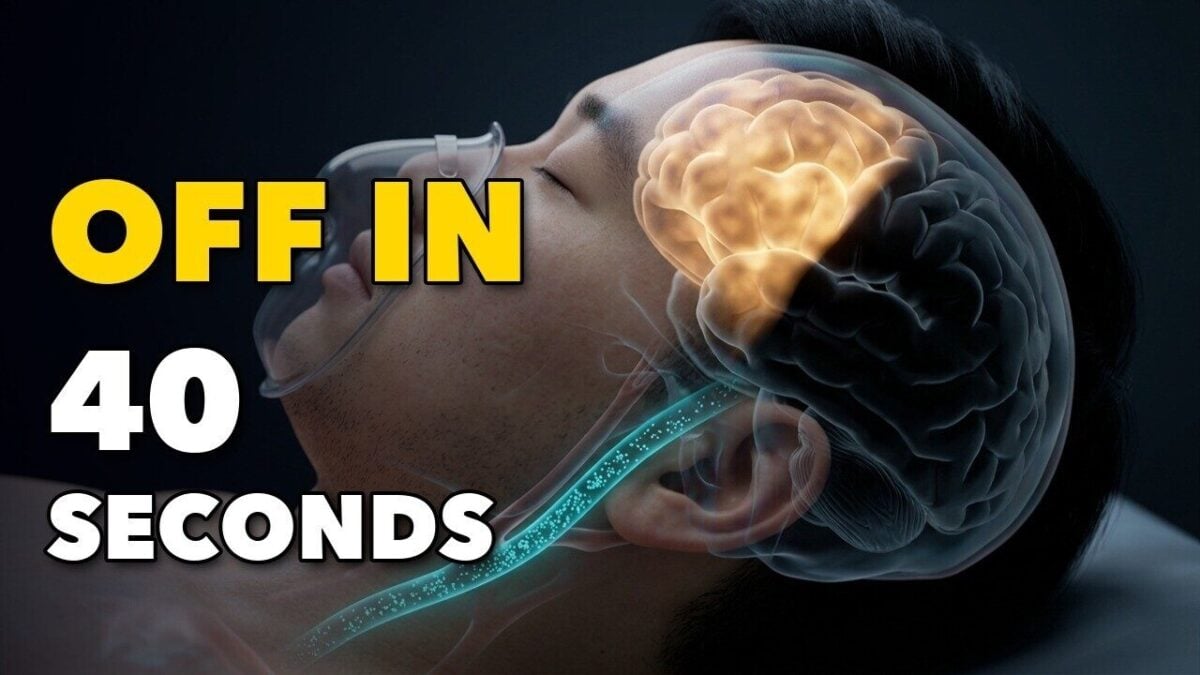
This article features a video from fds creative, a YouTube channel affiliated with JournalArta. The video's animation was made with the help of AI.
Sam is 24, and his appendix is about to burst. A doctor asks him to count backwards from ten. Roughly 40 seconds later, he is gone. Down the hall, Lia is having a C-section and stays wide awake for every minute of it. Neither of them feels pain. The way each of them gets there could hardly be more different.
That contrast drives "Anesthesia Knocked Him Out in 40 Seconds. She Stayed Awake. Why?", the latest 3D medical animation from fds creative. In under four minutes it follows an anaesthetic drug from a vein in the back of the hand to the brain's command centre.
The Day Surgery Stopped Hurting
For most of history, an operation meant feeling every cut. That changed on 16 October 1846 at Massachusetts General Hospital in Boston, when dentist William T.G. Morton put a patient under with ether and surgeon John Collins Warren removed a tumour from his neck in front of a room of doctors. The amphitheatre, now called the Ether Dome, still stands.
Forty Seconds to Lights Out
Modern general anaesthesia is far more precise. A thin cannula goes into a vein. Oxygen comes first, often a painkiller too. Then the main drug: propofol, milky white because it is carried in a soybean-oil emulsion.
It travels up the arm, through the right side of the heart, across the lungs, back to the left side and up the neck arteries. The route matters. The brain makes up about 2% of body weight yet takes roughly 15% of the blood the heart pumps out.
Once there, propofol latches onto GABA-A receptors, the brain's brake pedal. Chloride floods in and neurons fall silent, one after another. Memory goes first, which is why almost nobody remembers finishing the countdown. The thalamus, the switchboard that relays signals across the brain, stops passing messages on. On the monitor, brain waves turn slow and heavy.
Not Sleep, but a Controlled Coma
A single dose wears off within minutes as the drug seeps into muscle and fat and the liver breaks it down. So the anaesthetist keeps it flowing through a pump or switches to an anaesthetic gas, dosing by weight, age and health and adjusting throughout. Breathing is suppressed, so a ventilator takes over, while heart rate, breathing and brain activity are watched constantly.
Waking up mid-operation is rare. The UK and Ireland's NAP5 national audit put patient reports of accidental awareness at about one in 19,000 anaesthetics. The video is blunt about what this state is not: sleep. A sleeping brain still reacts to the world. This is closer to a deep, controlled coma that ends when the drug stops. For Sam, no time passes at all, because his brain records nothing.
Why Lia Stays Awake
Lia gets a spinal anaesthetic instead. A fine needle in her lower back delivers a local anaesthetic into the fluid around the spinal nerves, where it plugs their sodium channels so signals cannot pass. Thin pain fibres shut down first. She can still feel pressure and tugging, but no pain. She is numb from the chest down while her mind stays fully present for the moment her baby arrives. The effect fades within a few hours.
The video sums up the difference neatly: one switches the brain off, the other simply cuts the wires. Yet scientists can watch the brain's rhythms change and still cannot fully explain how a drug switches consciousness off. That question remains one of medicine's great open puzzles.
This article is for general education and is not medical advice. Anaesthesia must only be given by trained professionals in a medical setting.
Watch and Subscribe to fds creative
See the whole journey in detailed 3D animation on YouTube, then subscribe to fds creative and turn on notifications for more explainers on science and the human body.