Herzog Begins Coalition Talks as Netanyahu Falls Short of Majority
Israeli President Isaac Herzog accepted the certified results of the parliamentary election and began consultations with party leaders on forming a government…
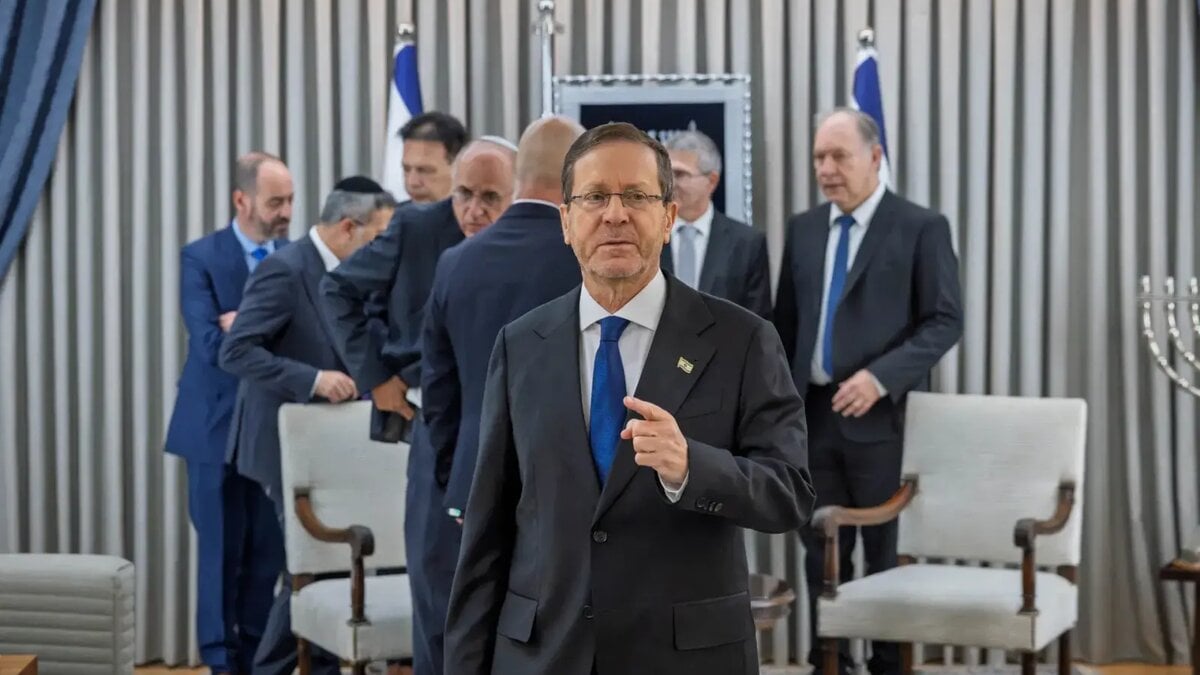
Israeli President Isaac Herzog accepted the certified election results and began consultations with party leaders on Wednesday to decide who should form the next government. The talks follow a parliamentary vote that left Prime Minister Benjamin Netanyahu’s bloc short of a majority and gave Arab-led parties a possible role in shaping the coalition.
Neither Netanyahu’s coalition nor the bloc led by opposition leader Gadi Eisenkot secured the 61 seats needed to govern in the 120-member parliament. Netanyahu’s bloc won 53 seats, while Eisenkot’s secured 48.
“The elections are over. Now is the time to face reality,” Herzog said.
The certification and consultations move Israel into coalition negotiations after Netanyahu and his allies challenged the result. The elections commission said it found no evidence of irregularities that compromised the election’s integrity or affected the outcome.
How could the parties reach a majority?
Arab-led parties secured a record 19 seats, making their recommendations potentially decisive. A partnership between Eisenkot and the Arab-led factions is one possible route to the 61 seats required for government.
Ra’am said it would recommend Eisenkot, bringing his expected support to 56 lawmakers, according to the source report. That number remains short of a majority. The Joint List had not announced its position, but its 11 seats could take Eisenkot past the threshold if the party endorsed him.
Netanyahu’s bloc may also fall short of the number of endorsements suggested by its seat total. Degel HaTorah, which holds four of United Torah Judaism’s seven seats, said it would recommend neither candidate. The faction broke with Netanyahu over his coalition’s failure to pass legislation exempting Haredi men from military service.
Consultations set the next step
Herzog completed the first day of meetings with party leaders on Wednesday night and said consultations would continue on Thursday. He met representatives of Religious Zionism and Zehut, Shas, and Yisrael Beytenu, who gave recommendations on which member of the Knesset should receive the task of forming a government.
Three factions aligned with Netanyahu’s religious-nationalist base recommended that he be given a chance to form a coalition. A fourth faction, led by a former Netanyahu ally who became a rival, backed Eisenkot. Eight more parties, including the two Arab-led factions, were scheduled to meet Herzog on Thursday, with Eisenkot’s Yashar party and Netanyahu’s Likud going last.
Herzog will select the candidate he believes has the best chance of assembling a coalition, with Netanyahu and Eisenkot the likely choices. After he announces his decision, the nominee will have 28 days to form a government, with a possible 14-day extension.
If neither candidate succeeds, Israel would hold another election early next year. That possibility gives the parties an incentive to negotiate, while leaving the final outcome dependent on recommendations and coalition agreements rather than the seat totals alone.
Netanyahu and his supporters have repeatedly alleged that Arab-led parties “stole” the election, possibly with foreign assistance. Israel’s elections commission said its investigation found “no evidence of irregularities that compromised the integrity of the election or affected its results”. Attorney General Gali Baharav-Miara also rejected a request to question elected officials without supporting evidence.
The commission’s finding means the certified results stand as the basis for the government-forming process. Herzog’s nominee will have 28 days to assemble a coalition.