How economists think Victoria can repair its budget
Four economists say Victoria should target a cash surplus, set a debt cap and commission an independent spending review. Their proposals come as the state…
Four economists say Victoria can repair its finances by targeting a cash surplus, setting a debt cap and commissioning an independent spending review as the state’s November 28 election campaign begins. Their warning puts borrowing and the cost of competing budget plans at the center of a debate with consequences for public services and the state’s economic prospects.
During the 25-day campaign, Victoria is expected to borrow $870 million and pay $610 million in interest, according to analysis by debt reduction advocacy group AMPLIFY. The economists described the state’s fiscal position as dire and said major parties should not continue with business as usual.
The joint statement came from independent economist Saul Eslake, former Reserve Bank board member Ian Harper, Australian National University economics professor Bob Breunig and UNSW chief societal economist Richard Holden. They called for a plan to repair the budget, rather than a quick turnaround.
“We recognise that Victoria’s fiscal position will not be turned around overnight,” the economists said. “But it also won’t be turned around if major political parties adopt a business-as-usual approach to this election.”
What do economists think Victoria can do?
The economists’ proposals center on returning the budget to cash surplus, putting a limit on debt and reviewing government spending independently. Harper and Eslake said the surplus should be the immediate priority.
Victoria has not recorded a cash surplus since 2008-09, during the global financial crisis. Harper said a medium-term debt strategy would help secure public services as the population grows, and described a return to surplus as the first step.
For households, the choices matter because a budget repair plan can affect the funding of public services and the tax burden. Eslake argued that raising taxes or selling public assets were no longer practical routes to a surplus, leaving spending reductions as the option he favored.
Victoria’s public assets have been sold over previous governments, including a $9.7 billion sale of the Port of Melbourne under Daniel Andrews. Eslake also said Victorians pay more tax than residents of any other state and warned that further increases could harm employment and investment.
How do the competing budget plans differ?
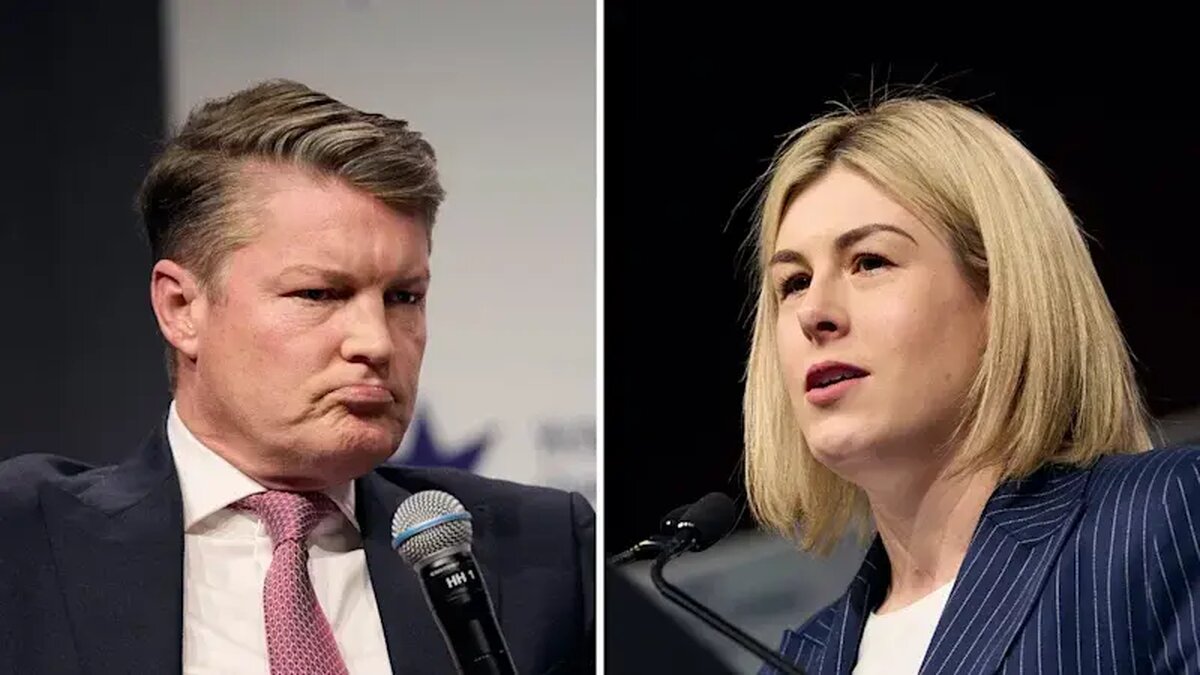
Opposition Leader Jess Wilson has pledged to deliver a cash surplus by 2032. Her approach relies heavily on a decade-long hiring freeze across parts of the public service, while the Coalition’s promised tax cuts would reduce revenue by about $5 billion in its first term.
Premier Ben Carroll has not set out a comparable surplus plan. He has described himself as “financially responsible, socially progressive” and pointed to savings made since taking power in July.
On Wednesday, Carroll told ABC Radio that the Coalition’s promised spending and tax cuts would “100 per cent” induce a recession in Victoria. Wilson called that claim “desperate lies”.
The spending debate also has a measurable scale. Commonwealth Grants Commission data cited by Eslake showed Victoria spends 7 per cent more per person than other states to provide an average level of government services, and 10 per cent more per person for average infrastructure.
Eslake said aligning spending with those benchmarks could reduce operating expenditure by about $5.5 billion and capital expenditure by about $1.75 billion, enough, he said, to bring the budget close to cash balance.
He also questioned whether the Coalition’s announced cuts would be sufficient. If it failed to win a majority in the upper house, legislation for further reductions could be blocked by parties holding a majority there.
Labor is already challenging the Coalition over $40 billion in supposed cuts, making additional reductions politically difficult for Wilson. Holden said Victoria’s fiscal reset would require an independent audit.