U.S., Saudi Arabia Sign Nuclear Cooperation Deal That Opens Door to Uranium Enrichment
The United States and Saudi Arabia have signed a nuclear cooperation deal that could eventually allow the Gulf kingdom to enrich uranium, a move that
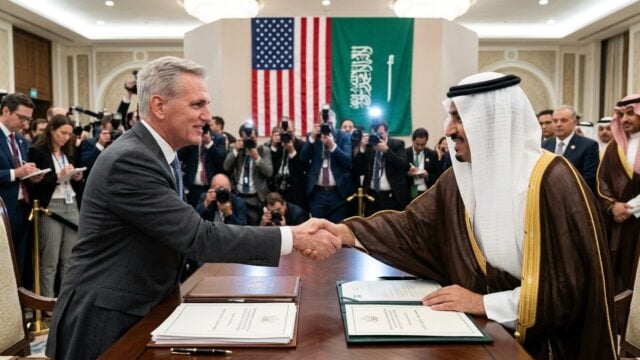
The United States and Saudi Arabia have signed a nuclear cooperation deal that could eventually allow the Gulf kingdom to enrich uranium, a move that would expand its civilian nuclear ambitions and alarm critics who fear the technology could be diverted toward weapons work. The agreement was announced this week and immediately drew scrutiny from U.S. lawmakers and Israeli officials.
The deal gives Saudi Arabia a legal path toward a civilian nuclear programme and, according to U.S. media reports cited by outlets covering the pact, may permit uranium enrichment in the future. That detail matters. Uranium can fuel power plants, but the same process can also produce material for nuclear bombs if a state chooses to push far enough.
A first for U.S. nuclear policy
Experts say the arrangement would mark a first for Washington if it eventually lets Saudi Arabia enrich uranium under a U.S.-backed framework. For decades, U.S. policy has generally pressed partners to steer clear of enrichment and reprocessing because those technologies sit close to the line between civilian energy and military use. Saudi Arabia’s new deal appears to loosen that long-standing posture.
That is why the announcement landed with such force. The kingdom has been seeking a civilian nuclear programme, and the U.S. Energy Department said the two sides have now signed a “peaceful nuclear co-operation agreement” that will provide “great access for American companies in the Saudi nuclear energy program.” A bilateral safeguards agreement was signed alongside it, the department said, framing the package as a foundation for a long-term partnership.
But the language did little to calm critics. U.S. lawmakers and Israeli officials have already voiced opposition to a plan that could give Riyadh a future enrichment capability. Their concern is straightforward. In a region already marked by deep security rivalries, any new path toward sensitive nuclear know-how raises the stakes.
Why the enrichment question matters
Enrichment sits at the center of the dispute. Civilian reactors need fuel, and enriched uranium can provide it. The same capability, though, can shorten the road to a bomb if a country builds up the right infrastructure and chooses to cross that line. That is the fear attached to Saudi Arabia’s agreement.
The text of the deal has not been made public, leaving outside observers to rely on official statements and media reports. Still, the broad direction is clear enough. Saudi Arabia wants room to develop a nuclear sector. The United States wants a commercial role for its companies and says the agreement supports nonproliferation. Critics are asking how both goals can be true at the same time if uranium enrichment remains on the table.
The worry is not abstract. Any deal that normalizes enrichment in Saudi Arabia could reverberate well beyond the kingdom’s borders, because other governments may read it as a new benchmark for what Washington is willing to accept. That is especially sensitive in a region where strategic trust runs thin and civilian nuclear projects can quickly take on a second, darker meaning.
Pressure from lawmakers and Israel
Opposition to the plan has been building in Washington and Jerusalem. U.S. lawmakers have warned against handing the kingdom a route to enrichment, and Israeli officials have objected as well, fearing that a civilian programme could be used as cover for a future weapons effort. Their objections rest on a familiar argument: once a state acquires the infrastructure and expertise, the line between peaceful and military use can blur fast.
That concern has shaped U.S. nuclear diplomacy for years. Here, it is colliding with a broader strategic calculation. The Energy Department said the new agreements lay the legal groundwork for a decades-long, multibillion-dollar partnership that advances economic and strategic goals, including nonproliferation. In other words, Washington is presenting the deal as both business and guardrail.
Saudi Arabia, for its part, described the accord in a statement as an extension of existing cooperation, though the full text still has not been released publicly. The absence of the document leaves a lot unresolved. What exact limits will be imposed? How much room will Riyadh have over time? And how tightly will the safeguards bind future decisions?
Commercial opportunity, strategic risk
For American companies, the deal could open the door to a new market in one of the world’s richest energy exporters. The U.S. Energy Department explicitly highlighted access for American firms in Saudi Arabia’s nuclear energy programme. That commercial promise helps explain why the agreement has advanced despite the political resistance surrounding it.
Yet the strategic risk is what keeps the issue volatile. Nuclear energy projects are often sold as solutions to electricity demand and diversification, and many countries run them safely. But enrichment changes the conversation. It moves a programme closer to the most sensitive tier of nuclear technology, where inspection regimes, political trust and national intent all matter immensely.
That is why the reaction has been so sharp and why this deal is likely to face sustained scrutiny. The question now is not just whether Saudi Arabia will build a civilian nuclear sector, but what limits the United States is actually prepared to accept as that sector develops. The coming weeks are likely to bring more pressure on both governments to spell out the details they have so far kept behind the curtain.