Pauline Hanson’s empty London hall exposes a deeper shift in Australian politics
Stood before about 120 people in London last weekend. Fewer than a quarter of the seats were filled. The empty rows told a. Pauline Hanson — full details here.
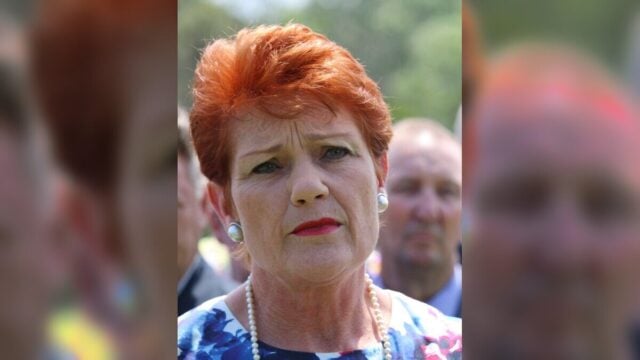
Pauline Hanson stood before about 120 people in London last weekend. Fewer than a quarter of the seats were filled. The empty rows told a bigger political story than the speech itself.
At CPAC London, Hanson used the stage to defend her remarks linking the end of the White Australia policy to migration problems and to attack the idea of white privilege. But the audience around her was tiny. The bigger surprise is who is no longer driving her political momentum at home.
The room was half empty. The message was not.
Hanson’s speech to CPAC London was billed as The Australian Fight Back, yet the scene in the hall undercut the drama. Around 120 people showed up. Many seats stayed empty. That image now hangs over One Nation’s rise: the party is gaining ground, but not for the reasons Hanson keeps emphasising.
For years, Hanson has tried to frame her politics around race and culture-war language. She again leaned into that script in London. But the voters moving One Nation forward are coming from a different place entirely. They are not the faithful, ideological crowd Hanson imagines waiting for her message about national identity and white privilege. They are people with far less patience for slogans.
The party’s new support is coming from Australians in Cranbourne, Ipswich, Elizabeth, the Latrobe Valley and the Hunter. These are outer suburbs and regional areas, not elite conference rooms or overseas activist events. And they are not responding to the themes Hanson pushed on stage.
Who is actually powering One Nation
The source of One Nation’s momentum is economically stranded Gen X voters. That is the core shift. These are middle-aged Australians in places where jobs, housing pressure and a sense of being left behind shape daily politics more than abstract culture fights.
That helps explain why Hanson’s London speech looked so detached. She was speaking to an audience that largely does not exist in the way she presents it. The real support base is not centred on a racial or cultural project. It is rooted in frustration, insecurity and anger from voters outside the main political and economic centres.
These voters live in the outer suburbs and in regions where the old social contract has frayed. They do not match the stereotype often attached to Hanson’s base. They are not simply marching behind a familiar anti-immigration banner. Their politics is shaped by strain, not ideology.
Why the old Hanson script no longer fits
That matters for Australian politics because it changes what One Nation now represents. Hanson keeps reaching for the arguments that made her famous. The audience is moving elsewhere. The party’s growth is coming from people who may be willing to back her, but not necessarily for the reasons she chooses to talk about.
In places such as the Latrobe Valley and the Hunter, the political mood has been shaped by economic pressure for years. In outer suburban communities like Cranbourne, Ipswich and Elizabeth, the same feeling runs through a different landscape: long commutes, stretched budgets, and a suspicion that the main parties are speaking past them.
Hanson’s performance in London exposed that gap in sharp relief. A small crowd. A big claim. And a party whose rise now depends less on the culture-war rhetoric she served up on stage than on a broader and more uncomfortable reality inside Australian voters’ lives.
That is the political change One Nation now has to live with: its momentum is coming from economically stranded Gen X voters in the suburbs and regions, not from the racial and cultural constituency Hanson keeps trying to summon.