Trump Moves to Put Warning Signs Outside Smithsonian History Museum Over ‘Inaccurate Information’
President Donald Trump has ordered warning signs placed outside the Smithsonian’s National Museum of American History, escalating his campaign to reshape how...
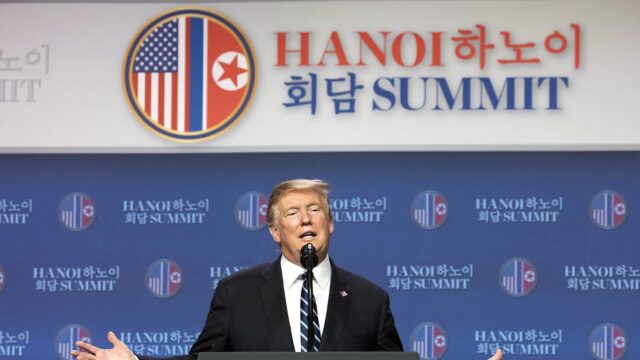
President Donald Trump has ordered warning signs placed outside the Smithsonian’s National Museum of American History, escalating his campaign to reshape how the institution presents the country’s past. The signs, he said Friday, should alert visitors to “inaccurate information” inside the museum.
The move pushes the fight beyond curators and exhibit halls and onto the museum’s front steps. It also sharpens a broader dispute over who gets to frame America’s story, and what counts as history versus political messaging.
White House criticism turns public
The order follows a White House report released on July 4 that said the museum “cannot be trusted to tell America’s story honestly and in a way that is inspiring, unifying, and worthy of our great republic.” That language set the tone for Trump’s latest directive, which treats the Smithsonian not as a neutral cultural institution but as a battleground over national identity.
In a separate push in March 2025, Trump said he intended to force changes at the Smithsonian Institution and signed an executive order targeting federal funding for programs that present what he called “divisive narratives” and “improper ideology.” Friday’s order extends that effort in a more visible way, putting the warning message in front of museum visitors before they even walk in.
A clash over history and politics
Trump wrote in the new order that Smithsonian leadership does not treat American history as a shared inheritance meant to be taught and celebrated. Instead, he said, it sees history as a “prime tool” for advancing social justice and a radical transformation of society.
That accusation goes to the heart of the dispute. For Trump and his allies, the issue is not just exhibit design. It is control over the national narrative, from slavery and civil rights to war, migration and the symbols that fill public museums. For the Smithsonian, a sprawling museum and research complex in Washington, the pressure raises fresh questions about autonomy and political interference in a system long viewed as a public trust.
The National Museum of American History sits at the center of that argument because its exhibits reach millions of visitors and help define how school groups, tourists and domestic audiences encounter the American story. A warning sign outside the building would be a highly unusual step for a federal museum, and a stark signal that the White House wants its critique seen before any visitor crosses the threshold.
What comes next
The order does not end the dispute. It widens it. Trump has already shown he wants to force changes inside the Smithsonian, and the new signage directive suggests he is willing to use the institution’s own public space as part of that pressure campaign.
For now, the museum is left with the prospect of a warning placard tied to the president’s claims about its exhibits. Trump’s message was blunt: Smithsonian leadership, he said, is not preserving a shared national inheritance. It is pursuing something else entirely.