Jharkhand Students Protest Exam Irregularities, Tired of Waiting for Jobs That Never Come
Rain pooled on the ground at Ranchi’s Jaipal Singh Munda Stadium. Students stayed anyway. For many in Jharkhand, the anger now spilling into the streets
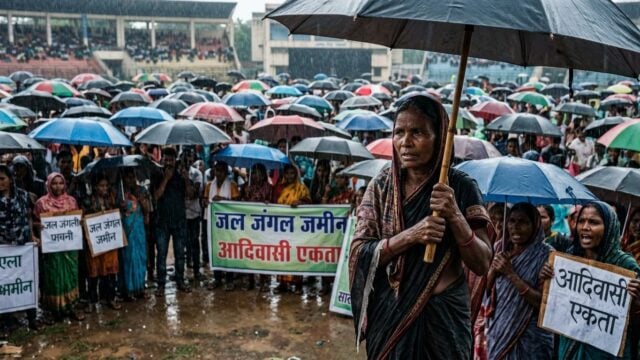
Rain pooled on the ground at Ranchi’s Jaipal Singh Munda Stadium. Students stayed anyway. For many in Jharkhand, the anger now spilling into the streets is no longer just about paper leaks and exam irregularities — it is about years spent chasing government jobs that were supposed to change family fortunes.
Devashish, speaking from the protest site, said the struggle runs deeper than one test or one commission. The eldest of three siblings in a farming family, he said a government post meant relief for his parents and a future for his brothers and sisters. Instead, the wait has stretched on, and the pressure has only grown. “We hoped it would help pull my father out of his lifelong struggle,” he said. “But instead of rescuing him from that struggle, we ourselves have become trapped in new ones.”
Years of tests, little trust
Across Jharkhand, students have taken to the streets in recent days over repeated problems in examinations conducted by the Jharkhand Public Service Commission and the Jharkhand Staff Selection Commission. The protests have tapped into a wider sense of frustration: applications filed, years spent studying, and still no clear path to stable work. The JSSC CGL, for example, has become a symbol of the grind. Over the past decade, students say, they have filled forms, waited, and watched the process drag on. Again and again.
That slow burn matters. In a state where many families still depend on farming and insecure work, a government job carries a meaning far beyond salary. It is a ladder. A shield. For students sleeping on platforms or under open skies, it is also a promise that feels increasingly fragile.
A protest site with water on the ground
At the stadium grounds in Ranchi, the weather has not eased the mood. Devashish pointed his camera toward the open field and noted the conditions around the protest camp. “This isn’t Delhi. This isn’t a metro city,” he said, stressing the difference between a major capital and the reality facing students in Jharkhand. Water covered parts of the site. The rain kept coming. The students kept standing their ground.
That image has come to define the protests: not polished banners or stage-managed speeches, but tired young people refusing to leave. Their demands are not abstract. They want fair examinations. They want trust in the system. And they want the state to answer for the years already lost.
For Devashish, the fight is personal. For many others, it is the same. “We have become trapped in new ones,” he said, and the line landed hard. It did not sound like a slogan. It sounded like a warning.