NSW Bans Take-Home Exams as AI Cheating Hits 1,000 Cases in Year 12
New South Wales will prohibit unsupervised take-home assignments for year 12 students in a sweeping overhaul aimed at stopping widespread artificial intellig...
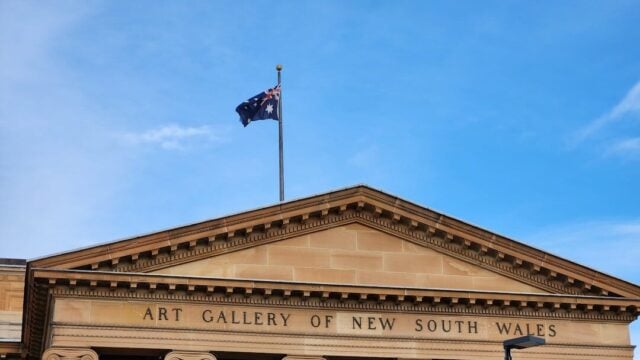
New South Wales will prohibit unsupervised take-home assignments for year 12 students in a sweeping overhaul aimed at stopping widespread artificial intelligence abuse in final exams. Education Minister Prue Car has asked the state's education standards body to impose a moratorium on remote assessment tasks, expected to take effect next term when current year 11 students advance to their final year.
The directive comes after more than 1,000 documented instances of misconduct involving AI use emerged in school-based year 12 assessments during 2025—a dramatic indicator of how generative tools are destabilizing traditional testing methods across the region.
Why the Crackdown Now
Car argued that permitting students to complete work unsupervised has become incompatible with maintaining the HSC's credibility as a measure of genuine academic ability. "The value of the HSC as a highly trusted credential depends on it accurately reflecting student knowledge, ability, and understanding," she wrote to Peter Shergold, chair of the NSW Education Standards Authority. "That confidence will be undermined if assessment outputs can be produced without students performing the intellectual work that the course requires."
The move treats the ban as temporary. A broader review will determine longer-term assessment strategies.
A Global Scramble for Solutions
NSW's ban reflects a worldwide reckoning. Universities from Singapore to the United States are redesigning curricula and exam formats at accelerating speed. The National University of Singapore shifted first- and second-year law courses from open-book to semi-closed-book exams, while also blocking students from using AI legal tools. The University of Chicago Law School requires first-year students to keep laptops closed during lectures, betting that foundational thinking skills cannot be offloaded to machines.
Yet the problem keeps compounding. Student reliance on AI for academic work has surged—95 percent of undergraduates now report using it for studies, up from 66 percent just two years earlier. Among those, roughly 12 percent acknowledge directly embedding AI-generated text in submitted assignments, a jump from 3 percent in 2024.
Job interviews have become another battleground. Nearly half of all applicants deployed AI assistance somewhere in their hiring process as of late 2025, according to Gartner data. One New York non-profit hired a grant writer whose polished answers masked an inability to function independently; the manager suspects covert chatbot consultation during virtual interviews. He lasted a month before dismissal.
The Integrity Problem
These setbacks have forced educators to abandon the assumption that banning AI outright would solve anything. Instead, institutions are splitting their approach: identify which skills demand human cognition, then design assessment and teaching around that separation. Chicago Law's Dean Adam Chilton put it plainly: "We need to make sure that the students are learning to think for themselves."
NSW's interim measure targets the most vulnerable assessment format—remote work completed without supervision. Whether the moratorium evolves into permanent policy depends on NESA's recommendations and the outcome of the broader examination now underway.