Why conditions on the USS Abraham Lincoln broke down during its long deployment at sea
Food shortages and other problems aboard the USS Abraham Lincoln grew out of an unusual supply-chain shock: Iranian attacks that wrecked a key U.S. Navy
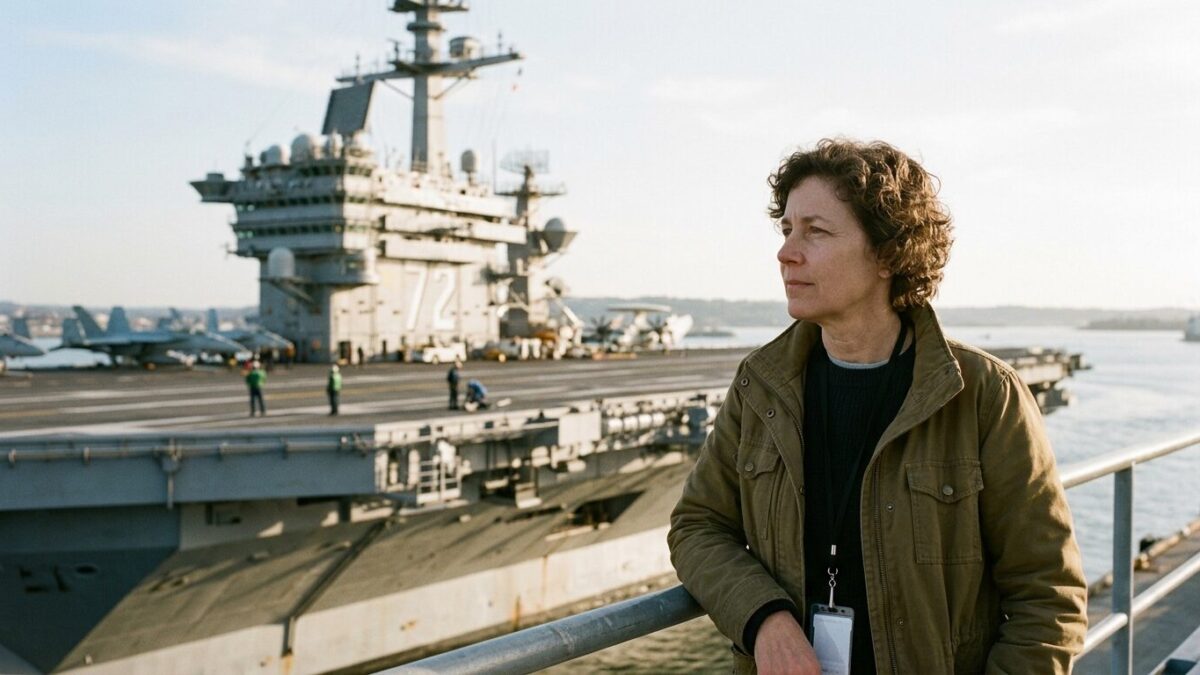
Food shortages and other problems aboard the USS Abraham Lincoln grew out of an unusual supply-chain shock: Iranian attacks that wrecked a key U.S. Navy base in Bahrain. The carrier and its roughly 5,000 sailors and Marines then had to lean on supplies routed through Diego Garcia, about 2,200 miles away.
The breakdown helps explain how a ship that has now spent more than 270 straight days at sea ended up with conditions that drew outrage. The Lincoln set a post-Vietnam War record after leaving San Diego on Novembe, and the strain of keeping a carrier group fed, stocked and moving through a widening conflict showed up far from home.
A base built to run the fleet
Naval Support Activity Bahrain sits at the center of the U.S. Navy’s Persian Gulf presence. It serves as the headquarters of the Fifth Fleet, the command that oversees maritime military operations across the Middle East.
Back in 2004, the Navy opened a $25 million, state-of-the-art nerve center there to support that mission. Then missiles and drones hit the site on Feb. 28, the first day of President Donald Trump’s war against Iran, according to The New York Times. The damage was severe enough that the base was largely destroyed.
When that hub went down, the Navy scrambled. A short time later, it started using Diego Garcia, a faraway UK-administered island in the middle of the Indian Ocean south of the Maldives, as a new logistics center, a military official told the Times.
Why the Lincoln felt it first
That shift mattered because a carrier group runs on constant replenishment. Food, parts, fuel and other supplies all move through a chain that assumes major bases keep working. Once Bahrain was knocked out, the Lincoln had to depend on a much more remote outpost.
The result was predictable. Shorter supply lines turned into longer waits, and longer waits turned into shortages aboard the ship. The problems that sparked the backlash were not isolated messes on deck. They were tied to a wider military logistics failure stretching from the Gulf to the Indian Ocean.
The Lincoln’s deployment has already become notable for length alone. What happened next made it a symbol of how quickly a modern war can strain even the most powerful naval force, especially when the nearest support hub is suddenly gone.