COP31 Ends Without Climate Pact After Fossil Fuel Deadlock
The COP31 climate summit in Antalya, Türkiye, closed on Sunday without a final agreement after two weeks of talks and two days of overtime. Disputes over fossil fuel language blocked consensus, and UN Secretary-General António Guterres called the result a setback.
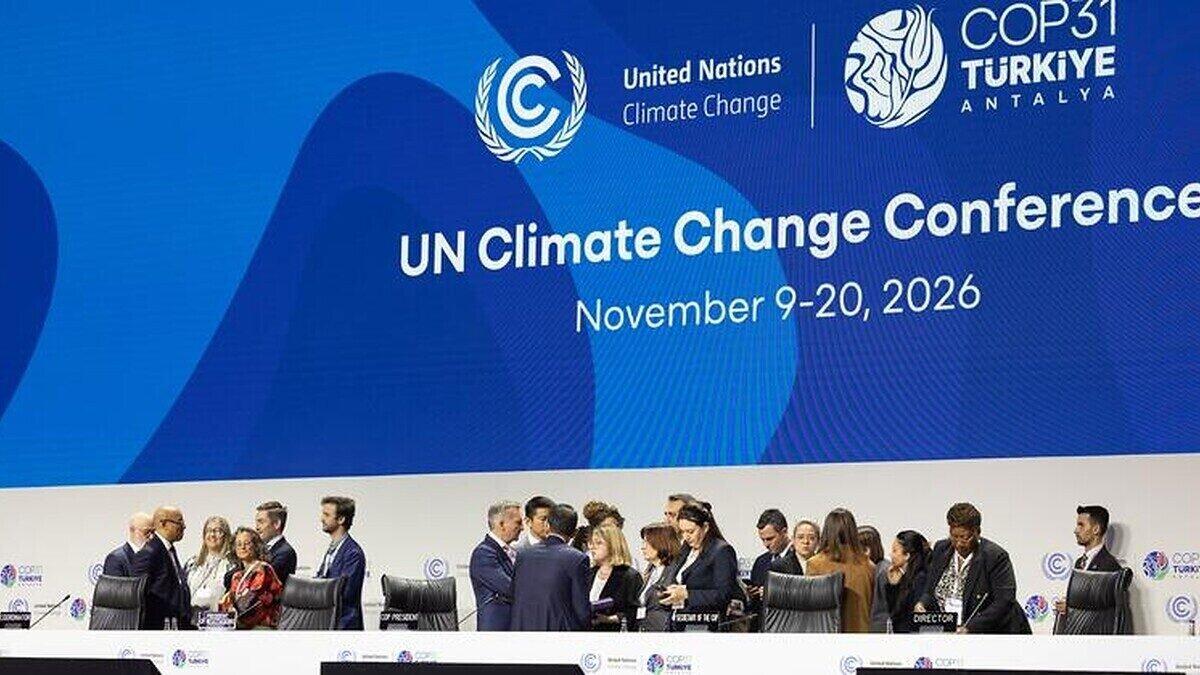
The COP31 climate summit in Antalya, Türkiye, ended on Sunday without a climate pact after two weeks of talks and two days of overtime. Negotiators could not resolve a split over fossil fuels, and UN Secretary-General António Guterres called the outcome a "deeply disappointing" setback in the fight against global warming.
Antalya is now the longest-running UN climate summit on record.
COP31 President Murat Kurum, Türkiye's environment minister, acknowledged the impasse. "I understand that there is no agreement on this text. For that reason, these decisions have not been adopted," he said.
Objections to the final text
The European Union formally objected to the overarching decision, saying it failed to "meet the moment". The bloc said it could not accept a text that omitted any reference to fossil fuels or a transition away from them, calling that omission "unconscionable".
Panama also rejected the text. It said governments had a duty "not to negotiate the minimum threshold, but to act".
The Marshall Islands withheld support, saying the deal failed countries on the front lines of climate change. Pakistan urged delegates to keep seeking consensus, saying climate action needs "bridges, not barriers".
Ghana, speaking for the African Group, said the text fell short on climate finance, loss and damage and the just transition. It said the group would still not block consensus.
Saudi Arabia, speaking for the League of Arab States, defended references to carbon capture and storage. It rejected suggestions that the technology amounts to greenwashing.
Guterres: no ambiguity in the science
Guterres said global temperatures keep breaking records and emissions remain dangerously high. He said the world is on course to exceed the agreed 1.5°C warming limit.
"There may be no consensus in the negotiating room. There is no ambiguity in the science," he said. He added: "We can't put out the fire while pouring fuel on it."
He noted that governments agreed at COP28 in Dubai to transition away from fossil fuels. He said the priority now is to speed up and finance that shift, with deeper emissions cuts this decade and more adaptation finance for vulnerable countries.
Drafts, process and the road to COP32
Australia and Türkiye co-presided over the summit. Their compromise drafts acknowledged that warming is on course to exceed 1.5°C and called for expanded carbon-removal technologies. Critics said the text weakened earlier commitments.
The final text proposed raising electricity's share of global energy use to 35% by 2035. It did not specify that the electricity be clean. It also set an aim of one gigaton of carbon capture by 2035, and developing countries objected that it lacked a specific adaptation-finance goal.
Australian climate minister Chris Bowen said Australia "left nothing on the field". He called the fossil fuel disagreement "unbridgeable".
Opposition shadow minister Dan Tehan called on Monday for Bowen to be sacked, labelling COP31 a "waste of money". Richie Merzian, a former Australian climate negotiator, said the collapse "just leaves a lot more work for 2027".
The next summit, COP32, is due to take place in Addis Ababa, Ethiopia.
 Take the quizWhat Kind of Holiday Spender Are You? Take the Black Friday QuizStart →



 LifestyleWhy Do Long Lines Make People Curious? 5 Reasons We Join the Crowd
 Technology · Apps & SoftwareHow to Secure a Home Wi-Fi Network: 7 Steps Cybersecurity Agencies Recommend
 Lifestyle · Food & HealthHigh Blood Pressure: Symptoms, Readings and 5 Ways to Lower It, Experts Say
 Lifestyle5 Subtle Signs You Still Feel Lonely Even in a Crowded Room