Nikon Disqualifies AI-Generated Microscopy Contest Winner
Nikon has disqualified Ning Xu’s winning Small World In Motion entry after ruling that its use of generative AI broke the contest rules. The video showed cilia…
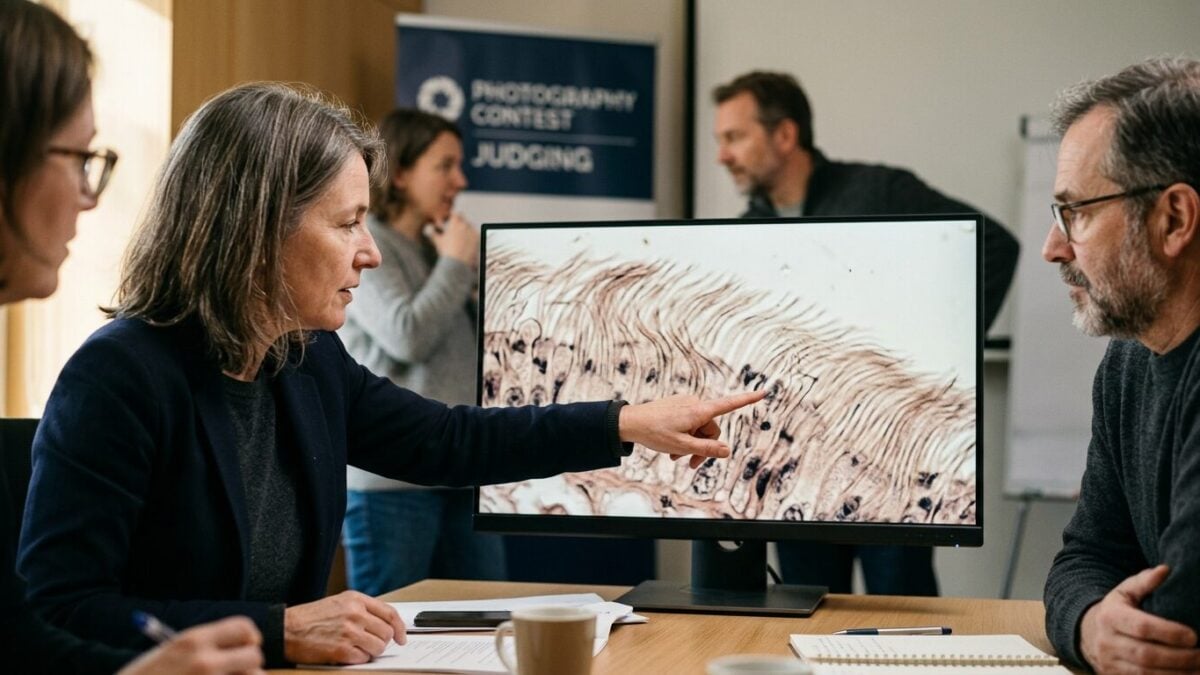
Nikon has disqualified a prize-winning microscopy video after deciding that its use of generative AI broke the rules of the Small World In Motion contest. The entry showed cilia moving in the airway of a child with primary ciliary dyskinesia, or PCD, and had drawn objections from scientists who questioned whether the footage was real.
The ruling removes the winning entry from a competition built around microscopic images. Nikon said its decision was not a judgment of the entrant’s professional reputation or scientific contributions.
Why Nikon disqualified the entry
The video was submitted by Dr Ning Xu, a researcher at Tsinghua University in China. It depicted tiny, hair-like structures called cilia, which line airways. Scientists, including former contest judges, complained to Nikon that the footage did not appear authentic.
Nikon said it reached its decision “after thoroughly re-evaluating the video and supporting materials and consulting with members of our judging panel”. The company said the entry “did not comply with the competition rules regarding generative AI”.
Xu had acknowledged using AI, but said he believed he had followed the rules and cooperated with Nikon’s investigation. In an earlier response published by CNN, he said AI was applied to reconstructed grayscale data to distinguish and color structures with similar morphology. He said it was not used to generate the experimental movie, the cilia or their motion.
The disagreement turned on how AI affected the image. Xu described the technology as a way to present scientific data, while critics questioned whether features in the video accurately represented biological structures. The sources do not provide Nikon’s detailed technical findings.
Nikon AI decision affects trust in scientific imagery
The case puts pressure on a contest whose purpose is to show details captured through microscopes. When an entry combines recorded material with AI processing, viewers and researchers need to know what the tool changed. The distinction matters because scientific imagery can communicate evidence as well as visual detail.
Dr Robert Hirst, a University of Leicester scientist who raised concerns, said he was “not surprised” and that he “knew immediately that the video was fabricated”. Hirst, lead scientist for the NHS centre for PCD diagnosis at the university, said the cells and cilia “look nothing like those from PCD patients”.
“I have been diagnosing PCD for 20 years by examining their cilia waveform, length, cell size and shape,” Hirst said. He also said the controversy had affected patients, scientists, doctors and PCD support networks around the world.
Nikon said it will review the rules and procedures of the annual contest, which has run for 15 years, according to the BBC. The review follows a dispute that has reached beyond the judging of one image: the contest must clarify how generative AI can be used in entries meant to represent microscopic observations.
The company’s stated next step is to examine how the competition operates. The disqualification stands, while Nikon considers changes to the rules for future contests.
Source: bbc.com