Dinosaur Fossil Offers Strongest Red Blood Cell Evidence
Researchers studying a 115-million-year-old Aratasaurus bone found cell-like structures and heme, a molecule associated with oxygen-carrying hemoglobin. The…
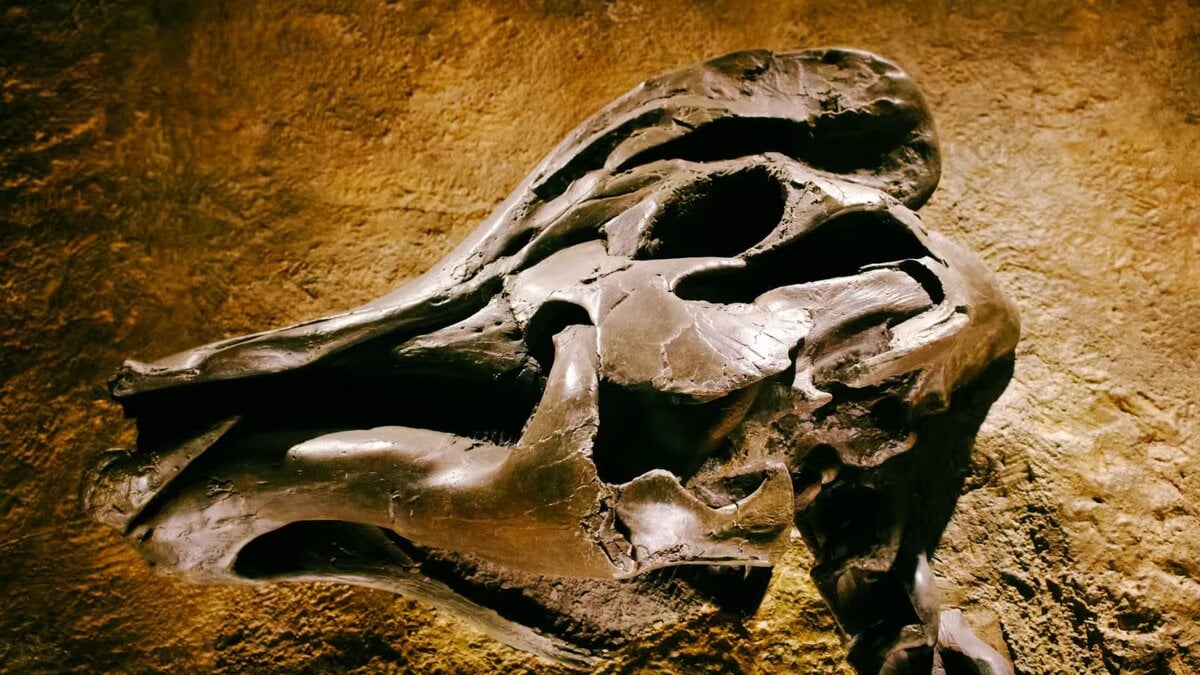
Researchers studying an Aratasaurus fossil in Brazil say scientists they’ve found strongest evidence of red blood cells in a dinosaur bone, pairing cell-like structures with chemical traces of heme. The bone is 115 million years old, but experts still debate whether the structures are blood cells.
The study, published Monday in Proceedings of the National Academy of Sciences, examined a partial hind limb from Aratasaurus museunacionali, a theropod that lived during the Early Cretaceous. Researchers combined microscopic imaging with chemical analysis to look for evidence that the structures were linked to red blood cells.
The result matters because soft tissues and cells rarely survive fossilization, making claims of preserved biological material contentious. If the interpretation holds up, fossils could offer clues to the chemistry of extinct animals—not just their anatomy.
What evidence did researchers find?
Inside tiny vascular canals in the bone, the team found abundant oval microstructures resembling red blood cells. The canals once contained blood vessels and nerve fibers. Chemical tests also identified heme, a molecule in hemoglobin, the protein that carries oxygen in red blood cells.
The researchers say this is the first time heme has been detected in situ within structures in a dinosaur fossil. Their case draws on several kinds of evidence, including the structures’ location and appearance, mineral composition and associated chemical signals.
Lead author Kliti Grice, an organic geochemist and John Curtin Distinguished Professor at Curtin University, said the approach could be applied to other fossils. “The exciting implication is not just what we have found in this dinosaur. It is that we now have approaches that can be applied to other fossils to ask how much original biological information may still be hidden within them,” Grice said in an email.
There is a potential payoff beyond identifying one fossil’s contents. Cellular and molecular traces could give researchers access to information about the chemistry of an animal and its tissues, Grice said. But she cautioned that one specimen is not enough to draw conclusions about Aratasaurus’ physiology.
Why are experts still debating the discovery?
Mary Schweitzer, a professor at North Carolina State University who has found remnants of blood vessels and soft tissues in dinosaur fossils, questioned whether the structures are red blood cells. She said dinosaur red blood cells should have a nuclear bulge, giving them a dome-like shape on both sides, while the structures in this bone are concave.
Schweitzer was more persuaded by the chemical findings, including heme and collagen amino-acid building blocks. The distinction matters: detecting biological compounds does not by itself settle whether the shapes seen under a microscope are cells.
The fossil was excavated in 2008 at Mina Pedra Branca, a geological site in northeastern Brazil within the Romualdo Formation. Researchers suggest stagnant, low-oxygen water may have slowed decomposition after the remains were buried. The bone also contained traces of manganese oxides, which may have helped stabilize the structures.
Grice said the next questions include whether this preservation is extremely rare or has been overlooked in other fossils. Finding similar evidence in more specimens could allow researchers to ask more detailed questions about extinct animals, she said.
For now, the claim rests on one Aratasaurus fossil—and the microscopic structures remain disputed.