Could You Survive Without Microsoft? The Hidden Cost of Dependence
Microsoft reported a 25% rise in total emissions in 2025 as data centres expand. As Cop31 opens in Turkey, an analysis asks what relying on one software supplier costs organisations in money, hardware and e-waste.
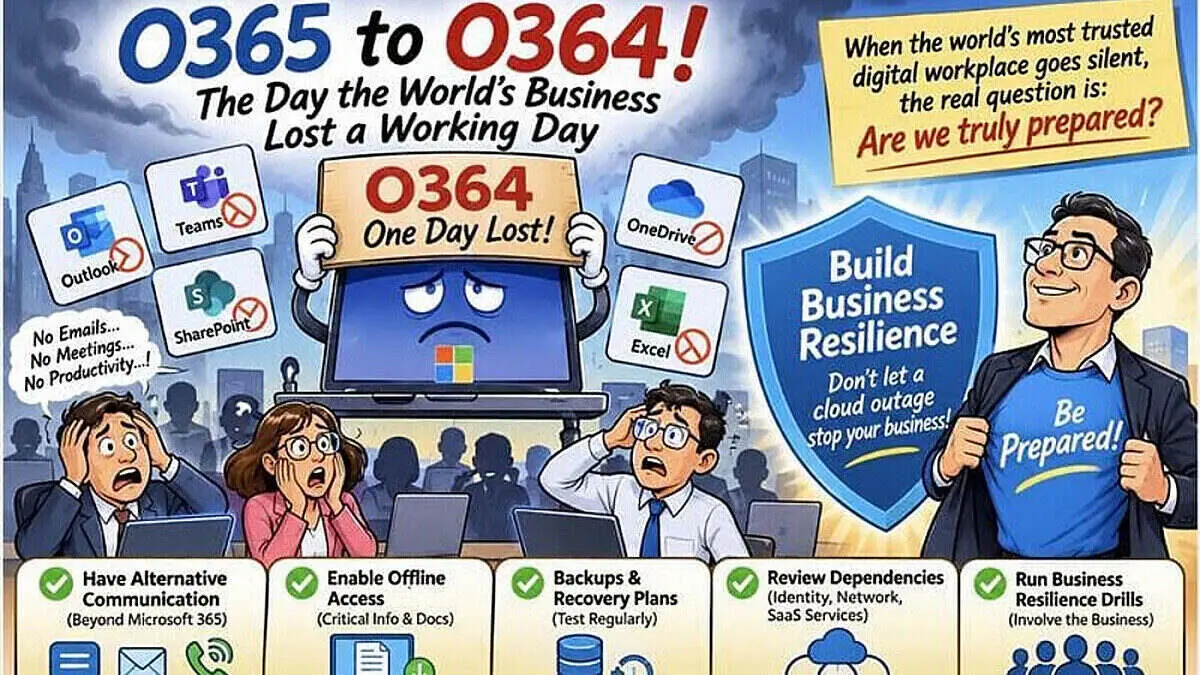
Microsoft reported a 25% year-over-year rise in total emissions in 2025, according to its 2026 sustainability report, just as world leaders gather at the UN climate summit, Cop31, in Turkey. Could you survive without Microsoft? An analysis published November 13 argues the real price of dependence on one software supplier is higher than the subscription fee.
Losing a single app, such as Outlook, can stall a working day. Email, calendar and meeting invitations all go with it.
Data centres and emissions
The cloud runs on data centres, electricity, cooling systems and hardware. The International Energy Agency estimates data centres used 415 terawatt-hours of electricity in 2024, around 1.5% of global demand. It projects 945 terawatt-hours by 2030, driven largely by AI and other digital services.
Microsoft attributes its emissions rise primarily to expanding data centres and a change in renewable-energy certificate accounting. The company is also investing in cleaner energy and more efficient infrastructure.
Turkey's Cop31 presidency released the voluntary Antalya artificial intelligence pledge in October. It aims to encourage climate-responsible AI and acknowledges the technology's energy and water demands.
The World Resources Institute, a global research organisation, welcomed the pledge's direction. It warned that voluntary commitments need stronger accountability mechanisms.
When software becomes a hardware bill
Windows 10's regular support ended in October 2025. Microsoft offers extended security updates for eligible consumer devices through October 2027.
That does not make every older computer obsolete. Software support and compatibility can still push organisations to replace machines that work.
Making devices uses energy and raw materials, and it creates electronic waste. The UN's global e-waste monitor says the world generated 62 million metric tonnes of e-waste in 2022. Only 22.3% was documented as formally collected and recycled.
Those figures cover all electronic waste, not waste attributable to Microsoft.
Switching costs
A subscription has a visible price. Training staff, migrating files, replacing equipment, running duplicate systems and changing suppliers add costs that are harder to see.
Economists call these switching costs. They can lock organisations into an existing provider even when better-value alternatives appear.
Regulators have taken notice. In March 2026, the UK's Competition and Markets Authority announced plans to investigate Microsoft's business software ecosystem.
The International Telecommunication Union has scheduled a Cop31 event for November 16. It will cover financing cleaner digital infrastructure, measuring emissions, and promoting durable, repairable and reusable electronics.