U.S. Loses Measles Elimination Status After Transmission Resumes
The United States has lost its measles elimination status after the virus reestablished regular transmission, public health researchers said. More than 8,000 people have been sickened in outbreaks over the past two years, and states have reported 13 measles-associated deaths. The Pan American Health Organization planned to announce the decision on Nov. 17.
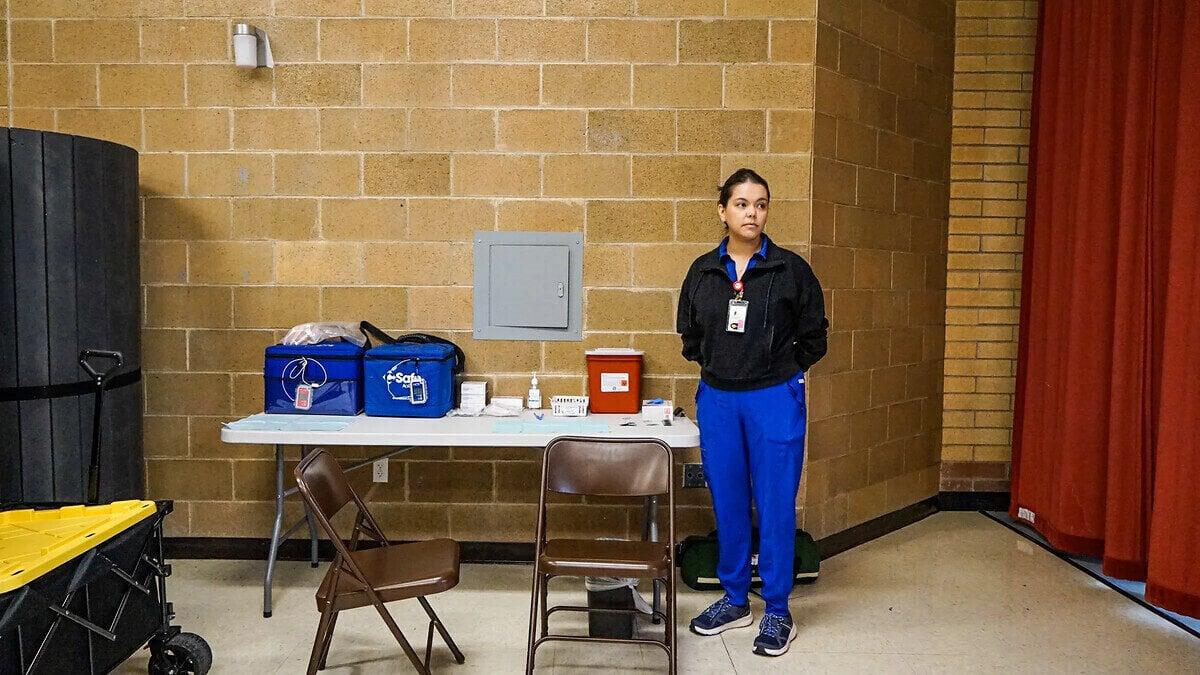
The United States has lost its measles elimination status after the virus reestablished regular transmission, public health researchers said this week. The decision marks a reversal of a public health achievement secured a quarter century ago, as outbreaks have sickened more than 8,000 people over the past two years.
The Pan American Health Organization (PAHO), which oversees health in the Americas and works with the World Health Organization, planned a public announcement on Nov. 17. Its assessment relied on analyses by the Centers for Disease Control and Prevention and an independent group of measles experts.
In public health terms, elimination means a country’s outbreaks end within a year. The United States no longer meets that standard.
“It’s a very sad moment,” said Anne Schuchat, an epidemiologist and former deputy director of the CDC who was not involved in PAHO’s decision. She said measles can bring high fevers, missed work and school, long-term complications and death.
Over the past two years, more than 830 people have been hospitalized with measles in the United States. Johns Hopkins University researchers estimate the outbreaks have sickened more than 8,000 people and cost roughly $125 million in medical care, public health response and productivity losses.
States have reported 13 measles-associated deaths, including a 7-month-old in New York and infants in Pennsylvania and Wisconsin in recent months. Babies typically are not vaccinated before they turn 1.
Two doses of the measles-mumps-rubella vaccine prevent about 97% of infections. When almost everyone in a community is vaccinated, the virus cannot spread, according to public health guidance described by researchers.
Researchers had anticipated PAHO’s decision after a Utah outbreak passed the one-year mark in June. The United States had maintained elimination status since 2000, when the CDC and PAHO determined that measles transmission was no longer a national threat.
Elimination did not mean measles had been eradicated worldwide. People infected abroad could still spark outbreaks, but those typically fizzled because of herd immunity: when 95% of a community is immunized, outbreaks can peter out and vulnerable people are protected.
Emily Hilliard, a spokesperson for the Department of Health and Human Services, attributed the resurgence to vaccination gaps that opened before the current administration. Childhood vaccination rates have steadily declined since the COVID pandemic began.
Scientists have also blamed the Trump administration for spreading vaccine misinformation and limiting responses to outbreaks. The administration cut millions of dollars from children’s immunization programs run by state health departments and ended funding for research on vaccine hesitancy.
Hilliard rejected claims that the department was suppressing information about measles. She said Health Secretary Robert F. Kennedy Jr. and the CDC had provided approximately $100 million in additional outbreak-response funding, and that journal publication timelines vary with data analysis and scientific review.
“The suggestion that HHS is deliberately suppressing information about measles or other vaccine-preventable diseases is false,” Hilliard said in an email.
In the past, large outbreaks prompted federal campaigns to increase vaccination. The last major surge before elimination ran from 1989 to 1991, when Patsy Stinchfield was a pediatric nurse at a children’s hospital in Minnesota. She recalled a ward devoted to children with measles and efforts to protect patients with cancer and weakened immune systems.
Two children at the hospital died. “That changed my career forever,” said Stinchfield, now executive director of the Measles Collaborative, an initiative that educates the public about vaccines and assists health workers responding to outbreaks.
After a 2015 outbreak spread among unvaccinated children at Disney parks in California, Congress summoned Schuchat to testify. “Vaccination wasn’t a partisan issue,” she recalled. “This was about problem-solving: What can we do about this?”
A measles outbreak in West Texas began shortly after President Donald Trump took office in 2025. Within seven months, it had become the largest US outbreak since 1992, spread to Mexico and at least three other states, sickened more than 4,500 people in the two countries and killed at least 16.
CDC scientists told researchers that the agency’s detailed outbreak reports had become slow and unpredictable. Hilliard said the timing varies with analysis and review. The CDC’s national measles update has not appeared in its journal this year.
 Take the quizWhat Kind of Holiday Spender Are You? Take the Black Friday QuizStart →





 Lifestyle7 Signs Your Social Battery Is Running Low (and Why You Keep Cancelling Plans)
 Lifestyle · Food & HealthThanksgiving Food Safety: How Long Leftovers Last and the Safe Turkey Temperature
 Lifestyle7 Quiet Habits of Emotionally Intelligent People, According to Psychologists
 LifestylePeople Who Don’t Like Celebrating Their Birthday Often Share These 7 Traits