Flinders Opens $3 Million Centre to Track MND and Test Therapies
Flinders University has opened a $3 million centre to develop ways to track motor neurone disease and assess experimental treatments. The South Australian Government, FightMND and the university funded the centre, alongside a separate $4 million state commitment for support services such as equipment loans and health care.
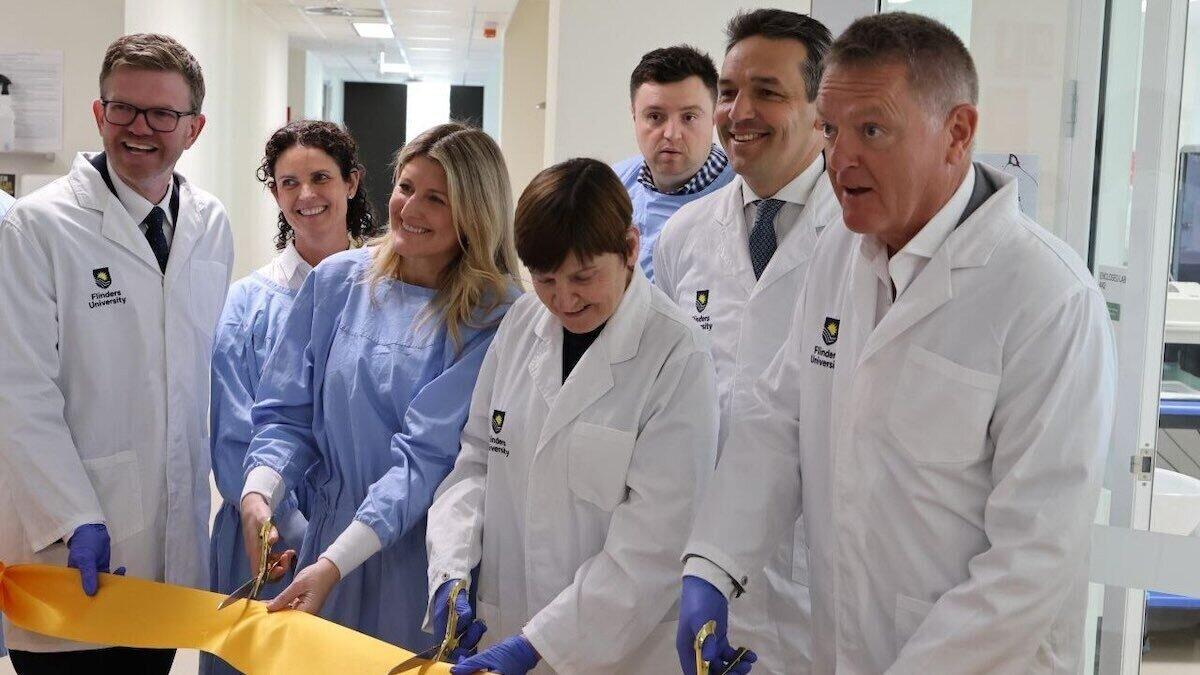
Flinders University opened a $3 million Adelaide research centre on November 17 to track motor neurone disease (MND) and assess experimental treatments, in a bid to improve clinical trials and care for people living with the condition.
The Ian Davis MND Biomarker Research Centre of Excellence, based in the university’s Health and Medical Research Building, will develop ways to monitor disease progression and determine whether potential therapies are working.
MND damages nerve cells that control voluntary muscle movement. It can make movement, speaking, swallowing and breathing increasingly difficult, and has no cure.
The condition affects approximately 150 to 200 South Australians at any given time. Around a quarter of South Australians living with MND are estimated to reside in rural and remote areas.
Led by Associate Professor Mary-Louise Rogers, the research team will look for non-invasive biomarkers: measurable biological signals that can help track the disease without more invasive tests.
The work builds on the Flinders team’s discovery of what it describes as the world’s first urinary biomarker for MND progression. “This investment will help us build on that breakthrough using powerful new technologies,” Rogers said.
“The Centre will give researchers new tools to detect disease signals earlier and better understand how potential therapies are working,” she said.
Researchers hope earlier detection of disease changes will make clinical trials more effective and speed treatment development. The stated goals include improving quality of life and potentially extending survival.
The South Australian Government, FightMND and Flinders University established the centre through a partnership. The state committed $1.8 million over three years until 2028–29; FightMND contributed $449,268, and Flinders provided an in-kind contribution of $732,015.
The state also committed a further $4 million to continue and expand practical support for South Australians affected by MND. Services include rapid-access loans of breathing devices, mobility aids and communication technology, as well as multidisciplinary health care for people over 65 who cannot immediately access Australian Government assistance.
Flinders Vice-Chancellor Professor Colin Stirling said Rogers and her team had advanced the university’s MND biomarker research and work on new therapies. He said the partnership was “advancing the research needed to improve care and bring hope to people affected by MND.”
Health and Wellbeing Minister Blair Boyer said the centre would add research infrastructure and specialist capabilities in South Australia. The team also received the Excellence in Collaborative Innovation Award at the 2026 South Australian Science Excellence and Innovation Awards.
 Take the quizWhat Kind of Holiday Spender Are You? Take the Black Friday QuizStart →
- 1Women With Autoimmune Diseases Wait About 4 Years for Diagnosis, Study Finds
- 2Micron Stock Falls 28% as $35.16 Billion Buyback Nears

- 3I’m A Celebrity 2026 Line-Up: Rooney Leads 11 Stars Into Jungle

- 4Taylor Swift and the Falcons Game Today: Chiefs in Atlanta

- 5Actor Says David Walliams Sexually Humiliated Him on Stage

 Lifestyle7 Signs Your Social Battery Is Running Low (and Why You Keep Cancelling Plans)
 Lifestyle · Food & HealthThanksgiving Food Safety: How Long Leftovers Last and the Safe Turkey Temperature
 Lifestyle7 Quiet Habits of Emotionally Intelligent People, According to Psychologists
 LifestylePeople Who Don’t Like Celebrating Their Birthday Often Share These 7 Traits