Foundational tests laser reflectors to track space junk
British startup Foundational has tested a small laser-reflecting device designed to keep satellites trackable after they stop working. Its Retro-2 demonstrator returned 6,111 laser shots during five orbital passes, the company said, as satellite operators seek ways to manage collision risks.
British startup Foundational said on November 17 that its laser-reflecting device had passed an orbital test, offering a potential way to track space junk.
The Retro-2 device returned 6,111 laser shots from the ground across five passes in low Earth orbit. Foundational developed the system with the European Space Agency.
The company's long-term aim is to help operators monitor spacecraft even after they fall silent. That could help manage collision risks as more objects crowd Earth's orbit.
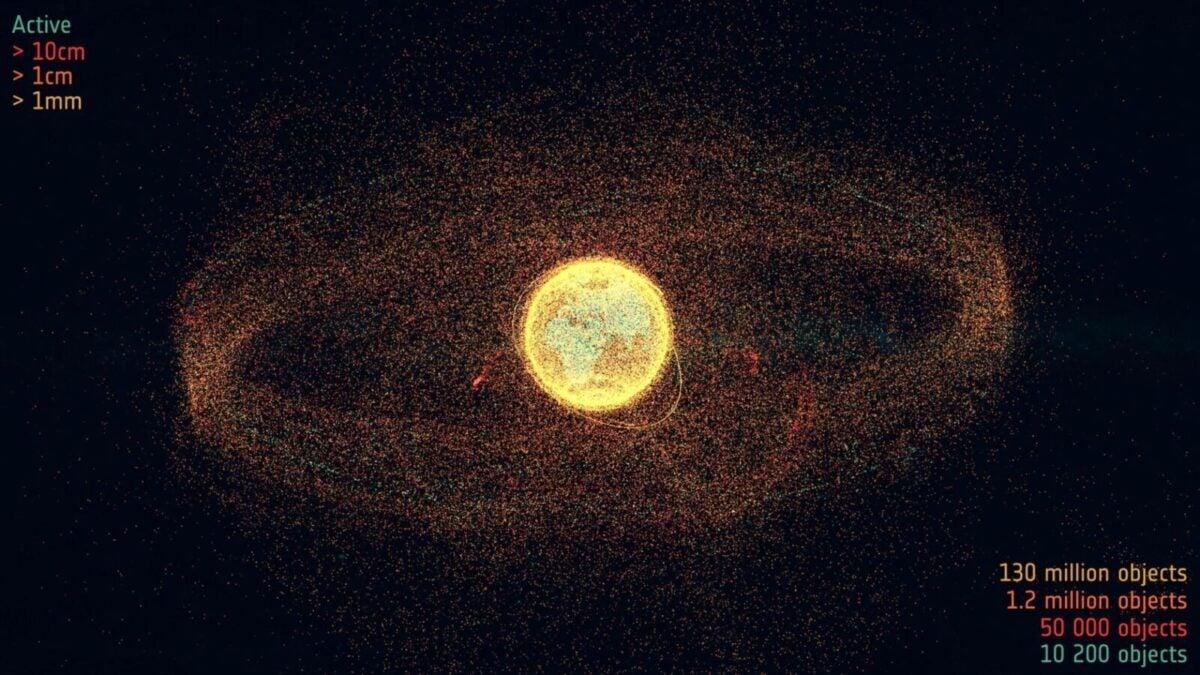
Millions of pieces of space debris circle Earth, according to the European Space Agency. Even small fragments can be dangerous because of their speed.
Seven reflectors returned laser signals
Retro-2 has seven reflectors and was attached to a small satellite for the demonstration. That satellite was integrated into an ION carrier craft operated by Italian company D-Orbit.
The mission launched in July on SpaceX's Transporter-17 rideshare flight.
The early-stage test checked whether the reflectors could return laser-ranging signals from a satellite. Laser ranging uses the returned signals to measure distance.
The test covered satellite altitudes between about 600 kilometers and 870 kilometers, or about 370 to 540 miles. Its usable range was 300 to 1,400 km, or 186 to 870 miles.
The technology needs “no electronics, power or commands from its host spacecraft,” Foundational said. Ground stations can use it to keep track of the spacecraft.
Dave Gooding, Foundational's co-founder and chief technical officer, said the tests demonstrated “millimeter-level ranging precision” with a device weighing 50 grams, or 1.8 ounces.
Tracking satellites after they fall silent
The device is intended for tracking rather than physically removing debris. Other proposed approaches include using large space nets or lasers to bring small fragments down to Earth.
Operators are also deliberately deorbiting large satellites, while a few spacecraft have been refueled to keep them operating.
“As space becomes increasingly crowded, keeping satellites trackable throughout their lifetime and beyond is critical to managing collision risks,” Gooding said.
London-based Foundational was founded in 2025 and has raised £8.2 million ($10.9 million) in pre-seed funding.
 Take the quizWhat Kind of Holiday Spender Are You? Take the Black Friday QuizStart →
- 1U.S. Emergency Alert Test Nov. 17 Is Not a Power Outage

- 2Gold Silver Price November: Futures Rise Near Yearly Lows

- 3Michael Clarke Says Sandpapergate Scars Drew Steve Smith to New York

- 42027 NFL Mock Draft Puts Ohio State’s Jeremiah Smith at No. 1

- 5GTA 6 New Zealand Time Trick Is Not Guaranteed to Work

 Lifestyle · Food & Health4 Reasons to Eat Oatmeal, According to Nutrition Experts
 Lifestyle7 Signs Your Social Battery Is Running Low (and Why You Keep Cancelling Plans)
 Lifestyle · Food & HealthThanksgiving Food Safety: How Long Leftovers Last and the Safe Turkey Temperature
 Lifestyle7 Quiet Habits of Emotionally Intelligent People, According to Psychologists