8th Pay Commission Hears 3.833 Fitment Request
India’s central government employees have asked the 8th Pay Commission to use a 3.833 multiplier for basic pay and pensions. Their lead negotiator says he cannot predict whether it will be accepted, while the government has not announced an effective date for a revision.
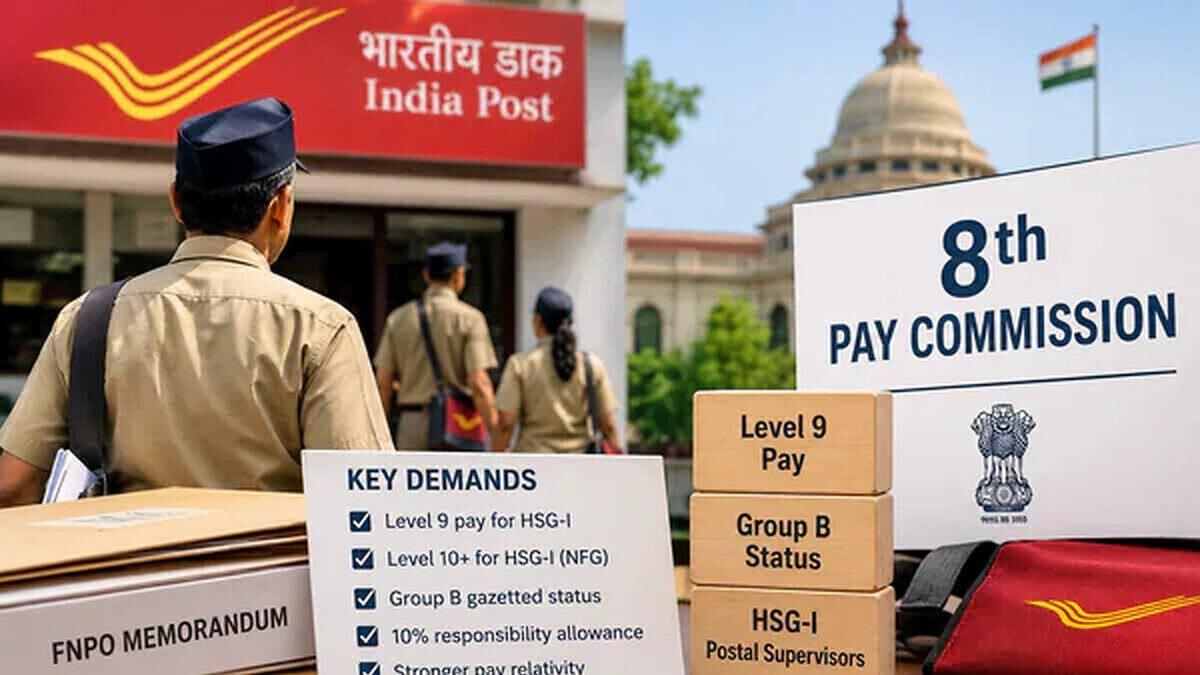
India’s 8th Pay Commission has heard a request for a 3.833 fitment factor, a multiplier used to revise basic pay and pensions. Employee negotiator Shiv Gopal Mishra said acceptance was uncertain. The proposal would raise minimum basic pay from Rs 18,000 to about Rs 69,000 a month.
Mishra is secretary of the staff side of the National Council (Joint Consultative Machinery), which represents employees in the talks. The staff side submitted its memorandum to the commission earlier this year.
“The 8th Pay Commission heard our demands patiently. We submitted our suggestions, they took note of the same,” Mishra said.
He said the staff side considered its demands reasonable and supported by data. Asked whether the commission would accept the proposed multiplier, he said, “We can't say what the future holds.”
Employees seek higher annual increments
The staff side has requested a uniform 3.833 multiplier for existing basic pay and pensions. The previous pay commission used a factor of 2.57. Other unions and associations have proposed factors ranging from 3.61 to 4.
The memorandum also calls for the annual increment, or yearly pay increase, to double from 3% to 6%. It proposes combining Levels 2 and 3, Levels 4 and 5, Levels 7 and 8, and Levels 9 and 10.
The staff side also wants a one-time upgrade for Level 5 employees to Level 6. It has requested a simpler pay matrix, the structure that sets pay across levels, up to Level 13.
Its minimum-wage calculation covers a family of five. It includes housing, utilities and other everyday costs, alongside a daily diet of 3,490 kcal based on ICMR norms.
Government has not set effective date
The government has not officially notified an effective date for the pay revision. It says decisions on pay, the fitment factor and implementation will follow its review of the commission’s report.
Mishra expressed confidence that arrears, or back pay, would be paid from January 2026. “We are 100% sure of arrears being rolled out from January 2026,” he said.
The previous commission’s term ended on December 31, 2025. Employees have treated January 1, 2026, as the natural date for the next revision.
The government established the current commission in a notification dated November 3, 2025. Former Supreme Court judge Ranjana Prakash Desai chairs it, with Prof Pulak Ghosh as part-time member and Pankaj Jain as member-secretary.
The commission has 18 months to submit its report, putting the deadline around May 2027. It has completed regional consultations across states and Union Territories, with the final meetings held in Bengaluru.
The Union Cabinet approved the previous commission’s recommendations in mid-2016 and applied them from January 1, 2016. Employees received arrears for the intervening months.
 Take the quizWhat Kind of Holiday Spender Are You? Take the Black Friday QuizStart →
- 1Stock Market Today: Dow Slides 1.34% and VIX Jumps 15% at Midday

- 2Joachim Klement to Sell Stocks After S&P 500 Signal

- 3Stock Market Today: Nasdaq, S&P 500 Futures Slide as AI Selloff Deepens
- 4Kenneth Walker’s Groin Injury Puts Cardinals Game in Doubt

- 5Pat Cummins Faces Captaincy Doubts From Mitchell Johnson

 Markets · FintechHow to Calculate Compound Interest: Formula, Examples and the Rule of 72
 Lifestyle · Food & HealthNormal Blood Pressure Chart by Age: Healthy Ranges Explained
 Lifestyle · Food & HealthWhat Is Raynaud’s Syndrome? Why Fingers Turn White in the Cold
 Lifestyle · Food & Health4 Ways Walking After Meals Helps Your Body, Doctors Say