EPFL Researchers Predict Heating Needed for Fusion Plasmas
Researchers at EPFL’s Swiss Plasma Center have developed a theory to predict when fusion plasma retains heat more effectively. Their model estimates that ITER would need at least 43 megawatts of heating power to reach that state, while SPARC would need 26 megawatts.
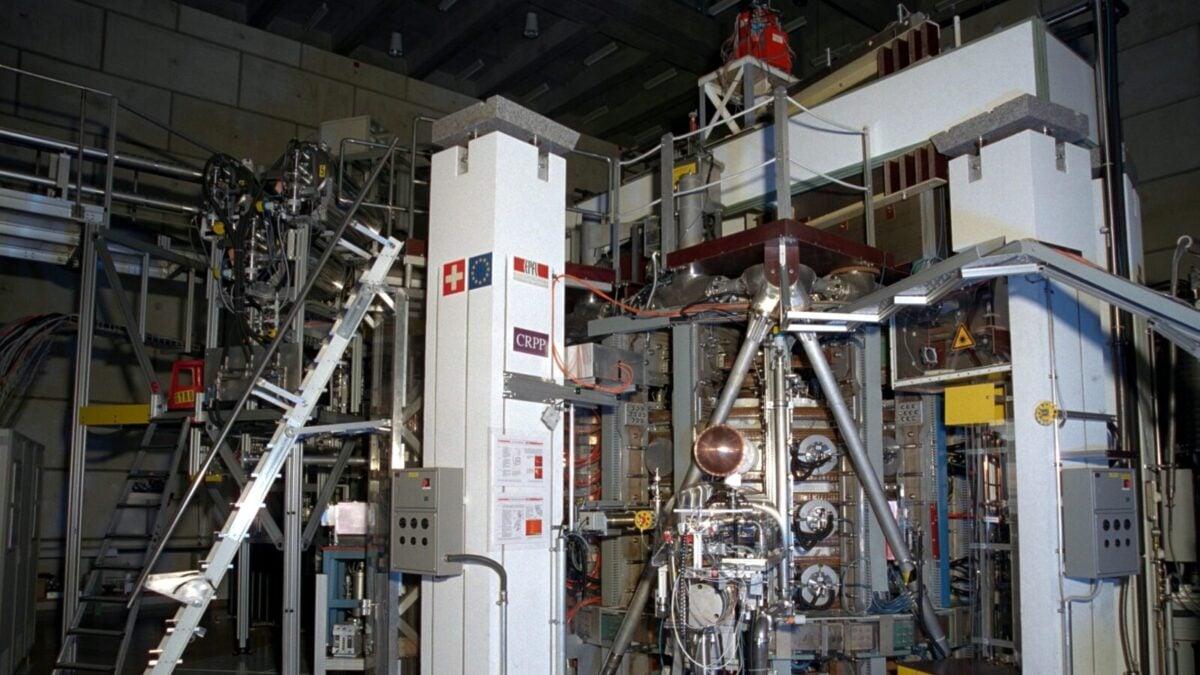
Researchers at EPFL’s Swiss Plasma Center have developed a theory explaining how fusion plasmas enter a state that retains heat more effectively. The model predicts the heating power needed for that transition, a challenge for future fusion devices.
The team estimates that ITER, an international fusion experiment under construction in France, would need at least 43 megawatts of heating power. That is below its planned 73-megawatt capacity.
For SPARC, the predicted minimum is 26 megawatts, close to its planned 25-megawatt capacity. US company Commonwealth Fusion Systems is developing the compact fusion device.
Brenno De Lucca, a doctoral assistant at the Swiss Plasma Center, led the study, which was published in Physical Review Letters.
Fusion combines light atomic nuclei, the process that powers the sun. On Earth, scientists heat gas to extreme temperatures to create plasma, a charged state of matter. Keeping it hot and stable long enough to produce fusion energy is a major challenge.
Devices called tokamaks use powerful magnetic fields to contain plasma in a doughnut-shaped chamber. Turbulence carries heat away from the plasma, making the conditions needed for fusion harder to maintain.
Researchers discovered in 1982 that heating beyond a certain threshold can sharply reduce turbulence at the plasma’s edge. The resulting state, known as high confinement or H-mode, allows the plasma to retain energy more effectively.
Scientists had struggled to predict the heating power needed to reach H-mode. The threshold changes with plasma density and magnetic-field direction, two effects earlier theories had not fully explained together.
De Lucca’s team simulated plasma behavior as heating increased, then developed a mathematical model and compared its predictions with measurements from existing tokamaks.
The researchers found that turbulence generates flows moving at different speeds across the plasma’s outer region. Those differences help suppress turbulence and reduce heat loss.
The model also shows how magnetic-field direction, plasma flows and particle collisions combine to make the transition easier in one magnetic configuration than another.
The equations describe how the threshold changes with density. The required power increases with density in one regime and decreases in another, producing a density at which the heating requirement is lowest.
For SPARC, the 26-megawatt prediction leaves considerably less room for uncertainty than the ITER estimate.
 Take the quizWhat Kind of Holiday Spender Are You? Take the Black Friday QuizStart →
- 1Stock Market Today: Dow Slides 1.34% and VIX Jumps 15% at Midday

- 2Joachim Klement to Sell Stocks After S&P 500 Signal

- 3Stock Market Today: Nasdaq, S&P 500 Futures Slide as AI Selloff Deepens

- 4Kenneth Walker’s Groin Injury Puts Cardinals Game in Doubt

- 5Pat Cummins Faces Captaincy Doubts From Mitchell Johnson

 Lifestyle · Food & HealthNormal Blood Pressure Chart by Age: Healthy Ranges Explained
 Lifestyle · Food & HealthWhat Is Raynaud’s Syndrome? Why Fingers Turn White in the Cold
 Lifestyle · Food & Health4 Ways Walking After Meals Helps Your Body, Doctors Say
 Lifestyle · Food & Health4 Reasons to Eat Oatmeal, According to Nutrition Experts