Dark Energy May Stem From Strong Force, Researchers Say
Researchers at the University of British Columbia and the University of Sheffield have proposed that dark energy may arise from the physics behind the strong nuclear force. Their model matched astronomical observations without introducing new particles or fields, though the team says further testing is needed.
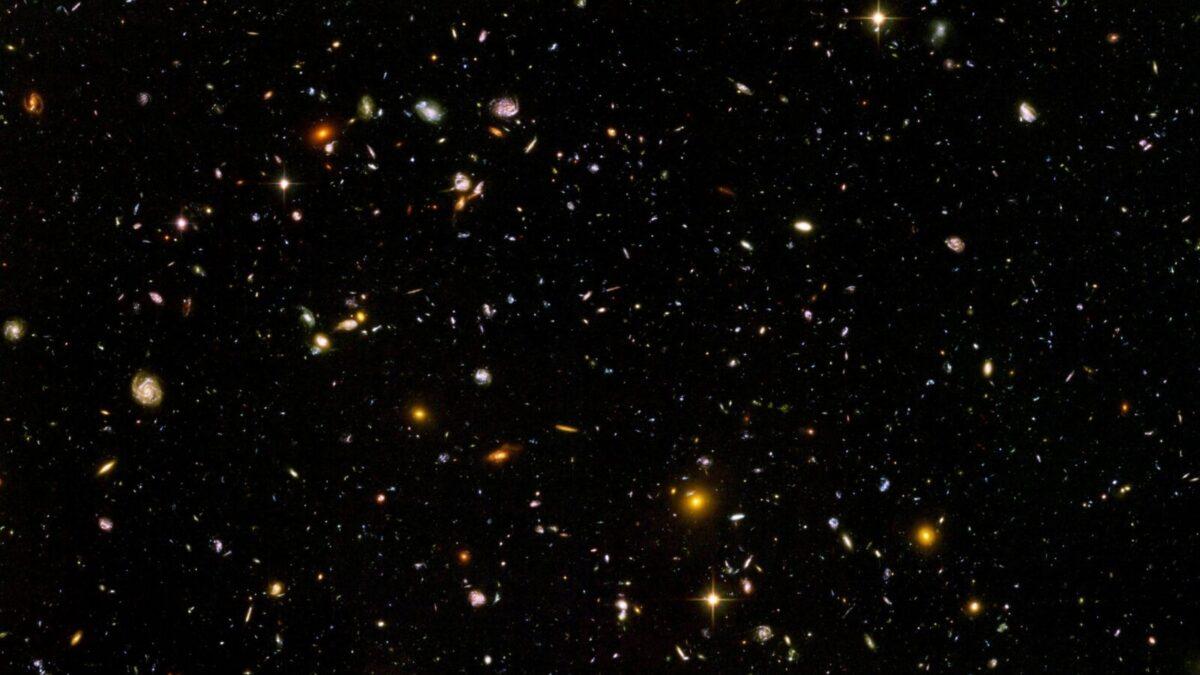
Researchers at the University of British Columbia and the University of Sheffield say dark energy may originate in known particle physics. Their model links the universe’s accelerating expansion to the theory behind the strong nuclear force, without requiring new particles.
Dark energy accounts for approximately 70% of the universe’s total energy budget, but physicists do not know what it is or where it comes from. The proposed explanation appeared in The Astrophysical Journal.
Many other explanations propose hypothetical particles or fields that experiments have not detected. The new model instead draws on the standard model of particle physics, which describes fundamental particles and their interactions.
A link to the strong force
The proposal centers on quantum chromodynamics, or QCD, the established theory of the strong nuclear force. That force binds fundamental particles called quarks inside protons and neutrons.
The researchers focused on the quantum vacuum: the subatomic fields and energy present even in empty space. They propose that its structure responds as the universe expands, creating an energy shift capable of driving acceleration.
University of British Columbia physics and astronomy professor Ariel Zhitnitsky developed the theoretical ideas behind the paper. “Our theoretical framework suggests no new particles may be required at all,” he said.
Zhitnitsky said the energy scale predicted from the QCD vacuum and gravity is close to the dark-energy scale observed today. The calculation does not require an added field or parameter, he said.
University of British Columbia professor Ludovic Van Waerbeke said the observed dark-energy scale emerges from known physical constants without additional fitting parameters.
Tests against astronomical observations
The researchers compared their model with astronomical observations, including light from distant exploding stars and radiation left over from the early universe. The model matched those observations as well as standard cosmological models, the team found.
Researchers at the University of Sheffield helped compare the proposal with cosmological data. The team plans to refine its calculations and test the framework against data from next-generation space telescopes.
Lead author Dong Ha Lee, a doctoral researcher at Sheffield, said the analysis reproduced the evolving dark-energy behavior suggested by current observations. “Testing models based on this idea against cosmological data is an essential step,” Lee said.
 Take the quizWhat Kind of Holiday Spender Are You? Take the Black Friday QuizStart →
- 1Stock Market Today: Dow Slides 1.34% and VIX Jumps 15% at Midday

- 2Joachim Klement to Sell Stocks After S&P 500 Signal

- 3Kenneth Walker’s Groin Injury Puts Cardinals Game in Doubt

- 4Stock Market Today: Nasdaq, S&P 500 Futures Slide as AI Selloff Deepens

- 5Pat Cummins Faces Captaincy Doubts From Mitchell Johnson

 Lifestyle · Food & HealthNormal Blood Pressure Chart by Age: Healthy Ranges Explained
 Lifestyle · Food & HealthWhat Is Raynaud’s Syndrome? Why Fingers Turn White in the Cold
 Lifestyle · Food & Health4 Ways Walking After Meals Helps Your Body, Doctors Say
 Lifestyle · Food & Health4 Reasons to Eat Oatmeal, According to Nutrition Experts