Iraqi Forces Enter Kataib Hezbollah Stronghold Under Deal
Iraqi troops entered Jurf al-Sakhar under a deal intended to reduce Kataib Hezbollah’s control without triggering a confrontation. The deployment follows allegations that the Iran-backed armed group ran an oil-smuggling network, which the group denies.
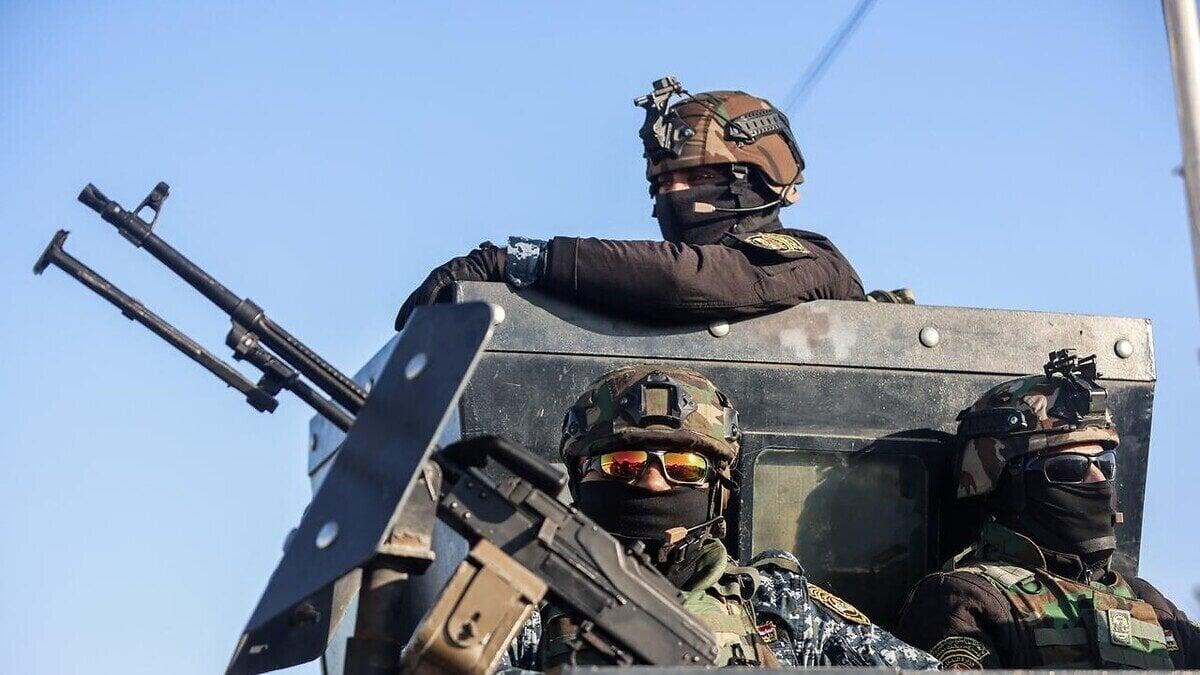
Iraqi security forces deployed in Jurf al-Sakhar on November 20 under a deal intended to limit the reach of Iran-backed Kataib Hezbollah without provoking a confrontation. The move puts government troops in a stronghold of a group that has claimed attacks on US forces.
A convoy flying Iraqi flags traveled toward the city, and soldiers took positions in its center. Kataib Hezbollah members stood nearby, close to their own flags.
Prime Minister Ali al-Zaidi ordered security forces to move against the group after officials accused it of running an oil-smuggling network. Officials said the network siphoned state-owned oil worth hundreds of millions of dollars in Jurf al-Sakhar.
Kataib Hezbollah denies the allegations. Arrests connected to the accusations prompted fears of an armed response.
Deal calls for militia withdrawal
Shiite politicians brokered the arrangement, under which Kataib Hezbollah members were expected to withdraw to other parts of Iraq. A security headquarters is planned in Jurf al-Sakhar to oversee the handover.
Iraq’s energy police have begun securing an oil pipeline in the city. Jurf al-Sakhar is in Babil province, about 50 km (30 miles) south of Baghdad.
Zaidi addressed troops entering the city from a joint military operations center in Baghdad. “From Jurf al-Sakhar, we begin asserting state authority across all of Iraq, confronting corruption and weapons beyond state control,” he said.
Nine senior security and oil officials have been dismissed following an investigation focused on Jurf al-Sakhar.
Iraqi Shiite political figures said Esmail Qaani, commander of Iran’s Revolutionary Guards’ Quds Force, visited Baghdad to help defuse tensions with Kataib Hezbollah.
US pressure to disarm militias
US President Donald Trump has pressed Zaidi to disarm militias that have attacked US troops and facilities in Saudi Arabia and the United Arab Emirates. The attacks followed US and Israeli strikes on Iran in February.
Kataib Hezbollah and other militias that report directly to Iran’s Revolutionary Guards have refused to hand over their weapons to the state. The United States designates Kataib Hezbollah as a terrorist group.
The group was founded after the 2003 US-led invasion of Iraq. It is part of the Islamic Resistance in Iraq, an umbrella group of hardline Shiite armed organizations supported by Iran.
Kataib Hezbollah also forms several battalions in Iraq’s Popular Mobilization Forces, an umbrella of armed factions established in 2014 to fight Islamic State. The force was subsequently recognized as an official security organization.
Its fighters receive state salaries, and some Kataib Hezbollah members hold senior positions in the force. The group often operates outside the chain of command, although it is technically under the prime minister’s authority.
Kataib Hezbollah’s political party, Huquq, has five lawmakers.
 Take the quizWhat Kind of Holiday Spender Are You? Take the Black Friday QuizStart →
- 1Stock Market Today: Dow Slides 1.34% and VIX Jumps 15% at Midday

- 2Joachim Klement to Sell Stocks After S&P 500 Signal
- 3Kenneth Walker’s Groin Injury Puts Cardinals Game in Doubt

- 4Stock Market Today: Nasdaq, S&P 500 Futures Slide as AI Selloff Deepens
- 5Pat Cummins Faces Captaincy Doubts From Mitchell Johnson

 Lifestyle · Food & HealthNormal Blood Pressure Chart by Age: Healthy Ranges Explained
 Lifestyle · Food & HealthWhat Is Raynaud’s Syndrome? Why Fingers Turn White in the Cold
 Lifestyle · Food & Health4 Ways Walking After Meals Helps Your Body, Doctors Say
 Lifestyle · Food & Health4 Reasons to Eat Oatmeal, According to Nutrition Experts