Taiwan Warns Canada of Risk in Closer China Trade Ties
Taiwan’s deputy foreign minister says closer trade ties with China could expose Canada to economic coercion. Chen Ming-chi’s warning follows Prime Minister Mark Carney’s agreement with President Xi Jinping to reduce tariffs as Canada seeks alternatives amid US trade tensions.
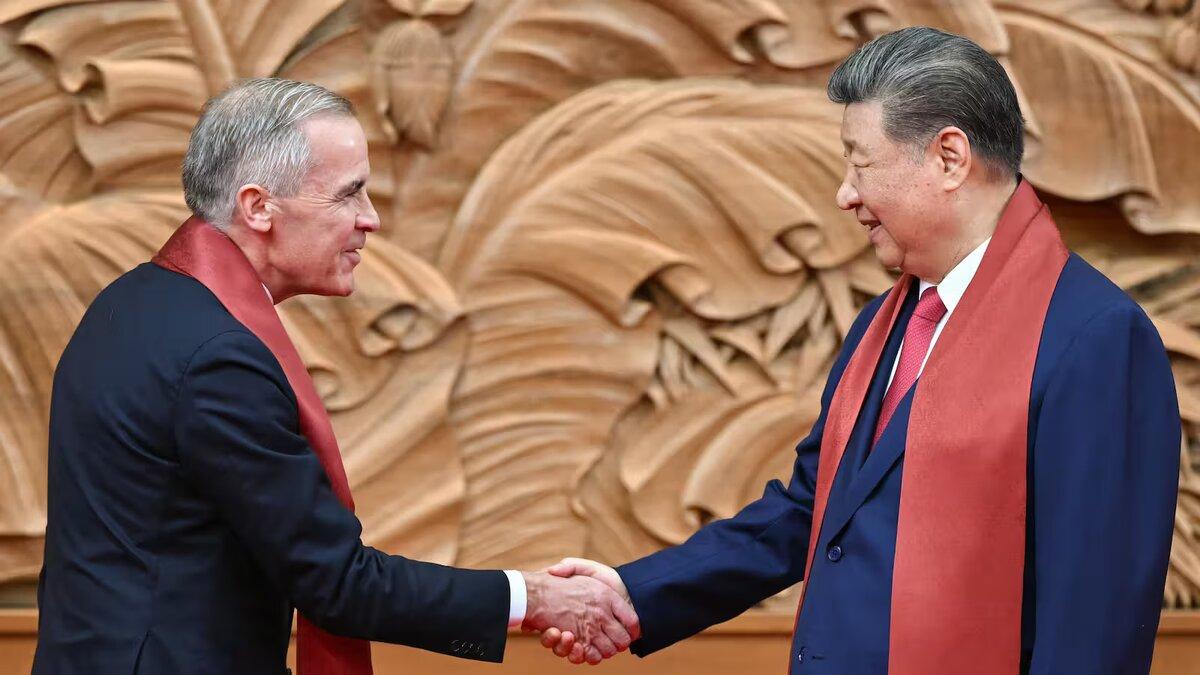
Taiwan’s deputy foreign minister has warned Canada that Prime Minister Mark Carney’s push for closer trade ties with China risks exposing the country to economic coercion. The warning follows Carney’s agreement with Chinese President Xi Jinping to reduce tariffs as Canada seeks alternatives amid US trade tensions.
Deputy Foreign Minister Chen Ming-chi spoke at the Halifax International Security Forum in Nova Scotia. He said Taiwan had learned that economic dependence on China carries consequences.
Carney Seeks New Trade Partners
Carney has urged middle powers to diversify their trade relationships to avoid economic coercion. He has cited US tariffs and China’s restrictions on critical minerals as examples of major powers using economic integration as a weapon.
Chen praised Carney’s speech at the World Economic Forum in Davos, Switzerland. He questioned whether Canada should deepen ties with countries that do not share its democratic values.
The warning came days after Carney met Xi in Shenzhen and agreed to additional tariff reductions. Canada is seeking to diversify trade during US President Donald Trump’s trade war.
Carney has said Canada could turn to Chinese automakers if talks with Washington fail to preserve a viable Canadian auto industry. Trump has threatened 50% tariffs on Canadian vehicles and auto parts beginning January 1.
Chen warned that Chinese electric vehicles could threaten Canadian manufacturers. He also said their connected technology could pose surveillance risks, even if the vehicles were manufactured in Canada.
Carney has argued that Canada’s trade relationship with China differs from Washington’s more complicated ties with Beijing. Canada primarily exports agricultural products, energy and other commodities, rather than sensitive technology such as advanced semiconductors, he said.
Taiwan Points to Trade Restrictions
Chen said Taiwan had reduced its economic dependence on China after Beijing used trade restrictions to exert political pressure. “They are very good at weaponizing interdependence,” he said.
The share of Taiwan’s outbound investment going to China fell from more than 80% in 2010 to 3.8% last year, Chen said.
Taiwanese government figures show exports to China and Hong Kong fell from nearly 44% of total exports in 2020 to about 27% last year.
Chen also pointed to the detention in China of former Canadian diplomat Michael Kovrig and businessman Michael Spavor. Their nearly three-year detention prompted accusations of hostage diplomacy.
The men were arrested in 2018, shortly after Canada detained Huawei executive Meng Wanzhou on a US extradition request. Beijing denied that their detention was politically motivated.
They were released in September 2021, the same day Meng returned to China.
Chen praised Carney’s international leadership and welcomed his commitment to sign a long-delayed trade cooperation arrangement with Taiwan.
 Take the quizWhat Kind of Holiday Spender Are You? Take the Black Friday QuizStart →


 Markets · FintechHow to Calculate Compound Interest: Formula, Examples and the Rule of 72
 Lifestyle · Food & HealthNormal Blood Pressure Chart by Age: Healthy Ranges Explained
 Lifestyle · Food & HealthWhat Is Raynaud’s Syndrome? Why Fingers Turn White in the Cold
 Lifestyle · Food & Health4 Ways Walking After Meals Helps Your Body, Doctors Say