France GDP Falls 0.2%: What Australian Exporters Can Check
French GDP declined in Q3 as exports and investment fell. Australian suppliers can check where their customers and contracts are exposed.

France’s economy shrank 0.2% in the third quarter of 2026 after stalling in the second, as weaker exports and investment outweighed continued household spending. For Australian exporters assessing orders for early 2027, the figures point to a narrower question than whether Europe is slowing. Which French customers face weaker demand, and where are purchasing plans holding up?
- Insee’s detailed estimate put French GDP down 0.2% from the previous quarter, with exports falling 1.6% and fixed investment down 0.9%.
- Household spending rose 0.3%, giving suppliers to consumers a different starting point from businesses reliant on French industrial investment.
- Australia’s trade agreement with the EU is a separate development. Businesses should check when its terms apply before building them into a contract.
Exports and investment led the decline
French exports fell after growing 2.9% in the second quarter, while imports rose just 0.1%. Together, exports and imports subtracted about 0.6 percentage points from quarterly GDP growth, according to the French statistical agency Insee. An increase in inventories partly offset the drag. The headline shows an economy losing output, while the underlying figures help distinguish weaker foreign sales from a broad retreat by French consumers.
Fixed investment fell for a third straight quarter. Insee’s breakdown showed lower investment by households, nonfinancial companies and public administrations. Australian businesses selling equipment or services to investment projects can use that split to decide which buyers need a fresh conversation. A supplier to a construction project, for example, has a different exposure from a specialist with a maintenance contract that a customer has already budgeted for.
- French real GDP: down 0.2% in the third quarter after no change in the second.
- French exports: down 1.6%, following growth of 2.9% in the previous quarter.
- French fixed investment: down 0.9%, after a 0.5% decline.
- French household spending: up 0.3%, following a 0.2% increase.
The sequence matters. Insee’s latest figures show a flat second quarter between contractions in the first and third quarters, so the data do not show two consecutive quarters of falling GDP. The national estimate is a starting point for assessing customer exposure. Demand in a particular industry can rise or fall faster than the national average.
Where Australian exporters have exposure
Australia’s Department of Foreign Affairs and Trade puts two-way trade with France at about A$13.3 billion in 2025. The department’s country brief identifies coal and oilseeds among the larger Australian goods exports to France. Travel, financial services and education also feature among the larger exports. Those activities depend on different purchasing decisions. Factory output may inform an industrial supplier’s near-term outlook, while booking data or enrolment inquiries may be a better indicator for a travel or education business.
Start with the customers that account for the largest share of expected revenue. Where orders are confirmed, compare contract delivery dates with the buyer’s latest purchasing schedule. Where revenue still depends on tenders or renewals, ask which decision gates are left and whether a smaller initial order is an option. This distinguishes a customer with a delayed purchasing decision from one whose underlying demand has fallen.
Currency can affect a deal even when a customer’s order volume stays the same. A supplier invoicing in euros can review the exchange rate assumed in its quote, the timing of deposits, and the cost of imported inputs before fixing an Australian-dollar margin. Domestic price pressures also matter to the cost base, as JournalArta’s coverage of Australian inflation and electricity costs illustrates. Cash-flow assumptions may warrant a separate check alongside Australia’s interest-rate backdrop.
Keep French demand and EU market access separate
Eurostat’s November flash estimate put third-quarter GDP growth at 0.4% for the euro area. Its estimate covered an earlier release window than Insee’s revised national figures. The regional growth estimate still helps explain why a business serving multiple European countries should check its order pipeline country by country. A delay in a French project need not imply that a customer elsewhere in the euro area is facing the same conditions.
The Australia–EU free trade agreement is a separate issue for contracts. Australia’s trade department describes legal, approval and parliamentary steps before the agreement enters into force. Exporters negotiating a price today should check current customs rules and the agreement’s status before quoting any future preference. A business that stands to benefit later can still gather documentation for its product’s origin and review shipping terms with its distributor.
A useful next check is the gap between signed orders and quotations that customers have yet to accept. Compare those two groups and examine whether delivery dates, payment terms or requested volumes have changed. If confirmed orders hold up but quotations are taking longer to convert, the challenge may be timing and working capital. If repeat buyers cut volumes or cancel deliveries, the business has stronger evidence that its particular market is weakening.
French household spending, fixed investment and orders across a supplier’s own accounts are the figures to follow as the next data arrive. The GDP contraction makes those checks more important for Australian companies planning inventory or credit terms for early 2027. Their decisions will be better grounded in confirmed customer demand and the rules in force at shipment than in one quarter’s growth figure alone.
 Take the quizWhat Kind of Holiday Spender Are You? Take the Black Friday QuizStart →
- 1Sandisk shares jump nearly 16% to $85.36 after Kioxia-Nvidia test

- 2Magnitude 5 earthquake hits Los Angeles area

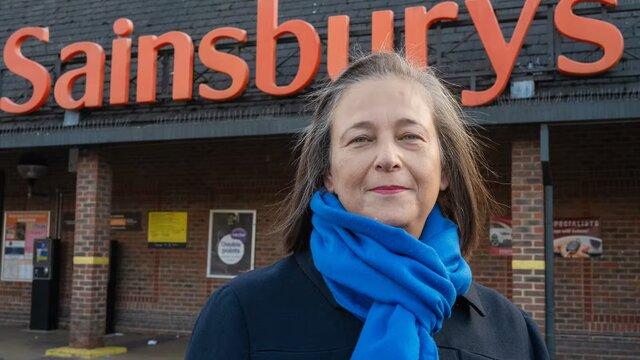
- 3Sainsbury’s wrongly bans woman after facial recognition alert
- 4Tesla shares jump 4.86% to $398.60 after German robotics filing

- 5Nasdaq Composite rises nearly 2% as tech rebound eases AI fears

 Markets · FintechU.S. Bank Cash Flow Manager: How Its Business Line of Credit Works
 Business · Macro & PolicyEmergency Fund Calculator: How Much Should You Save?
 LifestylePeople Who Type Long Texts and Delete Them Often Share These 5 Traits, Psychologists Say
 Business · Macro & PolicyFull Retirement Age Chart: Social Security Ages by Birth Year Explained