Japan’s Nikkei falls 6.2% as AI shares slump on Wall Street
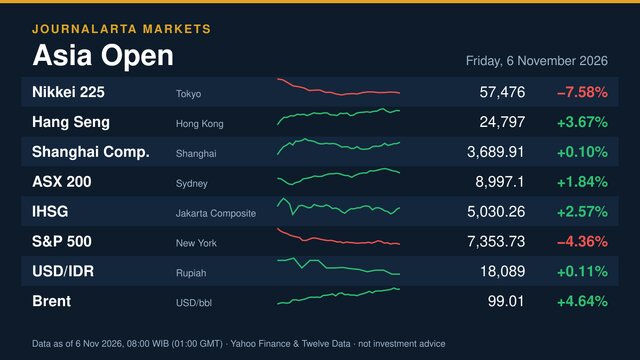
Japan’s Nikkei 225 fell 6.2% to 57,271.19 in morning trading Friday, as Asian markets followed a Wall Street sell-off in artificial-intelligence-linked stocks…

TOKYO — Japan’s stock benchmark Nikkei fell 6.2% to 57,271.19 in morning trading Friday, as a Wall Street sell-off in artificial-intelligence-linked stocks dragged down markets across Asia. The decline puts the spotlight on investor concerns over the cost of building AI data centers and the high valuations of companies tied to the technology boom.
The drop was part of a broader regional retreat. South Korea’s Kospi lost 7.1% to 5,000.25, while Australia’s S&P/ASX 200 fell 0.7% to 9,003.40.
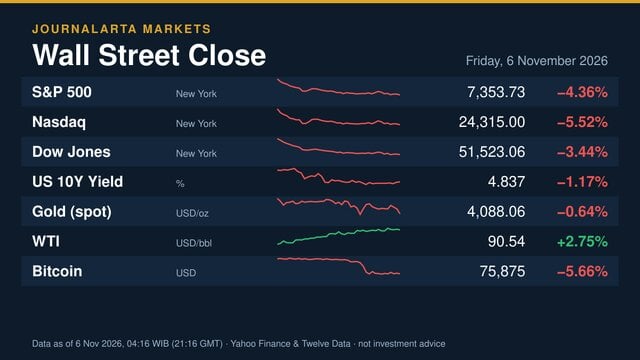
Wall Street’s losses came Thursday, with the S&P 500 falling 4.4% for its worst session since U.S. President Donald Trump’s tariffs unsettled markets worldwide in April 2025. The decline erased more than the index’s gain from the previous day, its strongest in three months.
The shock was broad. The Dow Jones Industrial Average fell 1,833 points, or 3.4%, and the Nasdaq composite dropped 5.5%. The Nasdaq, which includes many technology and AI-related shares, stood 11.9% below its all-time high set last month.
Why did Japan’s stock benchmark Nikkei fall?
The Nikkei’s decline followed sustained pressure on shares of companies that benefited from the AI boom. Investors have been weighing whether the rapid expansion of data centers can continue as borrowing becomes more expensive.
Some critics also argue that AI stock prices had climbed too high and entered a bubble. The resulting swings have affected markets for months, according to the account of the sell-off.
That risk reaches beyond chipmakers. Slower data-center construction could mean fewer purchases of AI chips, electricity and other goods and services used by the industry, which has been driving much of U.S. economic growth.
The pressure on investors is real.
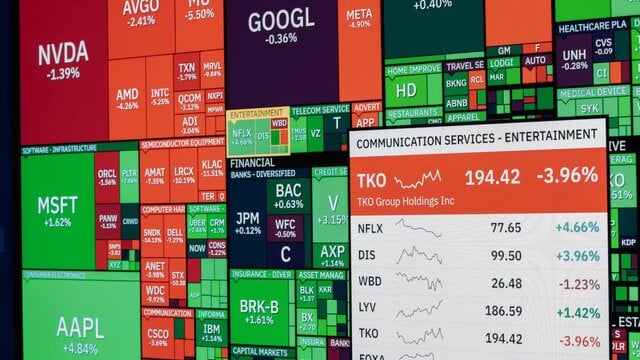
Nvidia fell 9.3% Thursday and was the largest drag on the S&P 500. The company was down 2.6% for the year so far, after annual gains of roughly 39%, 171% and 239% in the last three years. Advanced Micro Devices dropped 17.3%, cloud chip-rental company CoreWeave fell 9.8%, and GE Vernova, which helps power data centers, lost 7.5%.
The size of AI-related companies gives their share moves an outsized influence on broad indexes. A 1% move in Nvidia, for example, affects the S&P 500 more than a 1% move in nearly any other U.S. stock.
What did other markets and investors watch?
The S&P 500 fell 334.89 points to 7,353.73. The Dow dropped 1,833.06 to 51,523.06, while the Nasdaq composite lost 1,421.52 to 24,315.00.
U.S. midterm election results added another concern for data-center companies. Democratic victories raised the possibility that governments could force pauses in construction. Voters across political parties have expressed wariness about AI and dissatisfaction with higher power bills linked to data centers.
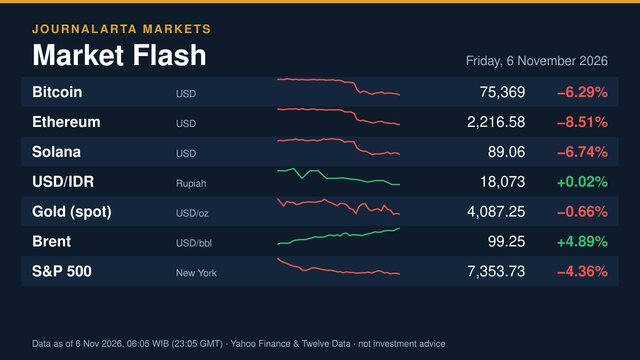
Energy prices moved higher during the session. Benchmark U.S. crude added 0.60% to $91.06 a barrel, while Brent crude gained 3.88% to $98.29. Uncertainty remained over the war with Iran and when the global energy industry could return to normal.
In currency trading, the U.S. dollar rose to 157.83 Japanese yen from 157.65 yen. Treasury yields also fell Thursday: the 10-year yield slipped to 4.84% from 4.90% late Wednesday. Investors continued to assess whether earnings and borrowing costs would support the market as the sell-off spread through Asian trading.