Physicists Create Exotic Supersolid Quantum State at Room Temperature
An international team of physicists has produced an exotic supersolid quantum state at room temperature, without the deep cooling such states normally need. The work, published in Science Advances, could make quantum research cheaper and point toward more practical computing systems and sensors.
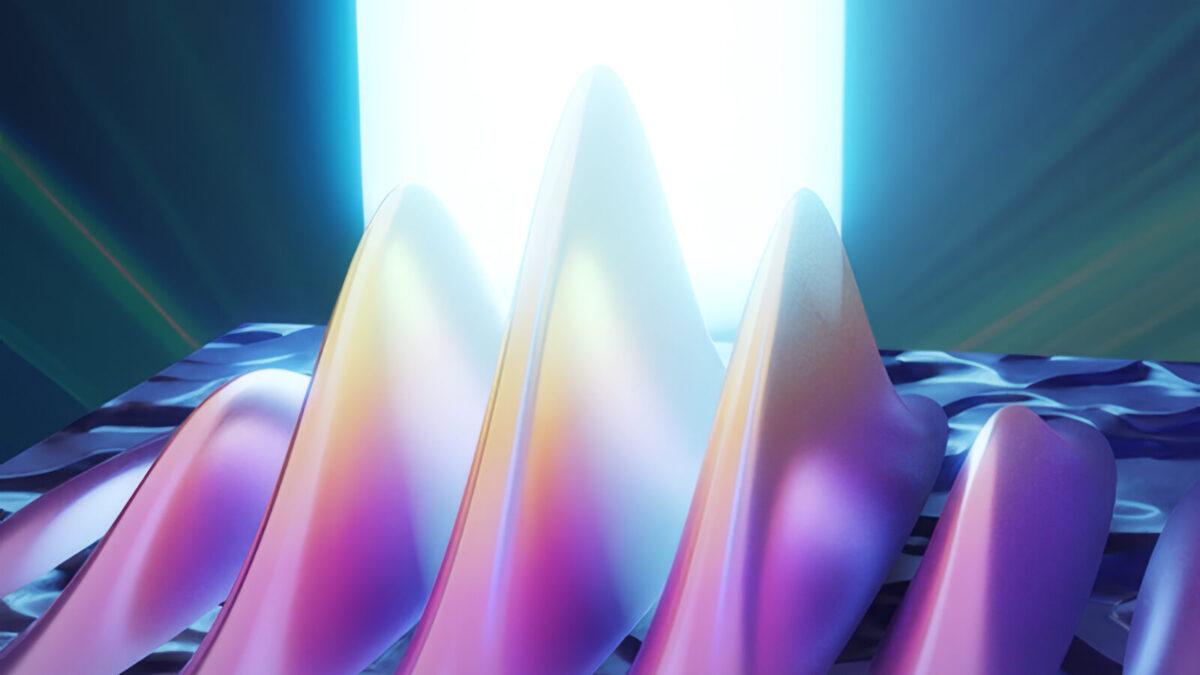
An international team of physicists has created an exotic quantum state of matter at room temperature, without the extreme cooling such states usually require, according to results published in the journal Science Advances.
The findings point toward more practical uses of quantum technology in advanced computing systems and sensors. The state is part liquid and part solid, and it breaks free of the usual confines of solids, liquids and gases.
The team built it inside a microcavity, a tiny structure that traps light. As a testbed, the setup is relatively inexpensive, can be controlled with voltages and does not need a cryogenic fridge.
"Our liquid-crystal microcavities can operate even at temperatures approaching 60 °C (140 °F)," said physicist Wiktor Piecek of the Military University of Technology in Poland.
What the researchers made
The technical name is a supersolid in an exciton-polariton Bose-Einstein condensate. Each part has a plain meaning.
A superfluid is a liquid that flows without resistance. A supersolid is a superfluid with a regular, repeating crystal structure instead of a loose, fluid one.
An exciton-polariton is a hybrid quasiparticle, meaning several particles acting as one, that combines light and matter. A Bose-Einstein condensate is a state in which many particles or quasiparticles merge into a single quantum entity.
To produce it, the researchers combined a liquid crystal, which voltage can control, with an organic semiconductor, which interacts strongly with light. Laser pulses supplied the energy for the quantum reaction.
Short-lived and hard to repeat
The behavior the team sought did not last. The materials degraded over time because the semiconductor reacted with the liquid crystal.
"We had to plan the entire sequence of experiments in advance," said physicist Marcin Muszyński of the City College of New York. "Repeating a measurement meant fabricating an entirely new sample."
Each successive laser pulse offered further validation. The condensate reformed every time, and its stripes, the crystal-like part of the supersolid, lined up in slightly different places with each refresh.
That points to a property of the quantum state itself rather than an effect of the surrounding microcavity. Physicist Guillaume Malpuech of the French National Centre for Scientific Research (CNRS) called it "a textbook example of spontaneous symmetry breaking."
"Theory predicted that the supersolid could choose among several equivalent states, and that is exactly what we observed," Malpuech said.
The individual particles lasted only fractions of a second, which was enough for the observations. Multiple samples gave the same results, and computer simulation models backed them up.
The result offers an easier way to study quantum behavior in superfluids and supersolids without the cost and complexity of extreme cooling. That applies particularly to the spin-orbit coupling seen here, the link between light polarization and motion that created the supersolid arrangement.
Next steps could include making the core reactions last longer. The team could also examine in more detail the quantum vortices that appeared, which are flaws in the stripe patterns that indicated superfluid behavior.