UK Contracts for Difference AR7: Industrial Power Costs
Analysis of UK Contracts for Difference Allocation Round 7 (AR7) results, £/MWh strike prices, LCCC levy mechanics, and industrial electricity procurement strategies.
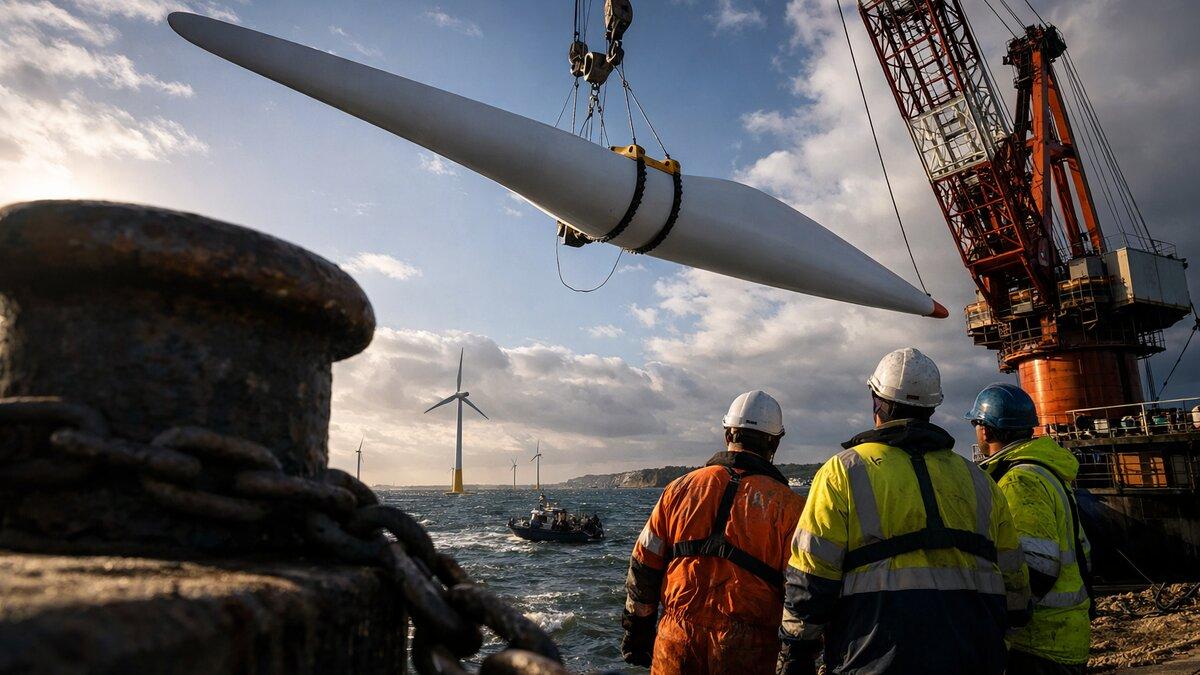
The UK's Contracts for Difference Allocation Round 7 (AR7) secured 8.44 GW of offshore wind at clearing prices near £91.20/MWh (2024 prices), locking in multi-decade generation capacity while reshaping wholesale price stability and supplier levies for British industry. Understanding how CfD strike prices interact with corporate power purchase agreements and grid bottlenecks is essential to controlling long-term £/MWh procurement risk.
- AR7 Record Volume: Published by DESNZ and NESO on 14 January 2026, AR7 awarded ~8.25 GW (8,245 MW) of fixed-bottom offshore wind and 192.5 MW of floating offshore wind.
- AR7 Strike Prices: Major fixed-bottom projects including Dogger Bank South, Norfolk Vanguard, and Awel y Môr cleared at £91.20/MWh in 2024 prices (£65.45/MWh in 2012 prices).
- AR7a Onshore Wind: Published in February 2026, onshore wind (>5 MW) cleared uniformly at £72.24/MWh in 2024 prices (£51.85/MWh in 2012 prices).
- Supply Chain & Grid Link: Managing industrial electricity exposure requires pairing LCCC levy forecasts with corporate power purchase agreements, industrial energy procurement software, and grid-scale battery storage.
AR7 and AR6 Strike Prices Compared
Managed by the Department for Energy Security and Net Zero (DESNZ Contracts for Difference framework) alongside the National Energy System Operator (NESO), the CfD scheme guarantees low-carbon generators a fixed strike price over a 15-year contract. When the UK wholesale reference price falls below the strike price, the Low Carbon Contracts Company (LCCC) pays generators the difference, funded by a Supplier Obligation levy on electricity suppliers. When wholesale prices exceed the strike price, generators pay the surplus back.
In AR7, DESNZ shifted headline bidding benchmarks to 2024 prices while retaining 2012 price equivalents for historical comparison. While clearing prices rose slightly above AR6's £58.87/MWh (2012 prices) due to global turbine, subsea cable, and financing inflation, AR7 delivered the largest single fixed-bottom offshore wind auction in European history.
| Allocation Round & Technology | Cleared Strike Price (2024 Prices) | Cleared Strike Price (2012 Prices) | Notable Awarded Projects / Scale |
|---|---|---|---|
| AR7 Fixed Offshore Wind (Jan 2026) | £91.20/MWh (£89.49/MWh Berwick Bank B) | £65.45/MWh (£64.23/MWh Berwick Bank B) | ~8.25 GW total (Dogger Bank South, Norfolk Vanguard, Awel y Môr, Berwick Bank) |
| AR7 Floating Offshore Wind (Jan 2026) | Not disclosed in summary release | Not disclosed in summary release | 192.5 MW awarded capacity |
| AR7a Onshore Wind >5 MW (Feb 2026) | £72.24/MWh | £51.85/MWh | Multiple Scottish & UK sites (Bettyhill 2, Cairn Duhie, Clachaig Glen) |
| AR6 Fixed Offshore Wind (Sep 2024) | N/A (2012 base) | £58.87/MWh (ASP cap £73.00) | Hornsea Project Four, East Anglia Two Phase 1 |
| AR6 Solar PV >5 MW (Sep 2024) | N/A (2012 base) | £50.07/MWh | Charleston, Montreathmont, Clump Farm |
How LCCC Levies and Grid Constraints Affect Industrial Buyers
For commercial and industrial energy buyers, CfD contracts act as a double-edged hedge. When gas-driven wholesale prices spike above £91.20/MWh, CfD generators return revenue to LCCC, softening non-commodity Supplier Obligation levies on business bills. Conversely, if wholesale power prices settle below the £72–£91/MWh range during high-wind periods, suppliers face higher LCCC top-up levies that pass through into industrial tariffs.
Industrial electricity costs in Britain are also shaped by non-energy policy and transmission charges regulated by Ofgem. Rapidly scaling offshore capacity across Dogger Bank and Scottish zones requires billions in transmission reinforcement to move power south toward manufacturing hubs and AI data centres. When grid bottlenecks prevent wind output from reaching demand centres, NESO incurs constraint payments that add balancing charges onto commercial bills.
Carbon compliance adds a further layer to industrial cost planning. Energy-intensive buyers evaluating UK manufacturing economics must weigh domestic power levies alongside border carbon adjustments outlined in How UK CBAM 2027 changes landed costs for importers and industrial cluster decarbonisation in UK Carbon Capture Technology: 2026 Rules and Cluster Costs.
Offshore Wind Supply Chain Bottlenecks and Capex Signals
The jump from £58.87/MWh in AR6 to £64.23–£65.45/MWh (2012 prices) in AR7 reflects genuine physical bottlenecks across the UK offshore wind supply chain. Higher steel prices, specialized installation vessel shortages, HVDC converter lead times, and elevated cost of capital forced developers to bid higher strike prices to reach final investment decision.
For industrial suppliers, cable manufacturers, and port operators along the North Sea corridor, 8.44 GW of contracted AR7 capacity creates multi-year order visibility. However, project delivery schedules remain exposed to port upgrade timelines and transformer manufacturing capacity across Europe and Asia-Pacific, meaning contracted megawatts will enter the grid incrementally toward 2030 rather than overnight.
In addition, higher-voltage direct current (HVDC) subsea links and onshore substations face multi-year procurement queues that directly affect project commissioning dates. When offshore wind farms experience grid connection delays, developers must manage working-capital carrying costs while industrial power buyers remain exposed to natural-gas-linked marginal wholesale pricing during peak winter demand periods.
Procurement Strategy for UK Industrial Power Buyers
Industrial treasurers and energy managers should avoid treating CfD auction wins as an immediate drop in delivered retail power prices. Instead, firms with annual loads above 10 GWh should combine LCCC levy forecasting inside industrial energy procurement software with sleeved or virtual corporate power purchase agreements (PPAs) tied to onshore wind or solar assets outside the CfD pool.
Where site space and grid connection capacity allow, pairing behind-the-meter solar with grid-scale battery storage lets UK facilities capture negative or depressed wholesale hours during peak wind generation while shaving peak transmission and balancing charges. Aligning procurement tenors with NESO grid delivery milestones ensures commercial buyers lock in predictable energy costs across the 2026–2030 build-out.
 Take the quizWhat Kind of Holiday Spender Are You? Take the Black Friday QuizStart →




 Markets · FintechHow to Calculate Compound Interest: Formula, Examples and the Rule of 72
 Lifestyle · Food & HealthNormal Blood Pressure Chart by Age: Healthy Ranges Explained
 Lifestyle · Food & HealthWhat Is Raynaud’s Syndrome? Why Fingers Turn White in the Cold
 Lifestyle · Food & Health4 Ways Walking After Meals Helps Your Body, Doctors Say