Harvard Scientist Says Canceled Mission Limits Asteroid Probe
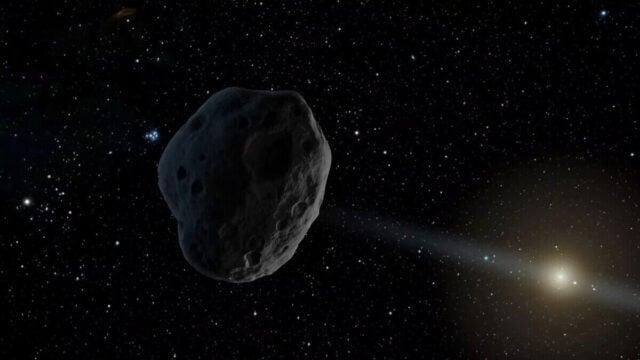
Harvard astrophysicist Avi Loeb says Japan’s canceled rendezvous with 1998 KY26 removes a chance to inspect the object up close. Loeb believes it could be a lost Soviet spacecraft, while NASA says a study found its unusual movement is driven by natural forces.
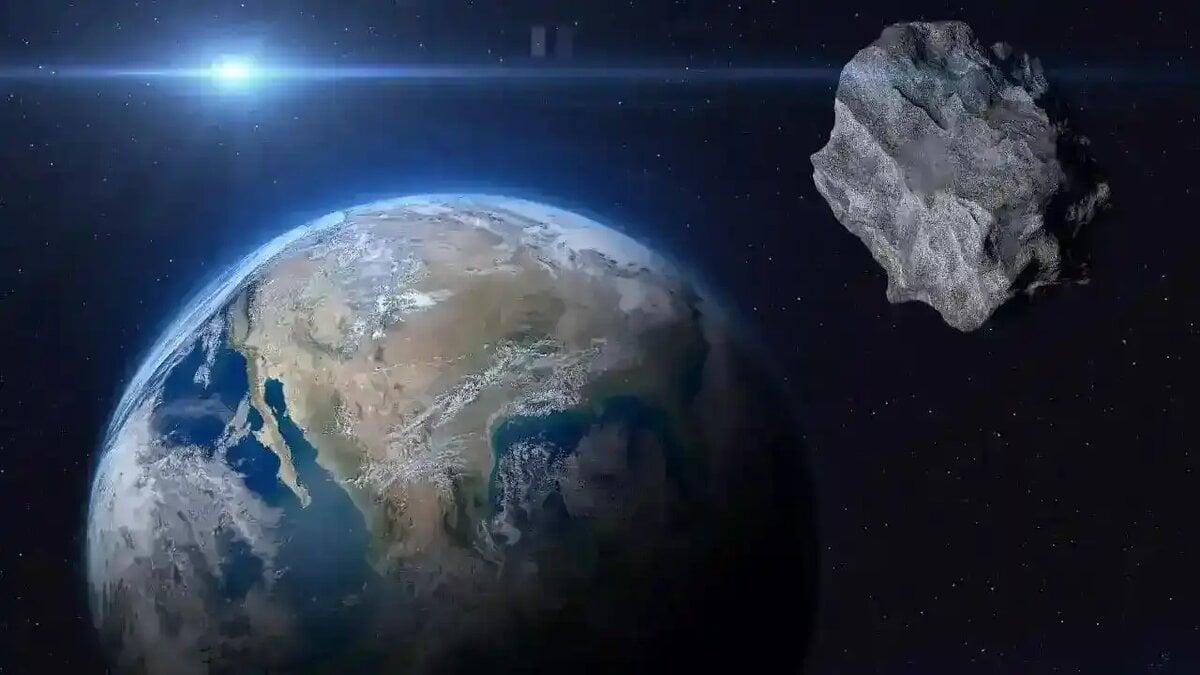
Japan has canceled a 2031 rendezvous with asteroid 1998 KY26, leaving Harvard scientist Avi Loeb without a close-up view that he says could prove whether the object is a lost Soviet spacecraft. NASA says a study found natural forces explain the object’s unusual movement.
The Japan Aerospace Exploration Agency, or JAXA, redirected its Hayabusa2 spacecraft after an engine malfunction. The probe will instead fly by asteroid 2015 BM510 in 2028.
Loeb says 1998 KY26 could be Phobos 1, a Soviet spacecraft launched toward Mars in July 1988. Phobos 1 lost contact with Earth after a faulty command caused it to shut down.
Engine trouble changed Hayabusa2’s course
JAXA told Japan’s Cabinet Office Space Policy Committee on November 16 that it was abandoning the 2031 rendezvous. The agency said Hayabusa2’s last normally functioning main ion engine malfunctioned in mid-August.
Ion engines use electrically charged particles to generate thrust. JAXA said combining working parts from two damaged engines left the spacecraft without enough thrust for the required orbital changes.
Reaching 1998 KY26 already required an Earth gravity assist, a maneuver that uses a planet’s gravity to alter a spacecraft’s path. Loeb questioned why engineers did not attempt such a maneuver to compensate for the lost thrust.
Loeb also questioned the timing of JAXA’s decision after he publicly discussed his theory. He acknowledged that the timing could be a coincidence.
NASA attributes movement to sunlight
NASA said a 2025 orbital study led by its Center for Near-Earth Object Studies found that sunlight and heat emissions drive 1998 KY26’s complex trajectory. NASA Administrator Jared Isaacman said he had not seen evidence that the object was anything other than an asteroid.
Loeb and his colleagues found that the object’s trajectory closely resembles that of Phobos 1. They calculated that sunlight reflecting off the spacecraft’s solar panels could produce the observed push.
Loeb also pointed to the object’s brightness and rotation. He said it rotates about once every five minutes and reflects about half the sunlight that reaches it.
Webb could examine the object remotely
Loeb says NASA’s James Webb Space Telescope could measure heat from 1998 KY26 and help scientists assess its size, surface temperature and composition. It would not provide the surface detail he sought from a nearby spacecraft.
“There is no way by which we can actually resolve the object, or get a high-resolution image of its surface, without coming close to it,” Loeb said.
The object is roughly 36 feet wide. Loeb said it poses no threat of hitting Earth.
 Take the quizWhat Kind of Holiday Spender Are You? Take the Black Friday QuizStart →





 Markets · FintechHow to Calculate Compound Interest: Formula, Examples and the Rule of 72
 Lifestyle · Food & HealthNormal Blood Pressure Chart by Age: Healthy Ranges Explained
 Lifestyle · Food & HealthWhat Is Raynaud’s Syndrome? Why Fingers Turn White in the Cold
 Lifestyle · Food & Health4 Ways Walking After Meals Helps Your Body, Doctors Say