BepiColombo Enters Mercury Orbit After Eight-Year Journey
The European-Japanese BepiColombo mission has entered orbit around Mercury after a journey of more than eight years. Its two connected spacecraft will separate before beginning their scientific work in 2027, investigating the planet’s magnetic field, surface and large iron core.
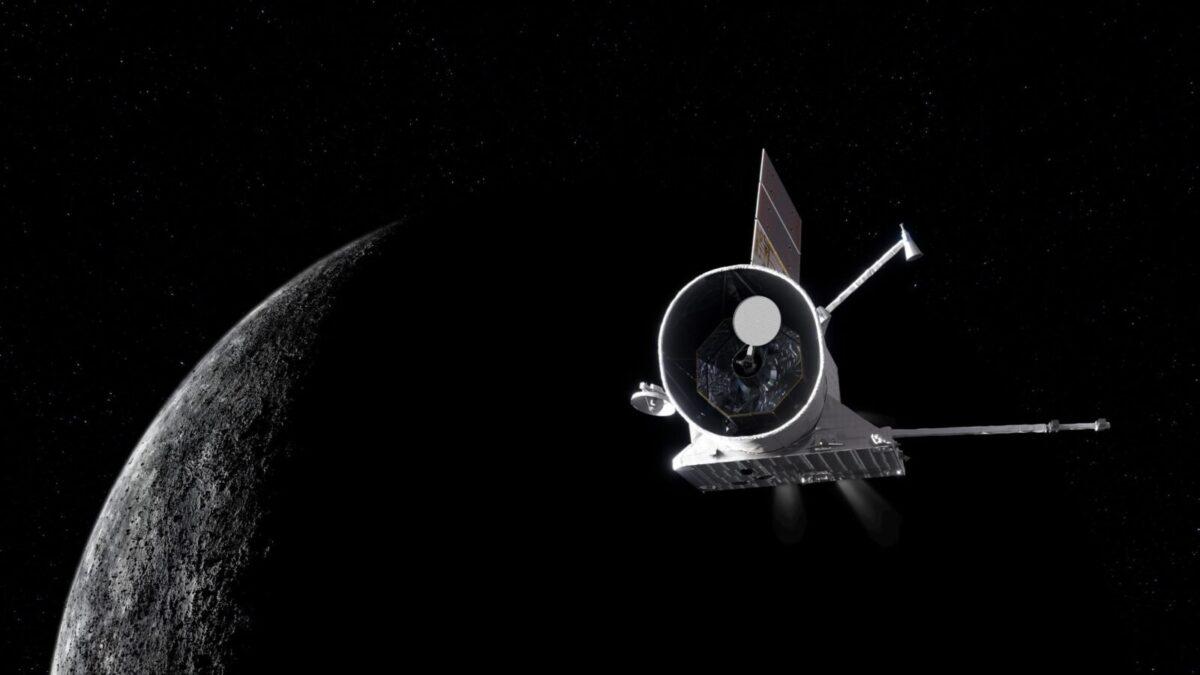
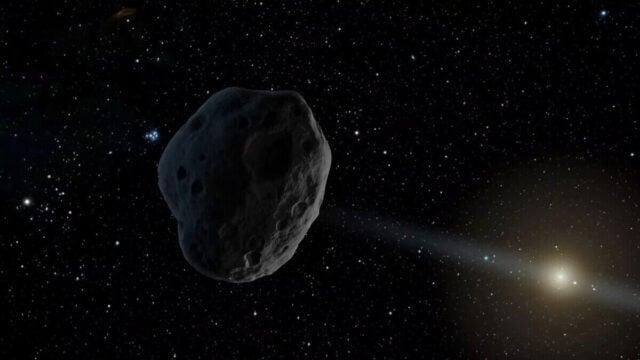
BepiColombo, a European-Japanese mission, entered orbit around Mercury on November 21 after more than eight years in space. It is only the second mission to orbit the planet, where two spacecraft will investigate its surface, magnetic field and large iron core.
A 37-minute engine burn put the mission into orbit. The burn began at 1:24 p.m. EST, and confirmation arrived several hours later.
“Flight Dynamics already has confirmed it achieved orbital capture around Mercury!” the mission team said after contact with the spacecraft was restored.
NASA’s MESSENGER was the only spacecraft previously to orbit Mercury, from March 2011 to April 2015. NASA’s Mariner-10 had flown past the planet three times in the 1970s.
A long route to Mercury
The European Space Agency and the Japanese Aerospace Exploration Agency launched BepiColombo aboard an Ariane 5 rocket from French Guiana in October 2018. The mission traveled almost six billion miles on its way to Mercury.
Reaching the planet required a winding route. The sun’s gravitational pull accelerates approaching spacecraft, which must lose enough energy for Mercury’s weaker gravity to capture them.
BepiColombo flew past Earth once, Venus twice and Mercury six times to slow down. The journey was extended by a year after a solar-panel problem reduced power available to the transfer module’s electric thrusters.
Two orbiters will separate
The mission has two main spacecraft: the European Space Agency’s Mercury Planetary Orbiter and Japan’s Mercury Magnetospheric Orbiter, also known as Mio. They remain connected after their transfer module released them on September 3.
The orbiters are expected to separate around December 9. Mio will then settle into a highly elliptical orbit over Mercury’s poles. The European orbiter will make a series of engine burns before reaching a less elliptical polar orbit on March 10, 2027.
Jessica Marshall, a systems engineer at Airbus, said a spring mechanism must release gently after eight years in space. The mechanism also twists as it releases, starting the spacecraft’s spin.
Science work starts in April
BepiColombo is scheduled to begin its scientific work on April 6, 2027. The European orbiter will study Mercury’s surface close-up, while the Japanese craft observes the planet from farther away.
The mission will investigate the origin of Mercury’s magnetic field, its internal structure and how its magnetic environment interacts with the solar wind, according to the European Space Agency.
Researchers also want to understand why ice exists in Mercury’s polar craters and how shallow, steep-sided hollows formed across the planet’s surface.
Professor Emma Bunce, a mission principal investigator at Leicester University, said Mercury’s outer layers may have been stripped away by a collision. She said the planet could instead have formed in a metal-rich part of the early solar system.
 Take the quizWhat Kind of Holiday Spender Are You? Take the Black Friday QuizStart →





 Markets · FintechHow to Calculate Compound Interest: Formula, Examples and the Rule of 72
 Lifestyle · Food & HealthNormal Blood Pressure Chart by Age: Healthy Ranges Explained
 Lifestyle · Food & HealthWhat Is Raynaud’s Syndrome? Why Fingers Turn White in the Cold
 Lifestyle · Food & Health4 Ways Walking After Meals Helps Your Body, Doctors Say