Durban Police Raid Suspected Drug Hub Inside Hijacked CBD Building
For the roughly 100 people believed to be living inside a hijacked building near Durban's Warwick Triangle, the week began with officers at the door.
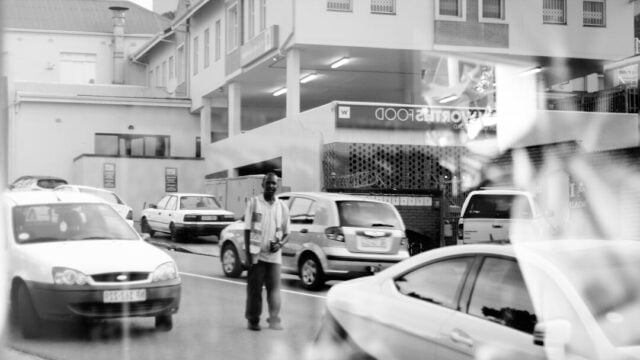
For the roughly 100 people believed to be living inside a hijacked building near Durban's Warwick Triangle, the week began with officers at the door. Durban Metro Police, backed by other law enforcement agencies, swept into the property in an early morning raid on Monday, targeting what authorities describe as a hub of criminal activity — drug dealing among it — in the heart of the central business district.
The operation forms part of a wider push by the city to claw back control of illegally occupied buildings and restore order in the CBD, a campaign that has drawn attention to how deeply informal occupation has taken root inside Durban's commercial core.
Makeshift rooms, shebeens and a hundred residents
What officers found inside spoke to a building that had long stopped functioning as one. Multiple makeshift structures had been erected within its walls, carving the property into improvised living quarters. Police estimate around 100 people call it home. Illegal taverns were also operating on the premises, adding an unlicensed liquor trade to the list of activities unfolding under one roof.
No arrests had been made by the time police addressed the operation. Several people, though, were taken in for questioning, and officers indicated the investigation was still live.
That distinction matters. Raids of this kind often end in mass roundups; here, authorities appeared to be building a case rather than simply clearing a scene.
A problem South Africa knows well
Hijacked buildings are a familiar blight across South Africa's biggest cities, where syndicates seize control of properties — sometimes from absent owners, sometimes from the state — and rent out space with no lease, no services and no oversight. Johannesburg's inner city has battled the phenomenon for years. Durban's CBD, particularly around the dense transport and trading hub of Warwick Triangle, has faced its own steady creep of occupation.
For city officials, the stakes run beyond crime statistics. Occupied buildings complicate fire safety, sanitation and electricity supply, and their presence near a market precinct like Warwick Triangle compresses traders, commuters and residents into the same space as the criminal economy police say was operating inside.
What Monday's raid signals
Framing the raid as part of a broader crackdown, rather than a one-off sweep, suggests the city intends to keep pressure on occupied properties. That raises immediate questions for the people found inside — where they go next, and whether authorities have a plan for them beyond removal.
It also puts the focus on ownership. Identifying who legally holds the building, and how it slipped into criminal hands, typically determines whether a property can be secured, returned to its owner or written off entirely.
For now, police are holding their cards close. The people taken in for questioning will shape what happens next: whether charges follow, whether the alleged drug operation inside is formally linked to dealers beyond the building's walls, and whether more addresses in the CBD land on the city's target list. Officials say the crackdown is ongoing — and Monday's dawn knock is unlikely to be the last.